Python Print and Browser Request Layers
JavaScript engine in Chrome
Inside the Engine Room
You already know that Chrome's rendering engine, Blink, takes HTML and CSS and turns it into a visible webpage. But what about the parts of a website that move, react, and update without you reloading the page? That's where JavaScript comes in, and it needs its own engine to run.
In Chrome, that engine is called V8. It's a high-performance open-source engine written in C++ that executes JavaScript code. It's the powerhouse not just for Chrome but also for server-side environments like Node.js.
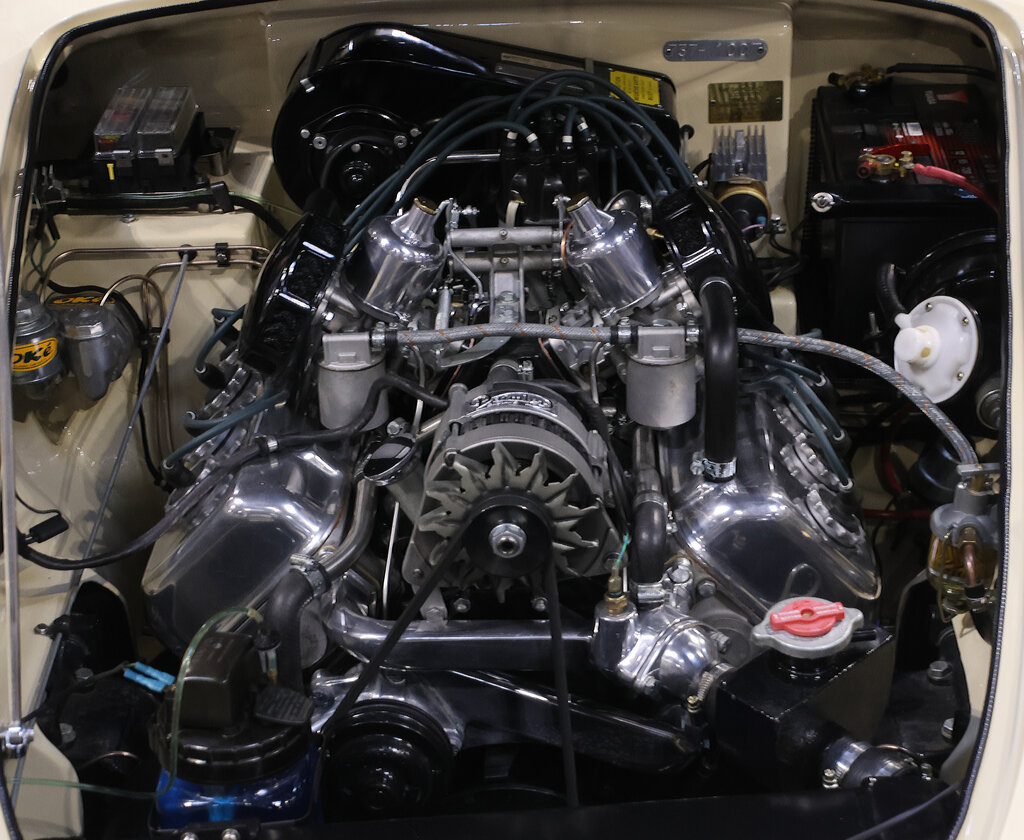
V8's primary job is to take the JavaScript written by developers and convert it into instructions that a computer's processor can understand. But doing this quickly is a major challenge. If the process is too slow, the website feels sluggish and unresponsive. V8 uses a clever combination of techniques to make sure your code runs incredibly fast.
Code in the Fast Lane
Computers don't understand JavaScript directly. They understand machine code, a low-level language of ones and zeros. Historically, there were two main ways to bridge this gap:
- Interpretation: An interpreter reads your code line by line, translating and executing it on the fly. It's fast to start but can be slow overall, especially for code that runs repeatedly.
- Compilation: A compiler translates your entire program into machine code before it runs. This takes longer to start up but results in much faster execution.
V8 gets the best of both worlds using a technique called Just-In-Time (JIT) compilation.
Instead of choosing one method, V8 starts by interpreting the code for a quick launch and then compiles the parts that are used most frequently for maximum speed.
This process unfolds in a few key steps:
- Parsing: V8 first parses the JavaScript code, breaking it down into a data structure called an Abstract Syntax Tree (AST). This tree represents the code's structure and meaning.
- Interpreting: The AST is then fed to V8's interpreter, named Ignition. Ignition quickly generates bytecode, a simplified set of instructions that's easier for a machine to process than raw JavaScript.
- Profiling: As this bytecode runs, a profiler watches for functions or loops that are executed repeatedly. This frequently-run code is marked as "hot."
- Optimizing: When code gets hot, V8 sends it to its optimizing compiler, TurboFan. TurboFan makes educated guesses about the code—for instance, assuming a variable will always be a number. Based on these assumptions, it generates highly optimized, super-fast machine code.
Sometimes, TurboFan's assumptions are wrong. If a function that was optimized for numbers is suddenly called with a string, V8 performs a deoptimization, throwing away the optimized code and falling back to the slower bytecode. This ensures the program runs correctly, even if it's a bit slower for that specific case.
Taking Out the Trash
As a JavaScript program runs, it creates objects, variables, and other data in memory. When this data is no longer needed, it needs to be cleaned up to free up memory for new tasks. This process is called garbage collection (GC).
Garbage
noun
In programming, 'garbage' refers to memory that has been allocated but is no longer in use by the program.
V8's garbage collector operates on a simple but powerful idea called the generational hypothesis: most objects die young. In other words, much of the data your program creates is used for a very short time and then discarded.
To take advantage of this, V8 divides memory into two main spaces, or generations:
- The Young Generation: This is where all new objects are created. It's small and designed for frequent, fast garbage collection. Most objects never leave this space.
- The Old Generation: If an object survives a couple of garbage collection cycles in the Young Generation, it gets promoted to the Old Generation. This space is larger and collected less often.
This two-space approach allows V8 to focus its cleanup efforts on the Young Generation, where most of the garbage is. This makes the garbage collection process faster and less disruptive to the program's execution, preventing your web page from freezing or stuttering.
Ready to test your knowledge?
What is the primary role of the V8 engine in a web browser like Chrome?
V8's Just-In-Time (JIT) compilation combines the benefits of which two traditional approaches to running code?
By combining fast startup, aggressive optimization, and efficient memory management, V8 ensures that the dynamic, interactive parts of the web run smoothly on your device.