Unlock Your Prefrontal Cortex Potential
Prefrontal Cortex Functions
The Brain's Conductor
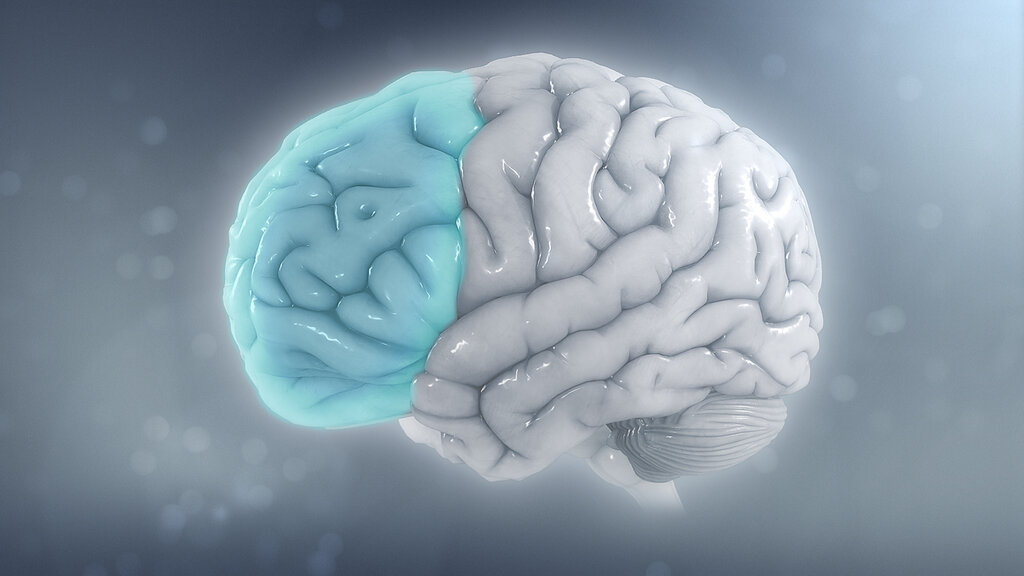
The prefrontal cortex (PFC), located at the very front of the brain, acts as the conductor of our cognitive orchestra. It doesn't play a single instrument; instead, it ensures all the different sections work together in harmony. This region is the seat of our highest-level thinking, orchestrating our thoughts, actions, and emotions to help us navigate the complexities of life and achieve our goals.
Executive Functions
The core responsibilities of the PFC fall under the umbrella of executive functions. Think of these as the management skills for your mind. They are a set of mental processes that enable us to plan, focus attention, remember instructions, and juggle multiple tasks successfully. Without them, we would be driven purely by impulse and external stimuli.
Three core executive functions are particularly crucial:
- Working Memory: The ability to hold information in mind and work with it. This is the mental sticky note you use to remember a phone number while you search for a pen or to follow the steps in a recipe.
- Cognitive Flexibility: The capacity to switch perspectives or adjust your approach to a problem. It allows you to adapt to changing demands and to see a situation from multiple viewpoints.
- Inhibitory Control: The skill of controlling your impulses, thoughts, and actions. It's what stops you from saying something inappropriate or helps you resist the temptation to check your phone while working on an important task.
Together, these functions allow us to manage our resources—time, attention, and effort—to achieve a goal.
Making Choices and Staying on Track
Every day is a series of decisions, from what to wear to which career path to follow. The PFC is central to this process. It acts like a master evaluator, weighing the potential outcomes of different choices. It integrates sensory information from the world around us with our internal goals, memories, and emotional states to guide our behavior.
This is where cognitive control comes in. It's the mechanism that aligns our actions with our intentions. The PFC helps select task-relevant information and filter out distractions. For example, when you're studying in a noisy cafe, your PFC helps you focus on your textbook and ignore the conversations happening around you. This process, often called attention regulation, is a constant, active effort to keep your mental spotlight pointed in the right direction.
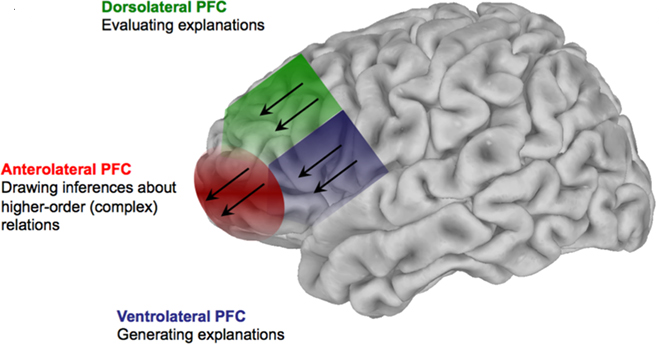
Different parts of the PFC specialize. The dorsolateral prefrontal cortex (dlPFC) is heavily involved in planning and working memory. The ventrolateral prefrontal cortex (vlPFC) helps with inhibitory control, and the orbitofrontal cortex plays a key role in evaluating the emotional value of choices.
Managing Emotions
The PFC doesn't just manage thoughts; it also manages feelings. It has strong connections to deeper, more primal brain areas like the amygdala, which is involved in processing emotions like fear. The PFC acts as a regulator, modulating emotional responses.
This process is called emotional regulation. When you feel a surge of anger and take a deep breath instead of yelling, that's your PFC at work. It provides the top-down control necessary to assess a situation and respond thoughtfully rather than reactively. This ability is fundamental to social interaction, allowing us to navigate complex social norms and maintain healthy relationships.
By integrating logical reasoning with emotional information, the prefrontal cortex enables the nuanced, flexible behavior that defines much of human experience.
Which of the following analogies best describes the primary role of the prefrontal cortex (PFC)?
Resisting the temptation to check your phone while working on an important task is a classic example of which core executive function?
Understanding the role of the prefrontal cortex is key to understanding how we think, decide, and act.