The Prefrontal Cortex Mind
Disorders Associated with Prefrontal Cortex Dysfunction
When the Brain's CEO Falters
The prefrontal cortex acts as the brain's chief executive, steering our thoughts, actions, and emotions. As we've seen, it's central to planning, decision-making, and social behavior. But what happens when this crucial region is damaged or doesn't function correctly? The consequences can be profound, leading to a range of neurological and psychiatric disorders that disrupt a person's life.

Schizophrenia
Schizophrenia is often marked by disorganized thoughts, hallucinations, and a disconnect from reality. Many of these symptoms are tied to problems in the prefrontal cortex. Brain imaging studies often reveal reduced PFC activity, a condition known as hypofrontality, especially during tasks that require executive functions like planning and working memory.
This impairment helps explain why individuals with schizophrenia may struggle to organize their thoughts, make logical plans, or control their impulses. The PFC's communication with other brain regions, particularly those involved in emotion and memory like the limbic system, is often disrupted, contributing to the complex symptoms of the disorder.
Depression
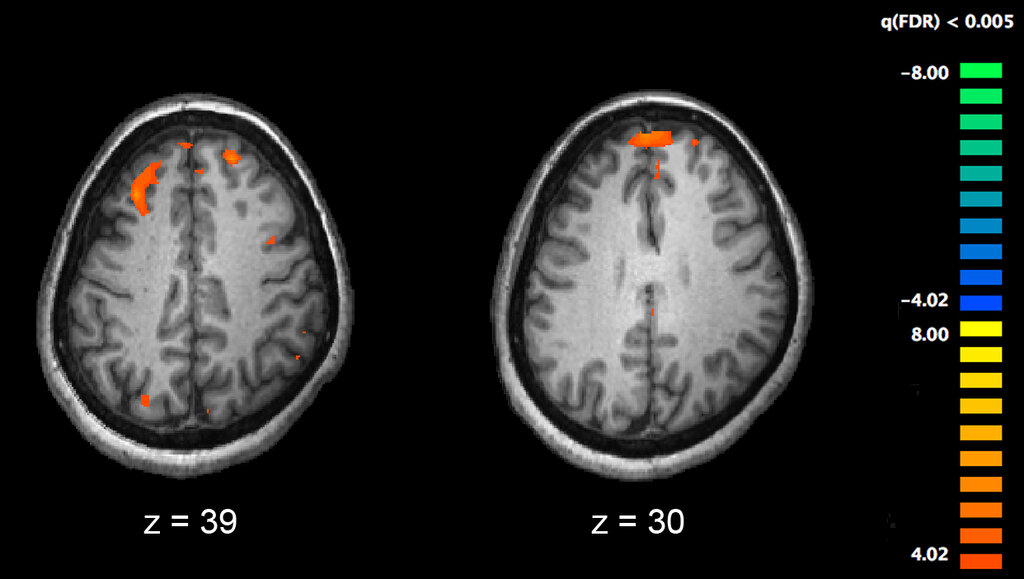
The PFC also plays a significant role in major depressive disorder. In depression, there's often an imbalance in PFC activity. The dorsolateral prefrontal cortex (dlPFC), which helps with cognitive control and problem-solving, tends to be underactive. This can make it difficult to shift focus away from negative thoughts or to find the motivation to complete tasks.
At the same time, the ventromedial prefrontal cortex (vmPFC), a region involved in processing emotions and self-perception, can become overactive. This hyperactivity is linked to rumination—the tendency to get stuck in loops of negative thinking—and feelings of worthlessness. Chronic stress, a major risk factor for depression, can physically alter the PFC over time.
Persistently high cortisol levels can begin to impair brain function, particularly in areas responsible for memory and emotional regulation like the hippocampus and prefrontal cortex.
ADHD
Attention-Deficit/Hyperactivity Disorder (ADHD) is fundamentally a disorder of executive functions, which are governed by the PFC. Core symptoms like inattention, impulsivity, and hyperactivity are directly linked to impairments in this brain region. The PFC's development is often delayed in individuals with ADHD, and its communication pathways with other parts of the brain may be less efficient.
This dysfunction makes it harder to filter out distractions, resist impulses, and plan ahead. It's not a matter of willpower, but of neurobiology. The PFC's struggle to manage incoming information and regulate behavior is central to the daily challenges faced by those with ADHD.
There is growing consensus that the central feature of ADHD is disinhibition.

Traumatic Brain Injury
Because of its location at the front of the skull, the prefrontal cortex is particularly vulnerable to traumatic brain injury (TBI) from accidents, falls, or blows to the head. Damage to the PFC can cause dramatic and lasting changes in personality, behavior, and cognitive ability.
Depending on the specific area of the PFC that is injured, a person might experience problems with impulse control, emotional regulation, or social appropriateness. They may struggle with planning and organization, or lose the ability to think flexibly. The story of Phineas Gage, a 19th-century railroad worker who survived a severe PFC injury, is a classic example of how physical damage to this area can fundamentally alter who a person is.
Now, let's test your understanding of how PFC dysfunction relates to these conditions.
In major depressive disorder, an underactive dorsolateral prefrontal cortex (dlPFC) is primarily associated with which of the following symptoms?
The term 'hypofrontality,' often observed in individuals with schizophrenia, refers to ______.
Understanding these links is key to developing better treatments and support for individuals affected by these complex disorders.