Quantum Physics Fundamentals
Introduction to Quantum Mechanics
When the Old Rules Break
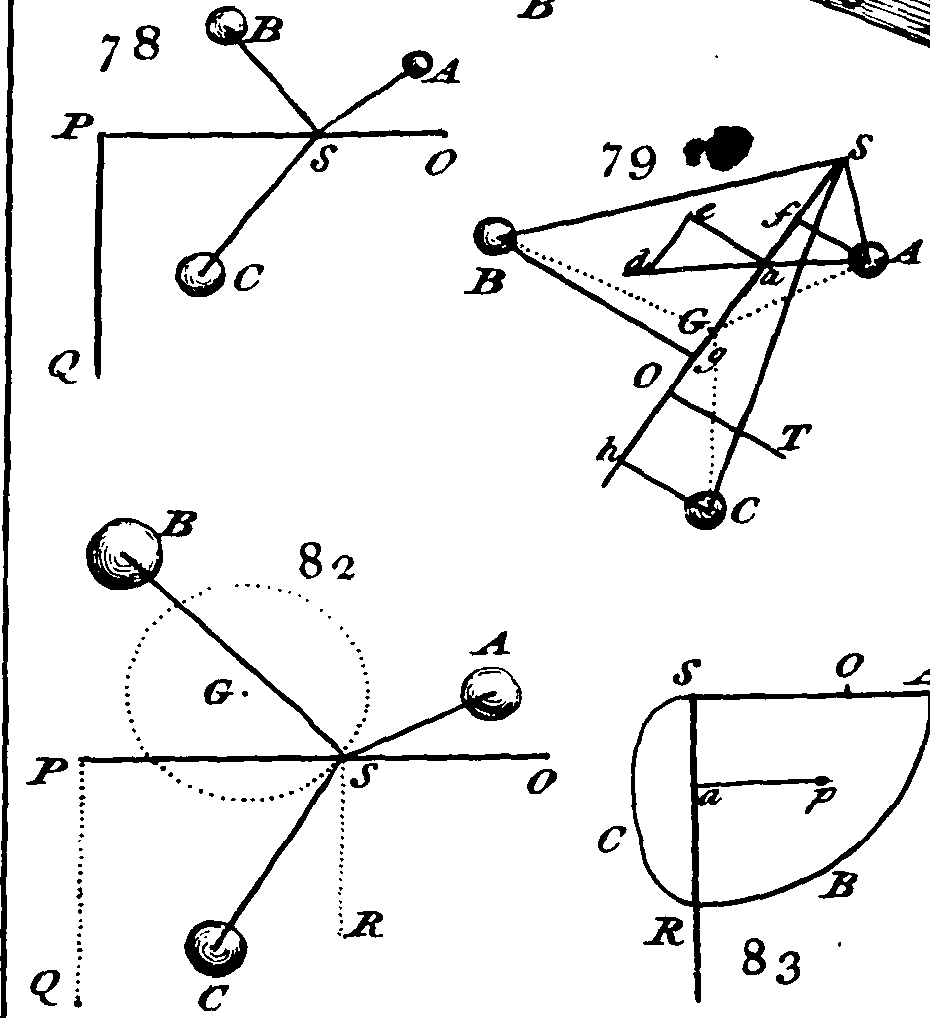
For centuries, our understanding of the universe was governed by a set of elegant, intuitive rules. These rules, laid out by Isaac Newton and others, are what we now call classical mechanics. They describe the world we see and interact with every day. If you know the position and momentum of a baseball, you can predict its exact path. The same laws that govern a falling apple also map the orbits of planets.
Classical physics is deterministic. It suggests a clockwork universe where, given enough information about the present, we could know the entire future. For hundreds of years, this framework was incredibly successful. It felt complete, as if we had discovered the final operating manual for reality.
But as the 19th century gave way to the 20th, new experiments began to reveal strange phenomena at the atomic scale. Scientists were peering into a world far smaller than apples or planets, and the old rules just didn't work there. It was like taking a map of New York City and trying to use it to navigate the inside of a single brick. The map isn't wrong, it's just for the wrong scale.
Puzzles from the Subatomic World
One of the first major cracks in classical physics came from something as simple as a glowing-hot piece of metal. Physicists were studying a phenomenon called black-body radiation. A black body is a theoretical object that absorbs all radiation that hits it. When heated, it glows, emitting light across a spectrum of frequencies.
Classical theories made a clear prediction about this glow. As the frequency of light increased (moving from red to violet and beyond), the intensity of the emitted energy should increase without limit. This led to a nonsensical conclusion known as the “ultraviolet catastrophe.” According to the math, any hot object should instantly release an infinite amount of energy, mostly in the form of high-frequency radiation like ultraviolet light and X-rays. This is obviously not what happens. Your toaster doesn't irradiate your kitchen every time you make breakfast.
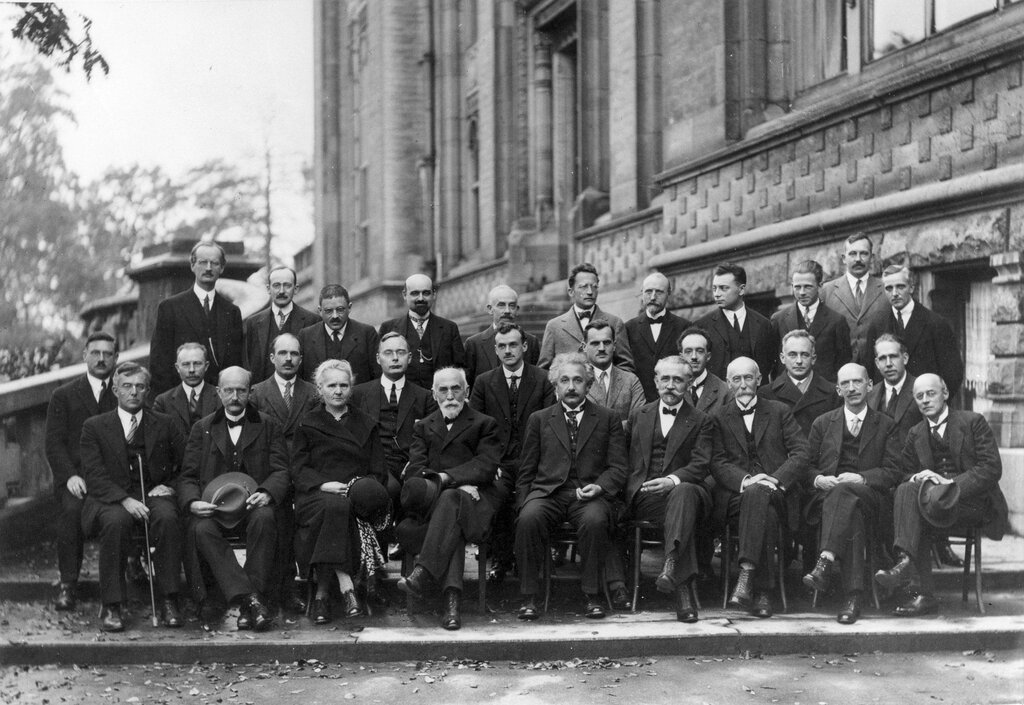
In 1900, the physicist Max Planck came up with a radical solution. He proposed that energy wasn't a continuous flow, like water from a tap. Instead, he suggested that energy could only be emitted or absorbed in discrete packets, which he called “quanta.” Think of it like a staircase versus a ramp. On a ramp, you can be at any height. On a staircase, you can only be on one step or another, never in between.
Planck's idea was that energy worked like a staircase. By assuming energy came in these tiny, indivisible chunks, his calculations perfectly matched the experimental results for black-body radiation, completely solving the ultraviolet catastrophe. He didn't fully understand the implications of his own idea, but he had opened the door to a new reality. The age of quantum mechanics had begun.
The Photoelectric Effect
Another puzzle that defied classical explanation was the photoelectric effect. This is a phenomenon where shining light on a metal surface can knock electrons loose. The classical view of light as a continuous wave predicted that if you shone a dim light on the metal for long enough, electrons would eventually absorb enough energy to pop off. It also suggested that a brighter light should eject electrons with more energy.
Experiments showed the exact opposite. A dim light, no matter how long it shone, would not eject any electrons unless its frequency was above a certain threshold. But if the frequency was high enough, even the faintest light would immediately knock electrons out. And brighter light didn't make the electrons more energetic; it just knocked out more of them.
In 1905, Albert Einstein extended Planck's quantum idea to explain this. He proposed that light itself is quantized. It behaves like a stream of tiny energy packets, later called photons. The energy of each photon is determined by its frequency. An electron can only be knocked off if it's hit by a single photon with enough energy to do the job. A brighter light just means more photons, so more electrons are ejected, but the energy of each electron depends only on the energy of the photon that hit it.
These discoveries—black-body radiation and the photoelectric effect—showed that classical mechanics was incomplete. At the smallest scales, energy and light didn't behave like continuous waves, but like discrete particles. A new kind of physics was needed to describe this strange, granular world.
According to the deterministic view of classical mechanics, what could you theoretically do if you had complete information about the present state of a system?
The "ultraviolet catastrophe" was a major failure of classical physics. It was a prediction that hot objects should...
This was the beginning of a revolution that would completely reshape our understanding of the universe. The simple, deterministic world of classical physics gave way to the strange, probabilistic realm of quantum mechanics.