Mastering Soccer Game Techniques
Combining Skills in Game Scenarios
From Drills to the Field
You’ve practiced dribbling through cones, passing in triangles, and shooting at an empty net. Those drills build a solid foundation. But soccer isn't played in a vacuum. The real challenge is using those skills together when the game is moving fast and an opponent is trying to stop you.
This is where we shift from isolated practice to realistic game scenarios. The goal is no longer just to perform a skill correctly, but to decide which skill to use and when to use it. It's about reading the game, making smart choices under pressure, and working with your teammates.
Handling Real Pressure
Dribbling around a cone is one thing; keeping the ball from a determined defender is another. When under pressure, your focus shifts from fancy footwork to effective control. The key is to keep the ball close and use your body to shield it from your opponent. By keeping your body between the defender and the ball, you create a physical barrier that makes it much harder for them to make a tackle.
This also forces you to play with your head up. You need to be aware of the defender's position while simultaneously looking for an open teammate to pass to or an open lane to dribble into. It’s a constant balancing act between protecting the ball and progressing the attack.
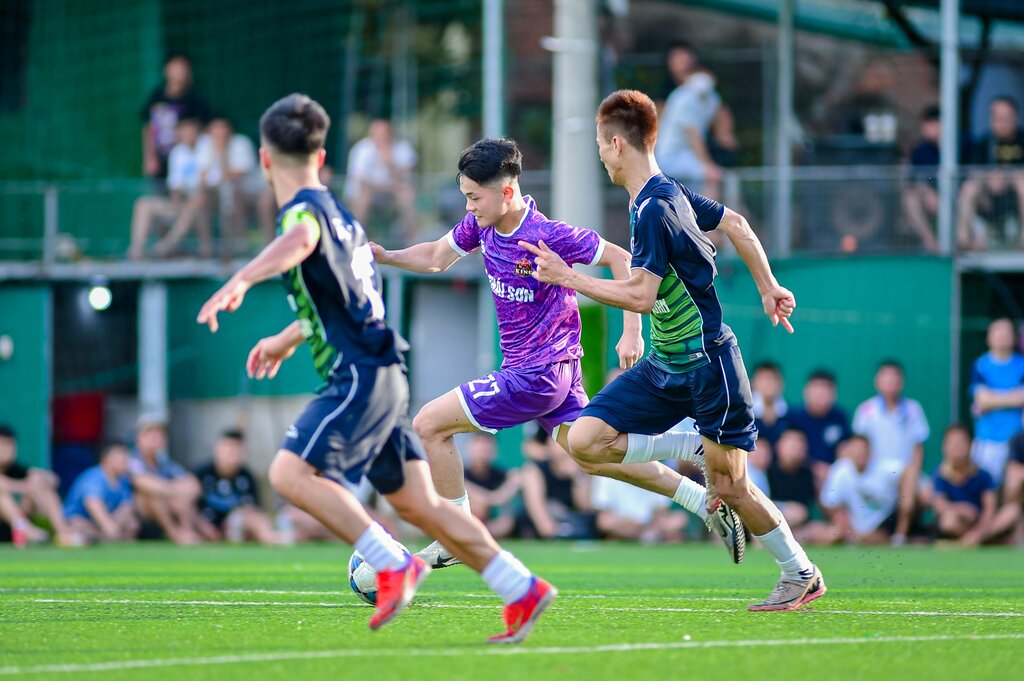
Passing in a game is also about more than just accuracy. It’s about vision and timing. A perfect pass sent at the wrong moment is a wasted opportunity. You have to assess the situation in a split second. Is your teammate making a run? Is there a defender in the passing lane? Would a short pass to a closer player be safer than a long pass downfield?
Good passers don't just see their teammates; they see the space around them. They anticipate movement and deliver the ball to where their teammate will be, not just where they are.
Creating Scoring Chances
In a match, you rarely get a perfect, stationary ball to shoot. Scoring opportunities are fleeting. You might have to shoot off one touch from a pass, take a shot while turning, or hit the ball after dribbling past a defender. Each scenario requires a different technique.
A powerful instep drive might be perfect from a distance, but a quick, accurate placement shot is better when you're close to the goalie. The key is to recognize the opportunity and execute the right shot for the situation, often with very little time to think.
The best goal-scorers are decisive. They don't hesitate when a chance appears.
Defense in a real game is about reacting to the offense. Your positioning and tackling must adapt to the ever-changing flow of play. You're not just marking a single player; you're covering space, communicating with your teammates to maintain your team's defensive shape, and deciding when to step up and challenge for the ball versus when to delay the attacker.
Small-Sided Games
The most effective way to combine all these skills is through small-sided games, like 3v3 or 4v4. Playing on a smaller field means you're always involved in the action. You get more touches on the ball, face more 1v1 situations, and are constantly forced to make decisions about passing, shooting, and defending.
These games naturally simulate the pressures of a full match but amplify the learning opportunities. You'll quickly learn how to control the ball in tight spaces, work with teammates to create opportunities, and transition instantly from attacking to defending.
Use small-sided games to highlight these ideas.
Think of small-sided games as the laboratory where you test everything you've learned. It's where individual skills merge into tactical understanding and true teamwork begins to form.
Ready to test your decision-making?
When a defender is challenging you, what is the most effective way to protect the ball?
According to the text, a good pass in a game is defined not just by its accuracy, but also by its...
Moving from drills to games is a huge step. It's about transforming your technical abilities into effective, intelligent play on the field.