Mastering Soccer Game Techniques
Ball Control
The First Touch is Everything
In soccer, the most important moment is often the first one. What you do in the instant the ball arrives at your feet can determine the entire next phase of play. This is called the first touch. It's not just about stopping the ball; it's about controlling it to set up your next action, whether that's a pass, a dribble, or a shot.
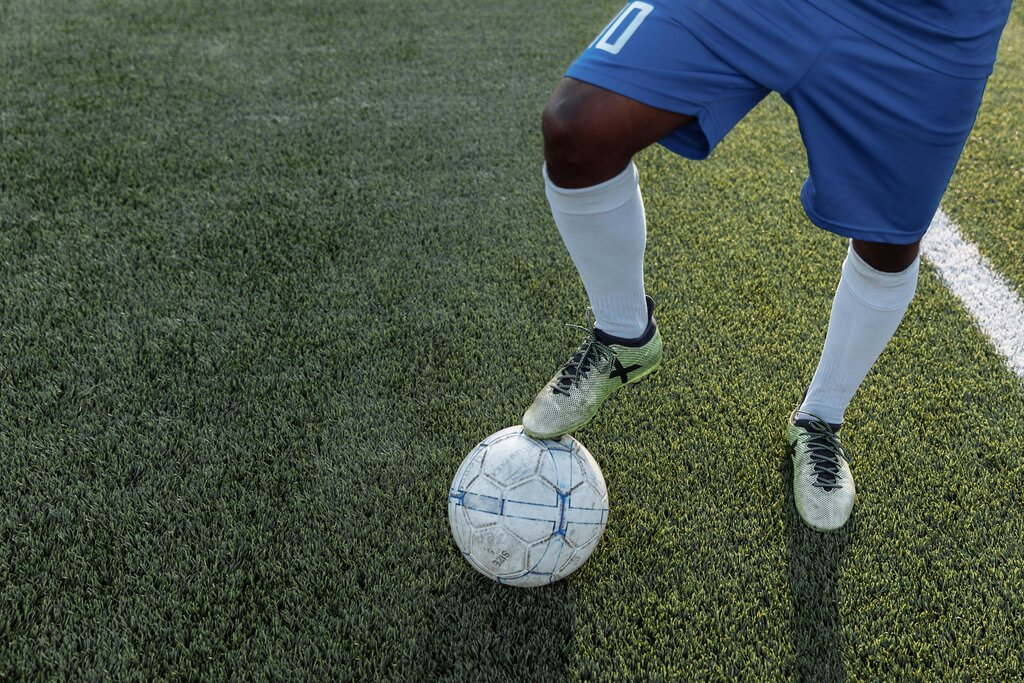
Think of your first touch as a conversation with the ball. A bad first touch is like yelling at it—the ball will bounce away wildly, likely straight to an opponent. A good first touch is a soft whisper. It calms the ball down and brings it under your spell. The goal is to cushion the ball's arrival, absorbing its momentum so it settles right where you want it.
A great first touch gives you time and space. A poor one gives the advantage to your opponent.
One of the best ways to practice this is with a wall. Find a solid surface and kick the ball against it from a few yards away. As it comes back, practice receiving it with different parts of your foot. Use the inside of your foot to gently guide it to one side. Try using the top of your foot (your laces) to cushion it so it stops dead. The key is to keep your ankle relaxed and 'give' a little as the ball makes contact.
Keeping the Ball Close
Once the ball is under your control, you need to be able to move with it. This is dribbling. The secret to effective dribbling isn't fancy tricks; it's keeping the ball close to your feet at all times. The more you touch the ball, the more control you have. Aim for a small tap with every step you take.
You'll use two main surfaces of your foot:
- Inside of the foot: This is your control surface. Using the area near your big toe gives you the most precision for small adjustments and navigating tight spaces.
- Outside of the foot: This surface, near your pinky toe, is for pushing the ball forward while running and for making wider turns. It allows you to keep a more natural running stride.
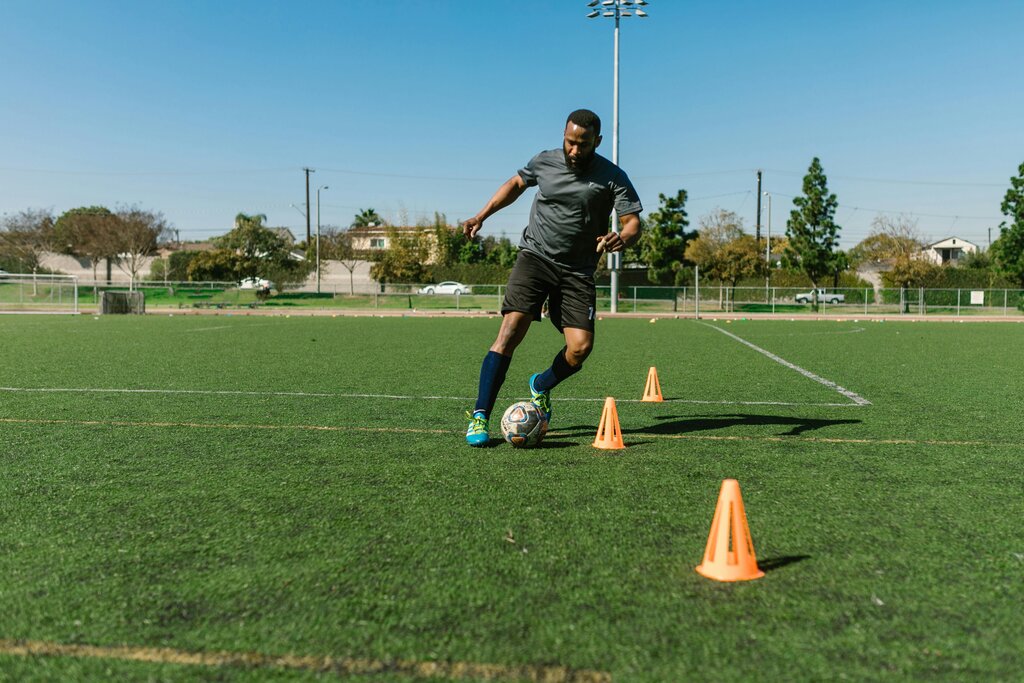
A simple cone drill is the perfect way to practice. Set up five or six cones in a straight line, about a yard apart. First, try to weave through them using only the inside of your right foot. When you get to the end, come back using only the inside of your left. Then, repeat the drill using only the outside of each foot. Focus on taking many small touches rather than a few big ones.
Juggling for Coordination
Juggling might seem like a party trick, but it's one of the best exercises for developing a feel for the ball. It improves your balance, coordination, and your touch, as you learn to make tiny adjustments to keep the ball in the air.
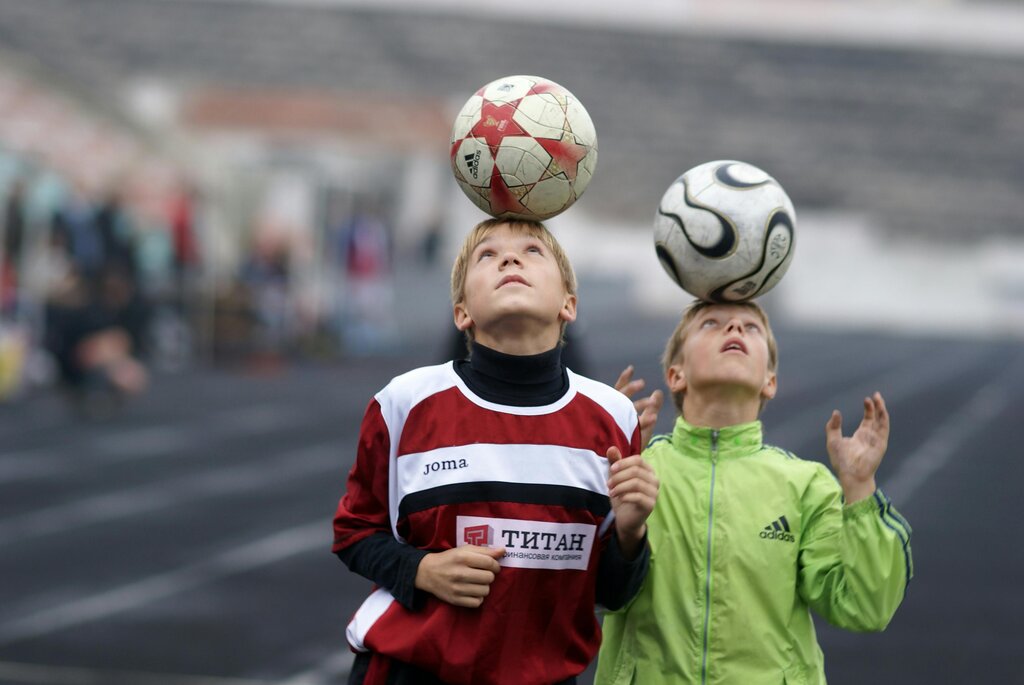
If you're new to juggling, don't try to be a superstar right away. Start simple:
- Hold the ball in your hands.
- Drop it and let it bounce once on the ground.
- As it comes up, tap it gently with the laces of your dominant foot.
- Catch it.
Repeat this over and over. The goal is to get a feel for how much power you need to tap the ball straight up to your hands. Once you can do this ten times in a row without missing, try two taps before you catch it. Then try without a bounce. Gradually build up, alternating feet. It takes patience, but the improvement in your overall ball control will be immense.
Time to see what you've learned.
What is the primary goal of a good first touch in soccer?
To cushion the ball's arrival when receiving it, the key is to keep your ankle locked and rigid.