Introduction to Fluid Dynamics
Fluid Properties
The Stuff of Fluids
What makes water different from wood, or air different from stone? The answer lies in how they respond to force. Solids resist being pushed around; they hold their shape. Fluids, on the other hand, flow. This category includes both liquids, like water, and gases, like the air we breathe. To understand how fluids move and interact, we first need to grasp a few of their core properties.
Density and Weight
Imagine two identical boxes. One is filled with feathers, the other with rocks. The box of rocks is obviously heavier. This is because rocks are denser than feathers. Density is simply a measure of how much "stuff" is packed into a given space.
Density
noun
The mass of a substance per unit of its volume.
Sometimes it's useful to compare a fluid's density to a standard, like water. This is called specific gravity. It's a simple ratio that tells you how many times denser than water a substance is. For example, mercury has a specific gravity of 13.6, meaning it's 13.6 times denser than water. Since it's a ratio, specific gravity has no units.
| Substance | Density (kg/m³) |
|---|---|
| Air | 1.225 |
| Olive Oil | 920 |
| Water | 1000 |
| Mercury | 13,600 |
Pressure and Temperature
Pressure is the amount of force a fluid exerts on a surface. A key thing to remember is that fluids exert pressure in all directions. If you dive to the bottom of a pool, you feel the water pressure on your eardrums, but it's also pushing on your feet, your back, and every other part of you.
This pressure increases the deeper you go. Why? Because the weight of all the fluid above you is pushing down. The more fluid above, the greater the pressure.
Temperature also plays a big role. When you heat a fluid, its molecules move faster and spread apart. This usually causes the fluid to expand, a phenomenon called thermal expansion. As the fluid takes up more space with the same amount of mass, its density decreases. This is why a hot air balloon rises: the hot, less dense air inside is lighter than the cooler, denser air outside.
Viscosity: A Fluid's Stickiness
Why does honey pour so much more slowly than water? The difference is viscosity, which is a fluid's resistance to flowing. It's like a kind of internal friction. Honey is very viscous, while water has a low viscosity.
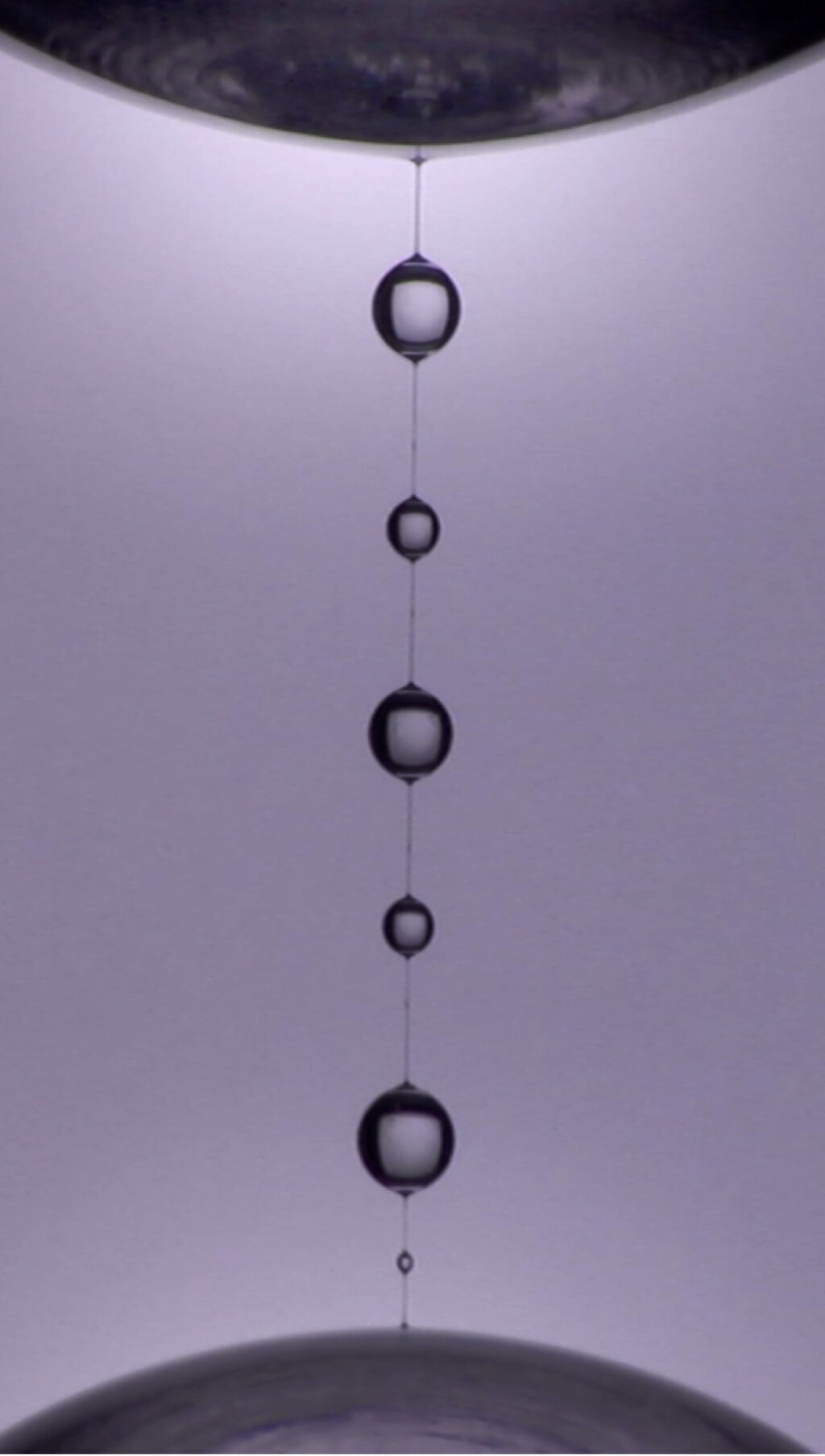
Viscosity is crucial for many applications. Motor oil needs to be viscous enough to stick to engine parts and lubricate them, but not so thick that it can't flow easily. For liquids, viscosity usually decreases as temperature increases—think of how runny warm honey becomes. For gases, the opposite is true: they become more viscous as they get hotter.
Let's test your understanding of these core properties.
What is the primary characteristic that distinguishes a fluid from a solid?
If a certain oil has a specific gravity of 0.92, what can you conclude?
Understanding these basic properties—density, pressure, temperature, and viscosity—is the first step to analyzing how any fluid will behave, from the air supporting a plane to the water flowing through a pipe.