Geothermal Energy Engineering and Economics
Geothermal Power Cycles
From Steam to Electricity
Once hot water or steam is brought to the surface from a geothermal reservoir, the next step is converting that thermal energy into electricity. The specific method used depends entirely on the characteristics of the fluid you're working with: its temperature, pressure, and whether it's mostly liquid or steam. There are three main technologies for this conversion: Dry Steam, Flash Steam, and Binary Cycle plants.
The most straightforward method is the Dry Steam plant. This approach is only possible with vapor-dominated reservoirs, where the underground resource is primarily high-pressure, superheated steam. The process is elegantly simple: the steam is piped directly from the production well to a turbine. As the steam expands and cools, it spins the turbine blades, which in turn drive a generator to produce electricity. After passing through the turbine, the lower-pressure steam is directed to a condenser, where it's cooled back into liquid water and then reinjected into the ground to replenish the reservoir.
Flash Steam Cycles
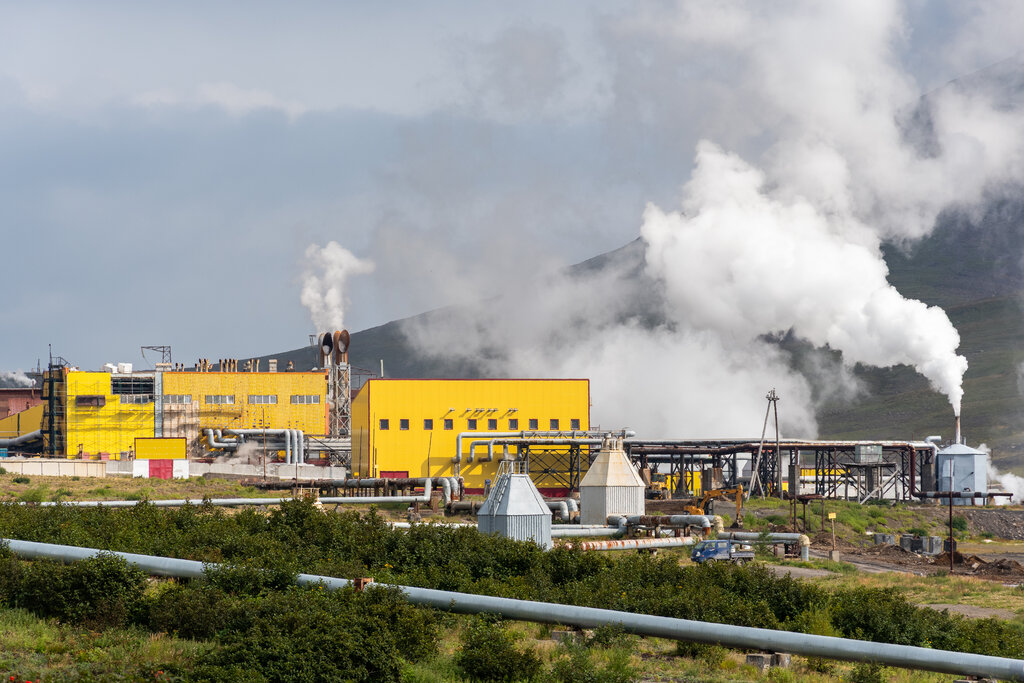
Liquid-dominated reservoirs are far more common than vapor-dominated ones. For these, we use Flash Steam plants. In a Single-Flash system, high-pressure hot water (typically over 180°C) is pumped from the reservoir into a vessel at the surface kept at a much lower pressure. This sudden pressure drop causes a portion of the liquid to rapidly boil, or "flash," into steam. This steam is then separated from the remaining hot water in a and piped to the turbine to generate electricity, similar to a dry steam plant. The leftover hot water, known as brine, is reinjected back into the reservoir.
To extract even more energy, a Double-Flash cycle can be implemented. After the first flash stage, the separated brine is still very hot. Instead of being immediately reinjected, it is directed into a second, lower-pressure vessel. This second pressure drop flashes an additional amount of steam. This lower-pressure steam is then fed into a separate, low-pressure stage of the turbine. While more complex and costly, a double-flash design can increase the power output of a plant by up to 20% from the same amount of geothermal fluid.
Binary Cycle Plants
What if the geothermal water isn't hot enough to flash efficiently into steam? For moderate-temperature resources (typically between 100°C and 180°C), we use Binary Cycle plants. These systems operate on a clever workaround: they use the geothermal water to heat a separate, that has a much lower boiling point than water.
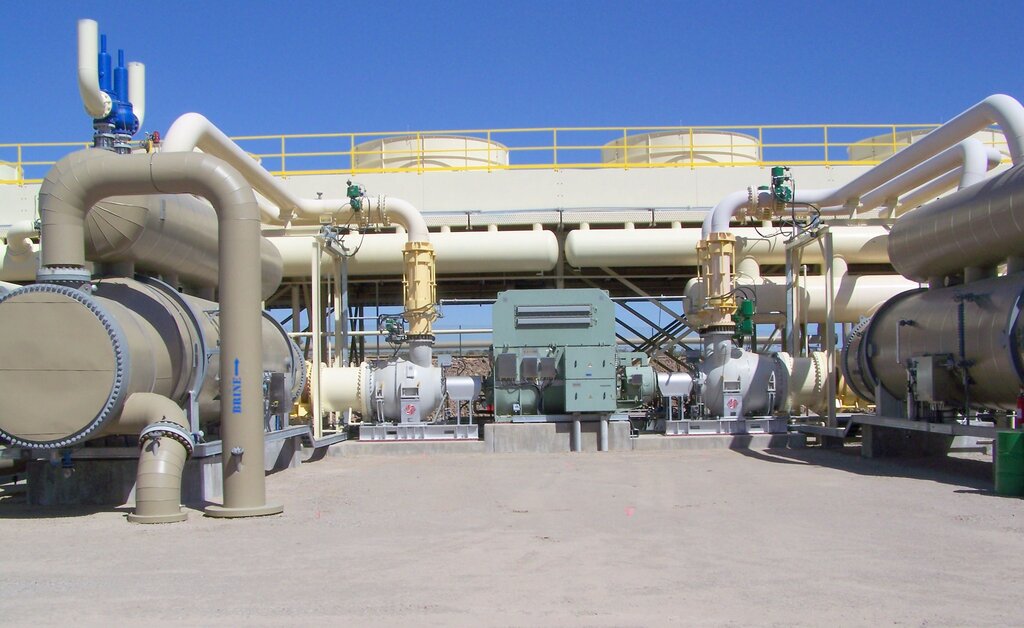
In a binary plant, the geothermal fluid is pumped through a heat exchanger, where it transfers its heat to the secondary fluid, which is in a separate closed loop. The geothermal water never comes into direct contact with the turbine. This secondary fluid, having been vaporized by the heat, expands through a turbine, generating electricity. After the turbine, the vapor is passed through a condenser (often air-cooled) that returns it to a liquid state, and it's pumped back to the heat exchanger to repeat the cycle. A major advantage is that the geothermal water is kept in a closed loop from production to injection, preventing the release of any dissolved gases into the atmosphere.
The most common type of binary cycle is the Organic Rankine Cycle (ORC), which uses an organic fluid like a hydrocarbon. A variation on this is the which uses a mixture of ammonia and water as the working fluid. Because this mixture boils over a range of temperatures instead of at a single point, it can more closely match the temperature profile of the geothermal brine as it cools in the heat exchanger. This can lead to higher thermal efficiency.
Efficiency in binary plants is further improved through regeneration. This process uses heat from the working fluid after it has left the turbine to preheat the liquid fluid before it enters the primary heat exchanger. By recovering this internal heat, the plant needs less thermal energy from the geothermal resource to complete the cycle, boosting overall efficiency.
Which type of geothermal power plant is most suitable for a vapor-dominated reservoir where the resource is primarily high-pressure, superheated steam?
What is the primary purpose of the 'flashing' process in a Flash Steam geothermal plant?