CISSP Certification Essentials
Security and Risk Management
The Core Principles of Security
At the heart of information security are three fundamental goals. They're often called the CIA triad, and they provide the foundation for almost every security decision.
Confidentiality, integrity, and availability—the CIA triad—are the three pillars of information security.
Think of them as three legs of a stool. If any one of them is weak, the entire stool becomes unstable. Let's break down each one.
Confidentiality
noun
Ensuring that information is not disclosed to unauthorized individuals, entities, or processes. It's about keeping secrets.
When you use your banking app, you expect that no one else can see your account balance. That's confidentiality. It's achieved through measures like passwords, encryption, and access control lists, which specify who gets to see what.
Integrity
noun
Maintaining the consistency, accuracy, and trustworthiness of data over its entire lifecycle. It means the data hasn't been tampered with.
Imagine a doctor changes a patient's medical record. If that change is unauthorized—say, altering a blood type from A+ to O-—the data's integrity has been compromised. This could have disastrous consequences. Integrity is about preventing unauthorized modifications.
Availability
noun
Ensuring that information is accessible when needed by authorized users.
If a website like an online store goes down, customers can't make purchases. The service isn't available. Availability ensures that systems and data are up and running when you need them. This involves protection against hardware failures, power outages, and attacks designed to shut services down.
Rules of the Road
The CIA triad tells us what we need to protect. Security governance, compliance, and ethics tell us how to do it in an organized and responsible way.
Security governance is the framework of policies, roles, and processes an organization establishes to oversee its security efforts. It's the high-level strategy. It answers questions like: Who is responsible for security? What are our security goals? How do we measure success? This ensures security isn't just a technical task but a core part of the business.
Compliance means following the rules set by outside parties. These can be legal and regulatory requirements imposed by governments, like the Health Insurance Portability and Accountability Act (HIPAA) for healthcare data or the General Data Protection Regulation (GDPR) in Europe for personal data. They can also be industry standards, like the Payment Card Industry Data Security Standard (PCI DSS) for handling credit card information.
Failing to comply with these rules can lead to heavy fines, legal action, and a loss of customer trust.
Finally, professional ethics are the moral principles that guide a security professional's behavior. This means acting honestly, protecting the privacy of individuals, and using skills responsibly. It's about doing the right thing, even when no one is watching.
Planning for Problems
No system is perfectly secure. Things can and do go wrong. Smart organizations plan for this inevitability through risk management and business continuity planning.
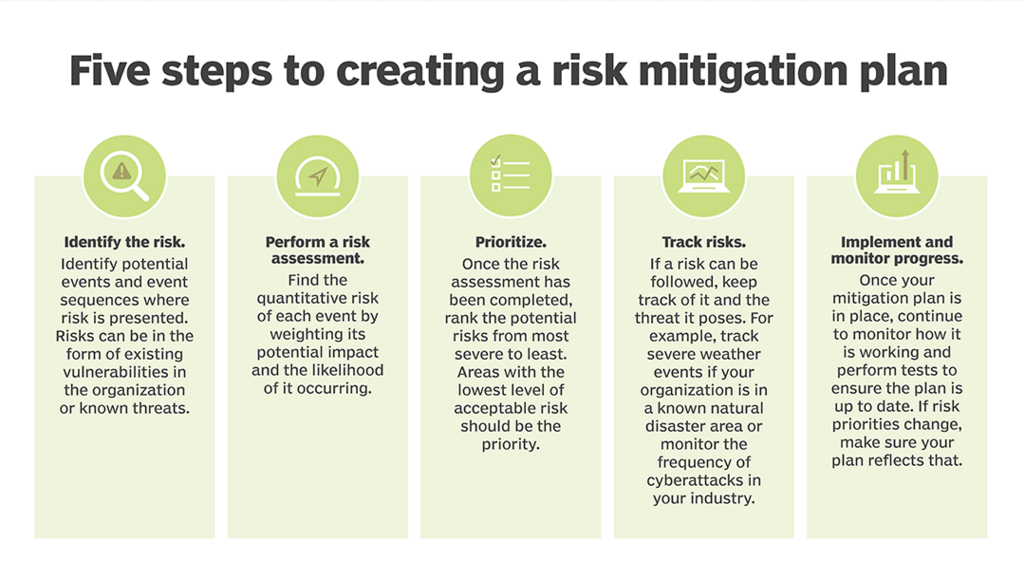
Risk management is the process of identifying potential threats, evaluating their likelihood and potential impact, and then deciding how to handle them. For example, a company might identify a ransomware attack as a major risk. They would then decide on a strategy: maybe they invest in better backups to mitigate the damage, buy cybersecurity insurance to transfer the financial risk, or accept a certain level of risk because the cost of perfect prevention is too high.
Business continuity planning (BCP) is a related concept that answers the question: "How do we keep the lights on when a disaster strikes?" This isn't just about cyberattacks. It could be a fire, a flood, or a power outage. A BCP outlines the procedures to get critical business functions running again as quickly as possible. Think of it like a fire drill for the whole company, ensuring everyone knows what to do in an emergency.
The Human Element
Technology is only one part of security. People are often the most critical component—and sometimes the weakest link.
Personnel security policies are designed to manage the human side of security. This starts with hiring, through background checks and clearly defining roles and responsibilities. It also includes managing access, ensuring employees only have permission to see the data they absolutely need to do their jobs (a principle called "least privilege"). And it covers what happens when someone leaves the company, like immediately revoking their access to all systems.
The most important people-focused strategy is security awareness training. Many cyberattacks rely on tricking people. Phishing emails, for example, try to fool employees into clicking malicious links or giving away their passwords. Training programs teach everyone in the organization how to spot these threats, understand security policies, and report suspicious activity. A well-trained workforce can be a powerful first line of defense.
Now, let's test your understanding of these foundational security principles.
A hospital discovers that a patient's allergy information was changed in their electronic medical record by an unauthorized person. Which component of the CIA triad has been primarily compromised?
An organization's internal framework of policies, roles, and processes for overseeing its security efforts is known as:
Understanding these core areas—from the CIA triad to the human element—is the first step in building a strong security posture. They provide the framework for all the technical and procedural controls that keep information safe.