World War II Unveiled
Aftermath
A New World Order
The end of World War II in 1945 wasn't just the end of a conflict; it was the start of a new global era. The old powers of Europe were exhausted, their cities in ruins and their economies shattered. Two new superpowers, the United States and the Soviet Union, emerged from the rubble, their immense military and industrial might poised to reshape the world.
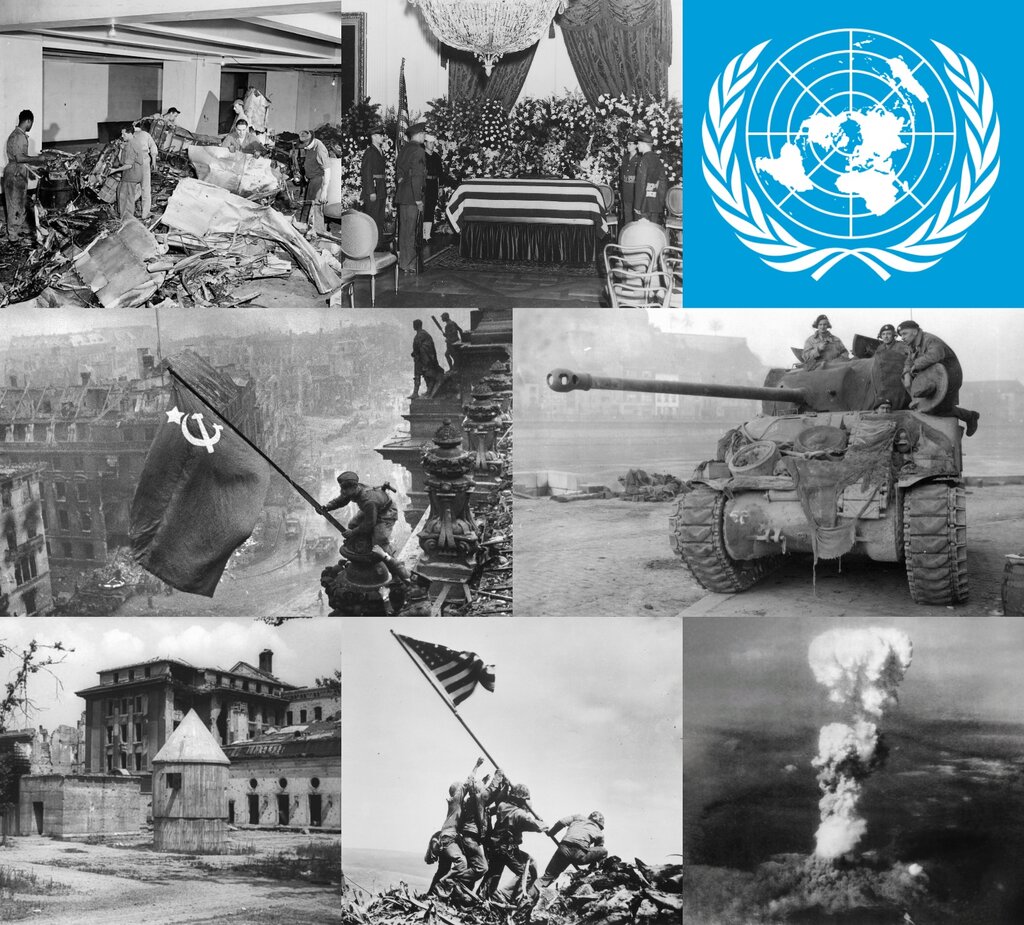
In the immediate aftermath, the victorious Allies faced a monumental task: how to prevent such a devastating war from ever happening again. The League of Nations, created after World War I, had failed spectacularly. A new, more robust international body was needed.
Delegates from 50 countries met in San Francisco in April 1945, even as the final battles raged in Europe. Their goal was to create an organization to maintain international peace and security. The result was the United Nations. The UN Charter was signed on June 26, 1945, and officially came into existence on October 24 of that year. Unlike the League, the UN was given more authority, including the power to deploy peacekeeping forces.
The Iron Curtain Descends
The wartime alliance between the United States, Great Britain, and the Soviet Union was one of convenience. Once their common enemy, Nazi Germany, was defeated, their deep ideological differences quickly surfaced. The US championed democracy and capitalism, while the Soviet Union was committed to communism. This clash of ideals set the stage for a new kind of conflict: the Cold War.
This was not a traditional war with direct fighting between the two superpowers. Instead, it was a period of intense geopolitical tension, military buildups, and proxy wars fought in other parts of the world. Soviet leader Joseph Stalin moved to install communist governments in the Eastern European countries his army had liberated, creating a buffer zone of satellite states. Winston Churchill famously declared in 1946 that an "iron curtain" had descended across the continent, separating the democratic West from the communist East.
The fundamental disagreement was over the future of a post-war Europe. The West wanted free elections and self-determination; the Soviet Union wanted a sphere of influence to protect itself from future invasion.
Nowhere was this division more visible than in Germany. After Germany's surrender, the Allies divided the country and its capital, Berlin, into four occupation zones, administered by the US, Great Britain, France, and the Soviet Union.
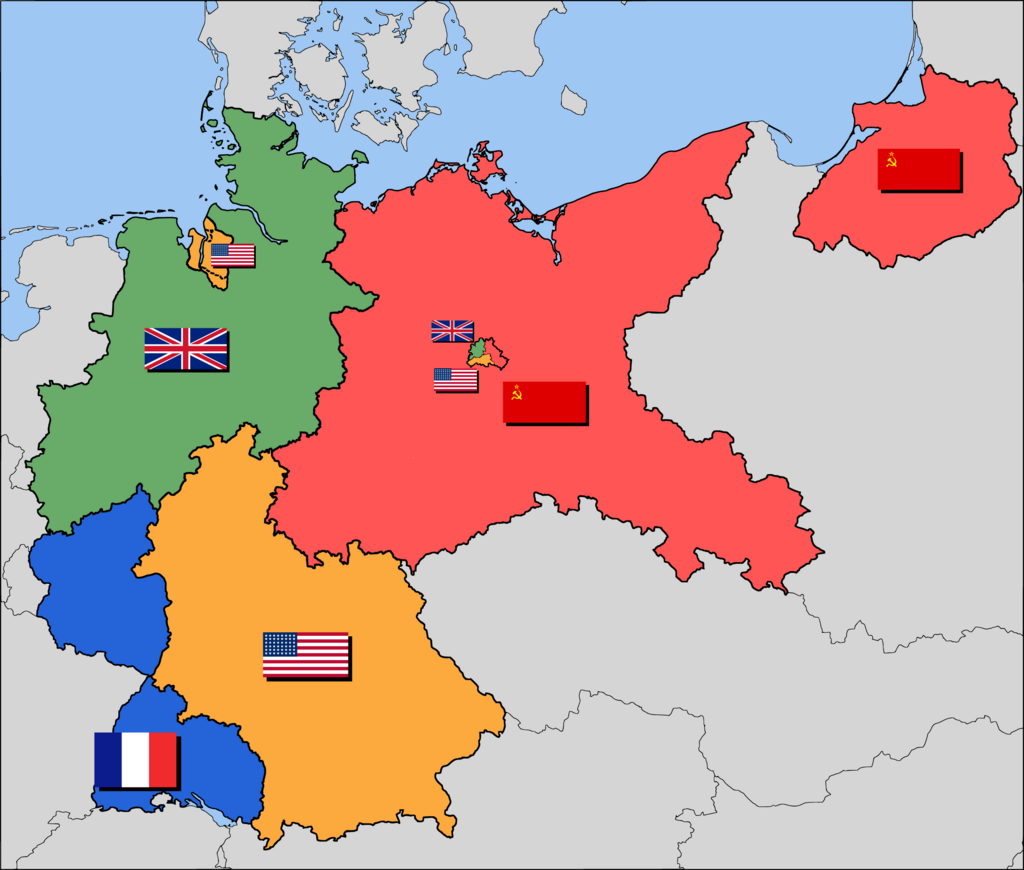
The western zones, controlled by the democratic powers, were eventually merged to form the Federal Republic of Germany (West Germany) in 1949. In response, the Soviets established the German Democratic Republic (East Germany) in their zone. Berlin, located deep within East Germany, remained a divided city, a stark symbol of the Cold War divide.
Justice and Reconstruction
With the war over, the Allies had to address the unprecedented crimes committed by the Nazi regime. From 1945 to 1946, a series of military tribunals were held in Nuremberg, Germany, to prosecute prominent Nazi leaders for war crimes, crimes against peace, and crimes against humanity. This was a landmark moment in international law.
Tribunal
noun
A court of justice or a forum for judgment.
The Nuremberg Trials established the principle that individuals could be held accountable for their actions during wartime, even if they were following orders. Twenty-two high-ranking Nazis were tried; twelve were sentenced to death, others received long prison sentences, and a few were acquitted. These trials laid the groundwork for the future establishment of the International Criminal Court.
Beyond justice, there was the immense task of rebuilding. Much of Europe and Asia lay in ruins. To prevent economic collapse and the potential spread of communism in Western Europe, the United States launched the Marshall Plan in 1948. It provided over $13 billion in economic aid to help rebuild infrastructure, restart industries, and restore stability. In Japan, the US led an occupation that oversaw the country's demilitarization, democratization, and economic reconstruction.
Which two nations emerged as the dominant global superpowers immediately following the end of World War II?
What was the primary stated purpose for the creation of the United Nations in 1945?
The end of the war reshaped global politics, creating new alliances, new conflicts, and new institutions that continue to influence the world today.