World War II Unveiled
Interwar Period
An Anxious Peace
The end of World War I in 1918 was meant to usher in a new era of peace. Instead, the next two decades were a time of deep uncertainty and turmoil. This period, known as the interwar period, was marked by economic collapse, political extremism, and unresolved tensions that would ultimately lead to an even more devastating global conflict.
The twenty years following World War I were considered an Age of Anxiety because of the negative impacts the war had on most aspects of life at the time.
A Flawed Treaty
The first major event of this era was the signing of the Treaty of Versailles in 1919. This treaty officially ended the war but was largely drafted by the victors—Britain, France, and the United States—without German participation. Its terms were harsh and aimed to punish Germany, which the Allies blamed for starting the war.
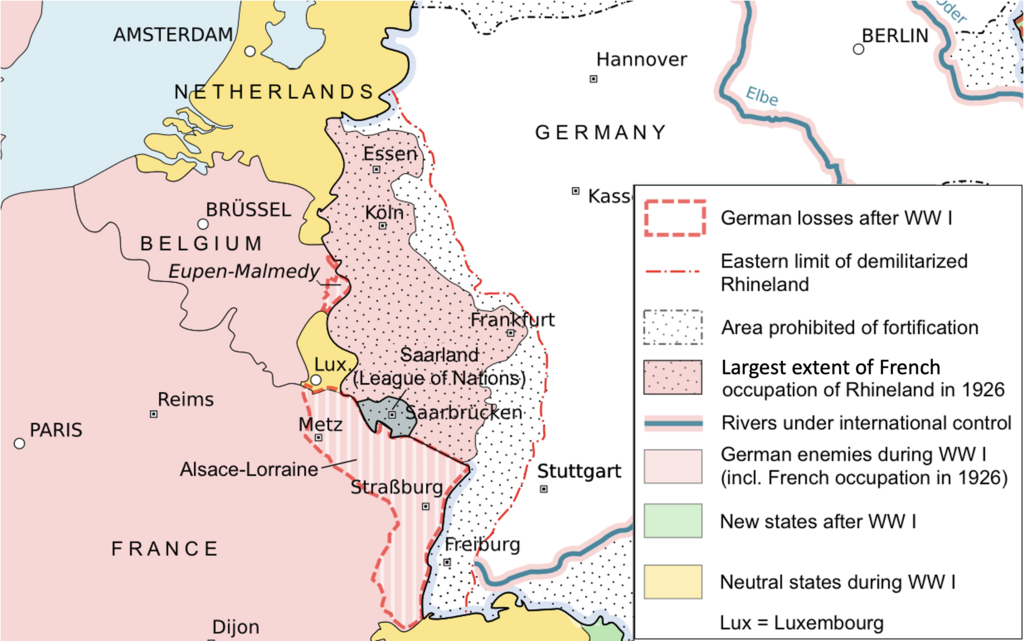
Key provisions forced Germany to:
- Accept full responsibility for the war (the "War Guilt Clause").
- Pay enormous financial reparations to the Allied powers.
- Cede significant territory, including Alsace-Lorraine to France.
- Drastically reduce its military, including demilitarizing the Rhineland, a key industrial area bordering France.
In Germany, the treaty was widely condemned as a Diktat—a dictated peace. This sense of national humiliation created deep resentment and instability in the new German government, the Weimar Republic.
Economic Collapse
The 1920s brought a brief period of apparent prosperity, often called the "Roaring Twenties." But this economic boom was built on fragile foundations. In October 1929, the U.S. stock market crashed, triggering the Great Depression. The effects quickly spread worldwide as American banks called in loans and international trade plummeted.
Businesses failed, and unemployment soared. People lost their savings, homes, and sense of security. The economic desperation caused many to lose faith in their democratic governments, which seemed powerless to solve the crisis. This widespread despair created fertile ground for radical new ideas and charismatic leaders promising simple solutions.
Deteriorating economic conditions in Germany in the 1930s created an angry, frightened, and financially struggling populace open to more extreme political systems, including fascism and communism.
The Rise of Totalitarianism
As democratic nations struggled, a new and aggressive form of government took hold: totalitarianism. In a totalitarian state, the government exerts total control over every aspect of public and private life, led by a single party and a dictatorial leader. Three nations, in particular, moved down this path.
| Country | Leader | Ideology | Goals |
|---|---|---|---|
| Italy | Benito Mussolini | Fascism | Restore Roman glory, expand territory in the Mediterranean. |
| Germany | Adolf Hitler | Nazism | Overturn the Treaty of Versailles, racial purification, territorial expansion (Lebensraum). |
| Japan | Emperor Hirohito / Hideki Tojo | Militarism | Secure resources, establish dominance over East Asia. |
In Italy, Benito Mussolini's Fascist party capitalized on post-war disappointment to seize power. In Germany, Adolf Hitler and the Nazi Party exploited the public's anger over the Versailles Treaty and the economic chaos to win support. They promised to restore German honor, rebuild the economy, and create a powerful new empire. In Japan, a powerful military faction gained influence over the government, promoting aggressive expansion to secure natural resources and establish an empire in Asia.
The Policy of Appeasement
Faced with this rising aggression, the major democratic powers of Europe, particularly Britain and France, were hesitant to act. Still reeling from the immense loss of life in World War I, their populations had little appetite for another conflict. They pursued a policy of appeasement: giving in to the demands of an aggressor to avoid war.
This policy was most famously applied to Hitler's Germany. When Hitler began to openly violate the Treaty of Versailles by rearming Germany and remilitarizing the Rhineland, the Allies did little to stop him. The high point of appeasement came at the Munich Conference in 1938, where Britain and France agreed to let Hitler annex the Sudetenland, a part of Czechoslovakia, in exchange for a promise of peace.
Instead of satisfying Hitler, appeasement only emboldened him. It signaled that the Western democracies lacked the will to enforce international agreements, encouraging him to pursue even more ambitious territorial claims.
The uneasy peace of the interwar years was crumbling. The combination of a punitive treaty, a global economic crisis, the rise of aggressive dictatorships, and the failure of democratic powers to stand against them created a perfect storm. The stage was set for another world war.
Which of the following was NOT a provision of the Treaty of Versailles imposed on Germany?
The widespread economic desperation caused by the Great Depression led to which major political shift in many countries?