The Making of the Christian Bible
Early Interpretations
Beyond the Literal Word
Once the books of the Bible were written and collected, a new challenge emerged: how to understand them. Early Christian thinkers, known as the Church Fathers, believed the scriptures were divinely inspired. This meant the texts held truths that went far beyond the surface-level stories and laws.
These theologians didn't just read the Bible; they prayed with it and wrestled with its meaning. They saw it as a living text, full of hidden connections and spiritual significance. For them, interpretation was a way to uncover the deeper mysteries of faith revealed by God.
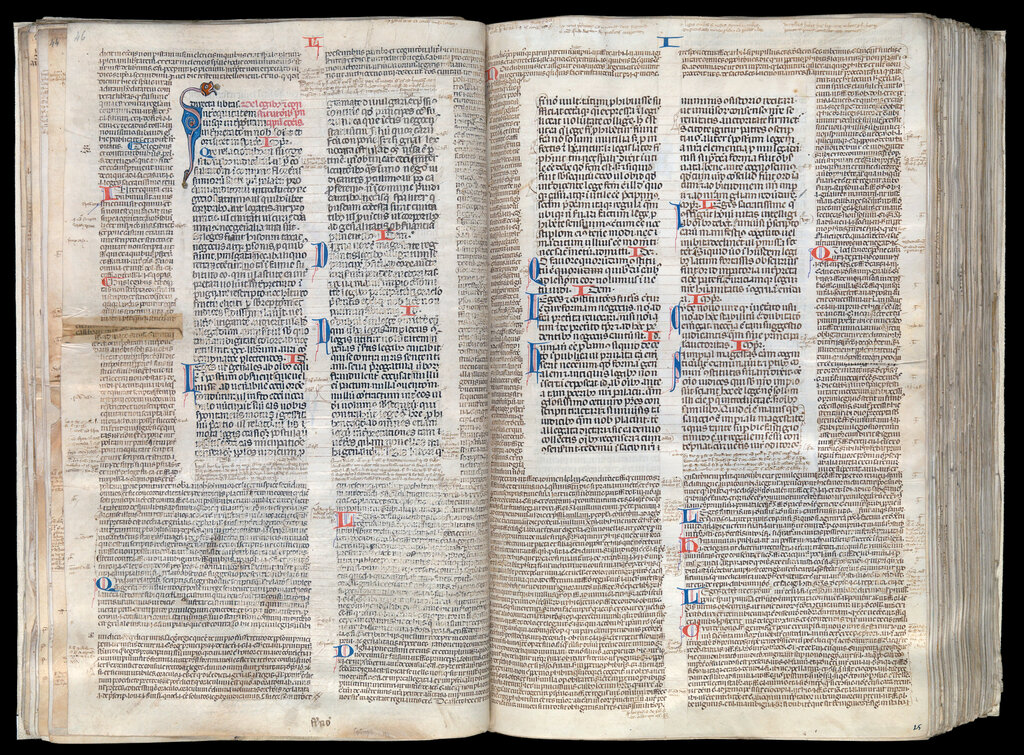
Thinkers like Origen of Alexandria in the 3rd century argued that just as a human being is made of body, soul, and spirit, scripture also has different layers of meaning. This idea laid the groundwork for a rich tradition of interpretation that would shape Christian thought for centuries.
The Four Senses
Over time, this multi-layered approach was formalized into a system known as the four senses of scripture. This framework allowed interpreters to explore a single passage from multiple angles, drawing out its full spiritual richness. The goal was to see how every part of the Bible pointed toward the central truths of the Christian faith.
The four senses are:
| Sense | Question It Answers | Example: "Jerusalem" |
|---|---|---|
| Literal | What happened? | The historical city in Judea. |
| Allegorical | What does it reveal about Christ or the Church? | The Church of Christ. |
| Moral | How should I live? | The soul of the faithful person. |
| Anagogical | What is our ultimate hope? | The heavenly city, our eternal home. |
This method allowed early Christians to connect the Old and New Testaments in profound ways. For example, the literal story of Jonah being swallowed by a large fish and emerging three days later was seen allegorically as a prefiguration of Christ's death and resurrection. The moral sense would ask what this teaches about repentance, while the anagogical sense might see it as a symbol of the soul's salvation from the darkness of sin.
This interpretive lens transformed the Hebrew scriptures into a Christian Old Testament, where every story, law, and prophecy was seen as pointing toward Jesus.
From Interpretation to Doctrine
These interpretive methods were not just intellectual exercises; they were the tools used to build Christian theology. When early church councils met to define core doctrines like the nature of Christ (Christology) or the Trinity, their arguments were deeply rooted in scriptural interpretations.
For instance, the story in Genesis where three men visit Abraham was widely interpreted allegorically as a manifestation of the Trinity. Passages from the Old Testament prophets were read as direct predictions of Jesus's life and ministry. This way of reading helped the early church articulate what it believed and defend those beliefs against differing views.
The only way to accomplish this is through the exegesis of the Scripture by using the literal grammatical-historical hermeneutic.
Church Fathers like Augustine of Hippo became masters of this approach. He taught that any interpretation must ultimately lead to a greater love of God and neighbor. For Augustine, the Bible was a vast and complex text, but its ultimate purpose was simple: to guide humanity back to its Creator.
These early methods established a lasting principle: reading the Bible is an active, faith-filled process. It involves looking beyond the surface to understand how ancient words speak to timeless truths.
Ready to test your knowledge?
What was the foundational belief of the early Church Fathers that drove their approach to interpreting the Bible?
The analogy that scripture, like a human, is composed of body, soul, and spirit, which laid the groundwork for multi-layered interpretation, is attributed to which thinker?
By developing these rich interpretive traditions, the Church Fathers ensured that the Bible would not be just a historical artifact, but a source of ongoing guidance and spiritual insight.