Mastering the Flood Fill Algorithm
Recursion Limits
When Recursion Runs Out of Room
Our recursive flood fill function works beautifully for small grids. But what happens if you try to fill a high-definition image with millions of pixels? The program might crash. This isn't a bug in our logic, but a fundamental limit of recursion.
Remember the function call stack from our earlier discussion? Each time our floodFill function calls itself for a neighbor, the computer adds a new task to a pile. It has to remember where it was and what it was doing for every single active call. For a huge area, that pile grows incredibly tall, consuming more and more of the computer's short-term memory.
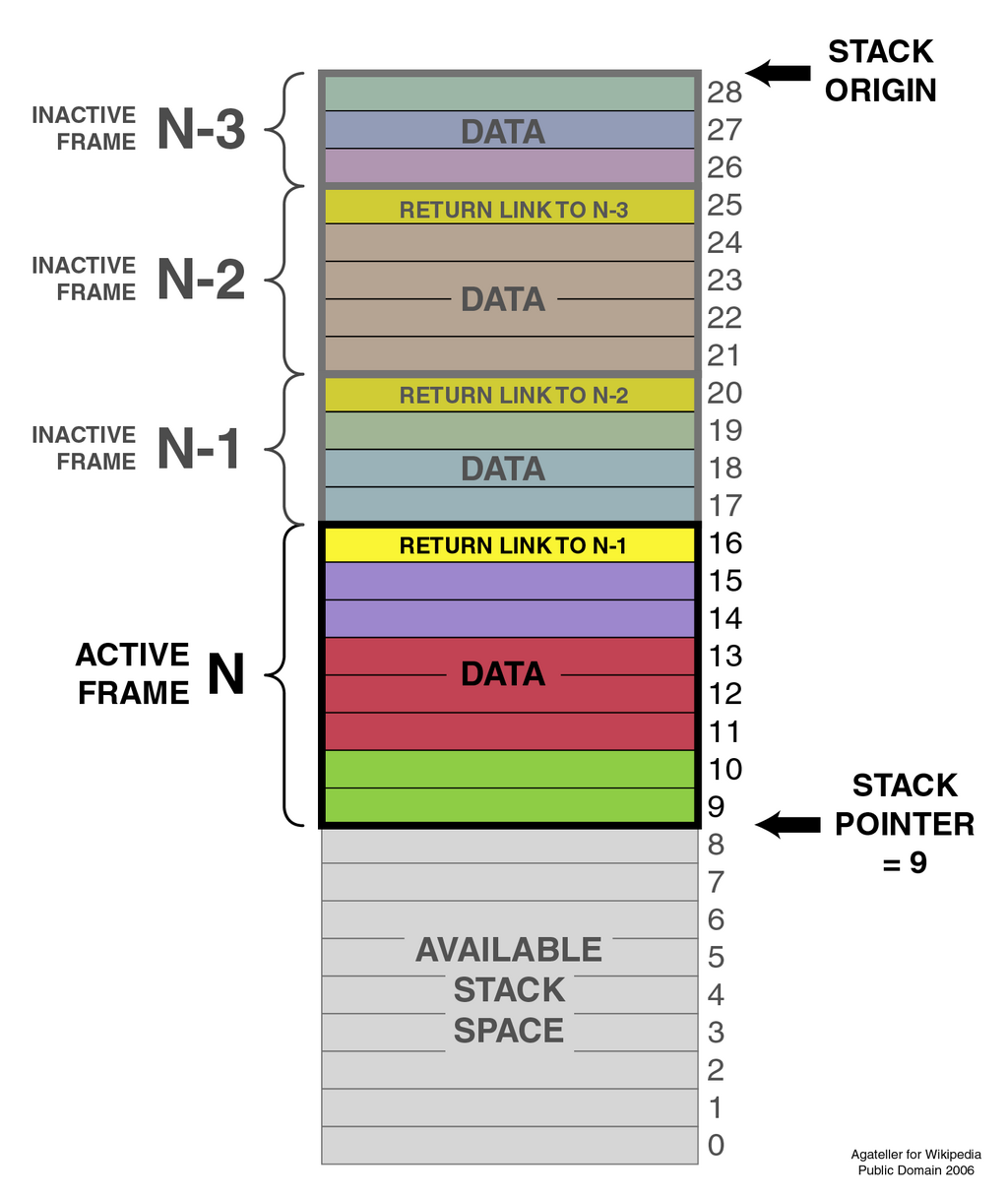
Eventually, the pile gets too high and topples over. In programming, this crash has a specific name: a Stack Overflow error. The program has run out of stack memory to track all the recursive calls. It's a common problem that even professional programmers encounter.
Thinking Iteratively
So, how do we fill massive areas without crashing? We switch from recursion to an approach called iteration. Instead of making a chain of function calls, we create a to-do list.
The iterative approach works like this:
- Create a list of pixels we need to check.
- Add the starting pixel to the list.
- As long as the list isn't empty, take a pixel off, color it, and add its valid neighbors to the list.
- Repeat until the list is empty.
This way, we aren't creating a deep stack of nested calls. We're just managing a simple list of coordinates. This process still visits every necessary pixel, but it uses memory differently and avoids the risk of a Stack Overflow. The special kind of to-do list we use for this is called a ., a fundamental data structure in computer science.
While recursion is an elegant and powerful tool for problems that are naturally divisible into smaller pieces, the iterative queue-based approach is often the professional's choice for tasks like flood fill in real-world applications. It's more robust and won't crash on large images.
What is the specific error called when a program crashes because it has made too many nested recursive function calls, exhausting its allocated memory for tracking them?
Instead of using recursion, a more robust way to implement a flood fill algorithm for large images is to use an iterative approach with a specific data structure to manage a 'to-do list' of pixels. What is this data structure called?
Understanding these limitations is a key part of growing as a programmer. It's not just about knowing how to solve a problem, but also about choosing the right tool for the job.