Mastering Constructive Feedback
Introduction to Feedback
What is Feedback?
Feedback is information about the result of an action. This information then circles back to influence the next action. Think about adjusting the water temperature in a shower. You turn the knob (the action), feel the water, and decide whether to turn it more or less (the next action). That feeling—the water being too hot or too cold—is feedback.
Feedback
noun
Information about a past action or event that is used to influence or modify future actions or events.
This simple loop of action, result, and new action is everywhere. It’s a fundamental concept for any system that needs to adapt, learn, or maintain a stable state. Without feedback, systems would just follow a pre-set path, unable to correct mistakes or adjust to changing conditions.
Why Feedback Matters
Feedback allows systems to be self-regulating. Imagine driving a car without being able to see where you're going. You couldn't make the small corrections needed to stay in your lane. The visual information you get from the road is feedback that helps you control the car.
From a simple thermostat keeping your home comfortable to complex ecosystems maintaining balance, feedback is what makes control possible. It’s the difference between a system that works and one that spirals out of control.
In human contexts, feedback is just as crucial. It's how we learn new skills, improve our performance, and build relationships. A musician listens to the sounds they make to play in tune, and a chef tastes their food to get the seasoning just right.
One of the key concepts in systems thinking is recognising feedback loops – the ways in which actions create reactions that either reinforce or counteract the original situation.
The Two Flavors of Feedback
Feedback generally comes in two main types: negative and positive. These terms don't mean 'bad' or 'good.' Instead, they describe how the feedback affects the system.
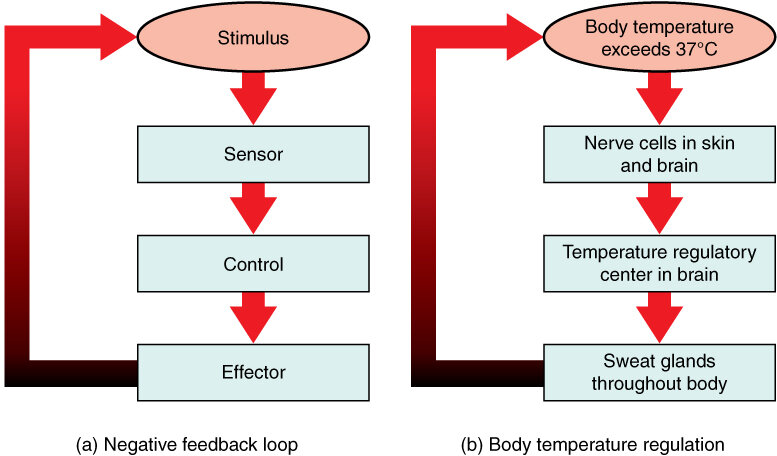
Negative feedback works to stabilize a system. It counteracts change, pushing the system back toward a target state. It’s a balancing force.
The thermostat is a classic example of a negative feedback loop. When the room gets too warm, the thermostat sends a signal to turn off the heat. When it gets too cold, it signals the heat to turn back on. The system is always working to reduce the difference between the actual temperature and the desired temperature.
Positive feedback amplifies or reinforces a change. Instead of correcting course, it pushes the system further in the same direction. It’s a snowball effect.
A common example is the high-pitched squeal you hear when a microphone gets too close to a speaker. The microphone picks up a sound from the speaker, amplifies it, and sends it back out through the same speaker. This loop repeats, getting louder and louder each time, until the system is overwhelmed.
| Type | Effect on System | Goal | Example |
|---|---|---|---|
| Negative Feedback | Stabilizing | Maintain equilibrium | A thermostat regulating room temperature |
| Positive Feedback | Amplifying | Drive change | A microphone squeal |
Feedback in Action
Once you know what to look for, you can see feedback loops operating in all kinds of systems.
- Biology: Your body regulates blood sugar with a negative feedback loop. After you eat, your blood sugar rises, prompting the pancreas to release insulin. Insulin helps cells absorb the sugar, bringing your blood sugar level back down.
- Economics: A stock market crash can be fueled by positive feedback. When prices start to fall, people panic and sell their stocks. This mass selling pushes prices down even further, causing more panic and more selling.
- Social Dynamics: The spread of a viral video is another example of positive feedback. The more people who see and share the video, the more visible it becomes, leading even more people to see and share it.
- Engineering: The cruise control in a car uses negative feedback. A sensor measures the car's speed. If the car slows down going up a hill, the system gives the engine more gas. If it speeds up going downhill, it reduces the fuel. The goal is to keep the speed constant.
Now, let's check your understanding of these core concepts.
What is the primary function of feedback in a system?
A thermostat maintaining a constant room temperature is a classic example of which type of feedback loop?
Understanding feedback is the first step toward understanding how complex systems—from our own bodies to the global climate—work. It's a simple idea with powerful implications.