Master Your Golf Swing
Common Swing Faults Diagnosis
Diagnosing Your Misses
Every frustrating shot in golf isn't random. It's a piece of feedback. A slice, a hook, or a topped ball is simply the result of a specific error in your swing mechanics. Think of yourself as a detective. The ball flight is the clue, and the cause is hidden somewhere in your setup, backswing, or downswing. By understanding why a certain miss happens, you can stop applying random fixes and start implementing targeted solutions.
A bad shot tells a story. Your job is to learn its language.
The Dreaded Slice
The slice, that banana-shaped curve to the right (for a right-handed golfer), is the most common miss in golf. It robs you of distance and lands you in trouble. In almost all cases, a slice is the result of a simple physics problem: the clubface is open relative to the swing path at impact. This imparts sidespin on the ball, causing it to curve.
This open face is usually caused by an ''. Your club approaches the ball from outside the target line and cuts across it, moving back inside the line after impact. This glancing blow is often combined with a failure to properly release the club, leaving the face wide open. Check your grip first; a weak grip, where your hands are rotated too far to the left, makes it very difficult to square the face.
To correct this, you need to feel the opposite. Try placing a headcover or another object a few inches outside and behind your ball. Your goal is to swing without hitting the object, forcing your club to approach from the inside. Focus on starting your downswing with your lower body, which helps drop the club 'into the slot' on the correct plane.
Taming the Hook
The hook, a sharp curve to the left, is the slice's evil twin. It's caused by the opposite mechanical flaw: a relative to your swing path. This usually happens when your swing path is too much from inside-to-out, combined with an overactive release of the hands through impact. The club comes from too far behind your body and your hands roll over too quickly, shutting the face.
A grip that is too 'strong'—with the hands rotated too far to the right—can pre-set this fault. While an inside-out path is good, an excessive one is a problem. To fix it, feel like your hands and arms swing more in sync with your body turn. A good drill is to practice finishing your swing with the club pointing to the left of your target, which helps prevent the club from getting stuck behind you and forces a more neutral path.
Ground Before Ball
Fat and thin shots are all about controlling the low point of your swing. They aren't directional misses like a slice or hook, but rather vertical ones. You're either hitting the ground before the ball (fat) or hitting the top half of the ball (thin).
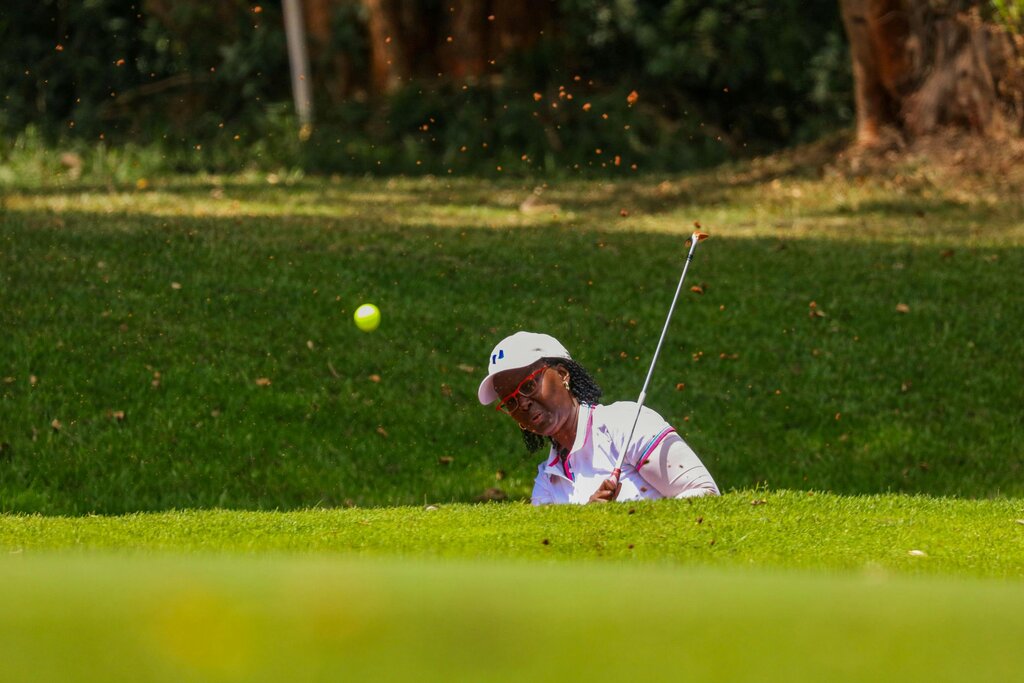
Fat shots happen when the bottom of your swing arc occurs behind the golf ball. The primary cause is a breakdown in posture or an incorrect weight shift. If your weight hangs back on your trail foot during the downswing, your low point will naturally shift behind the ball. To fix this, ensure your weight moves toward the target as you start your downswing. A great drill is to place a towel on the ground about six inches behind your ball. Your goal is to miss the towel and hit the ball, ensuring your low point is at or after the ball.
Thin shots are the opposite. The low point of your swing is too high, causing the leading edge of the club to strike the equator of the ball. This often happens when a player lifts their chest or head through impact in an attempt to help the ball into the air. Remember, you must hit down to make the ball go up. Focus on keeping your chest pointed down at the ball through the impact zone. Imagine there's a second ball stacked directly on top of yours, and your goal is to hit the bottom one.
Finally, there are shanks. This is where the ball is struck on the hosel of the club—the part where the shaft connects to the clubhead. It's often caused by setting up too close to the ball or by shifting your weight towards your toes during the swing, pushing the clubhead further away from your body. The fix is often as simple as taking a small step back from the ball at address.
For a right-handed golfer, what is the primary cause of a sliced golf shot (a ball that curves significantly to the right)?
A player consistently hits the ground before the ball, resulting in "fat" shots. What is the most likely reason for this?
By learning to diagnose the root cause of your bad shots, you can turn a frustrating round into a productive practice session. Every swing gives you data you can use to get better.