Lithium's Float Failure
Density and Buoyancy of Elements
A Tale of Two Elements
You've already learned the rules of density and buoyancy. Now let's see them in action by comparing two very different elements: lithium and oxygen. One is a solid metal, the other is an invisible gas. Their densities are worlds apart, and that difference dictates how they behave.
Lithium the Lightweight Metal
When you think of metal, you probably picture something heavy that sinks straight to the bottom of a pool. Lithium breaks that stereotype. It's the least dense of all solid elements at room temperature.
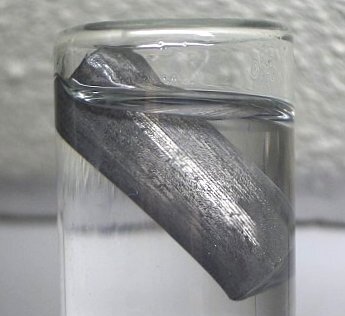
Lithium has a density of about 0.534 g/cm³. Since we know the density of water is about 1 g/cm³, we can immediately see that lithium is only about half as dense. Because its density is less than water's, lithium is positively buoyant and floats. It doesn't just float, it skitters across the surface, reacting with the water as it goes.
A metal that floats? Lithium’s low density makes it an exception to the rule.
Oxygen an Everyday Gas
Next, let's look at oxygen, the gas essential for life. It might seem weightless, but it has mass and takes up volume, which means it has a density.
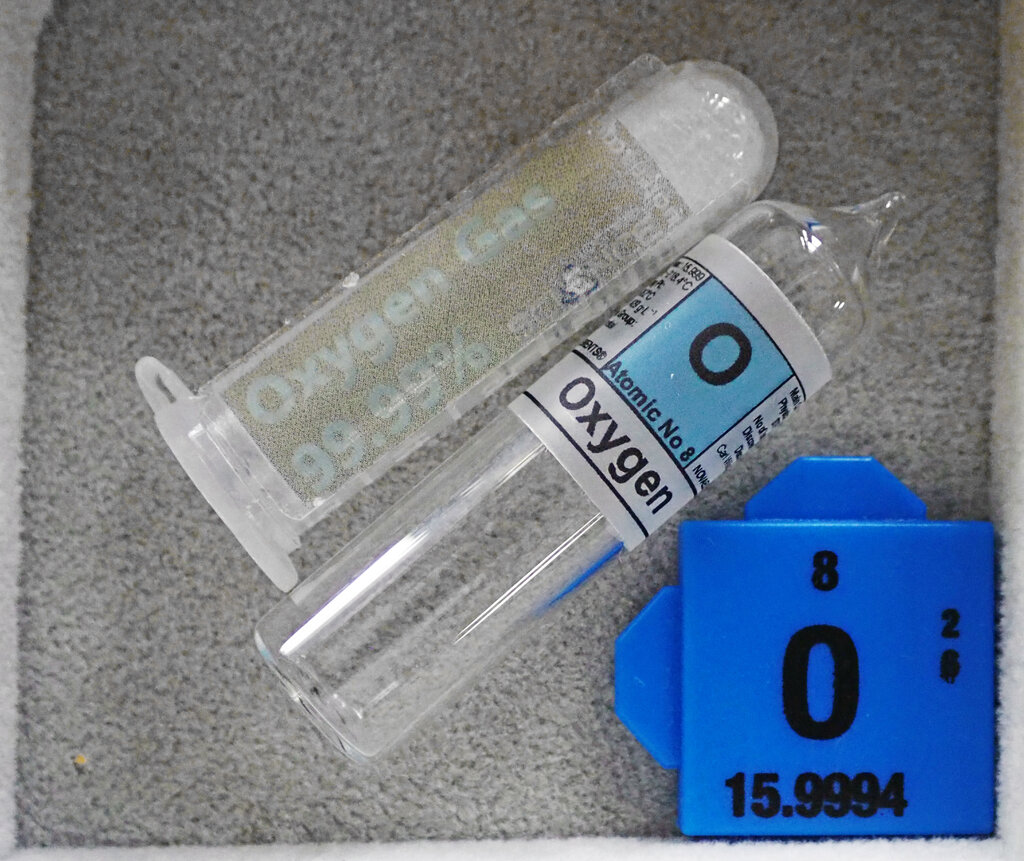
Oxygen's density is incredibly low, only about 0.00143 g/cm³. This is far, far less than the density of water. It's so low that it's hard to even compare it to a solid like lithium.
Bubbling oxygen through water is a perfect demonstration of buoyancy. The gas is so much less dense than the liquid that it rushes upward to escape.
Putting It All Together
Comparing these two elements side-by-side reveals just how vast the range of densities can be. A chunk of lithium and a balloon full of oxygen might take up the same space, but their masses—and therefore their densities—are dramatically different.
| Element | State (at STP) | Density (g/cm³) | Behavior in Water |
|---|---|---|---|
| Lithium | Solid | 0.534 | Floats |
| Oxygen | Gas | 0.00143 | Rises and bubbles out |
| Water | Liquid | ~1.0 | N/A |
Lithium's density is about 373 times greater than oxygen's. This huge difference is why one is a solid you can hold and the other is a gas that disperses into the air. Understanding these properties is key for chemists and engineers who use these elements to create everything from batteries to rocket fuel.
Ready to test your knowledge on these concepts?
Why does a piece of lithium metal float when placed in water?
An object will sink in water if its density is greater than approximately 1 g/cm³. Based on this, which of the following statements is true?