Laplace Transforms for Advanced Learners
Operator Theory Perspective
The Transform as a Linear Operator
The Laplace Transform is more than just a calculation; it's a continuous linear operator. It maps a function from a vector space of time-domain functions to a different vector space of complex-frequency functions, . This mapping isn't arbitrary. It's defined by an integral operation where the function is multiplied by an integral kernel and integrated over time.
The limits of integration depend on whether we're using the unilateral transform (), which is common for causal systems, or the bilateral transform (), which considers the function's entire history. The linearity of the integral ensures that the Laplace Transform itself is a linear operator: . This property is fundamental, allowing us to decompose complex problems into simpler parts.
The Complex Frequency Domain
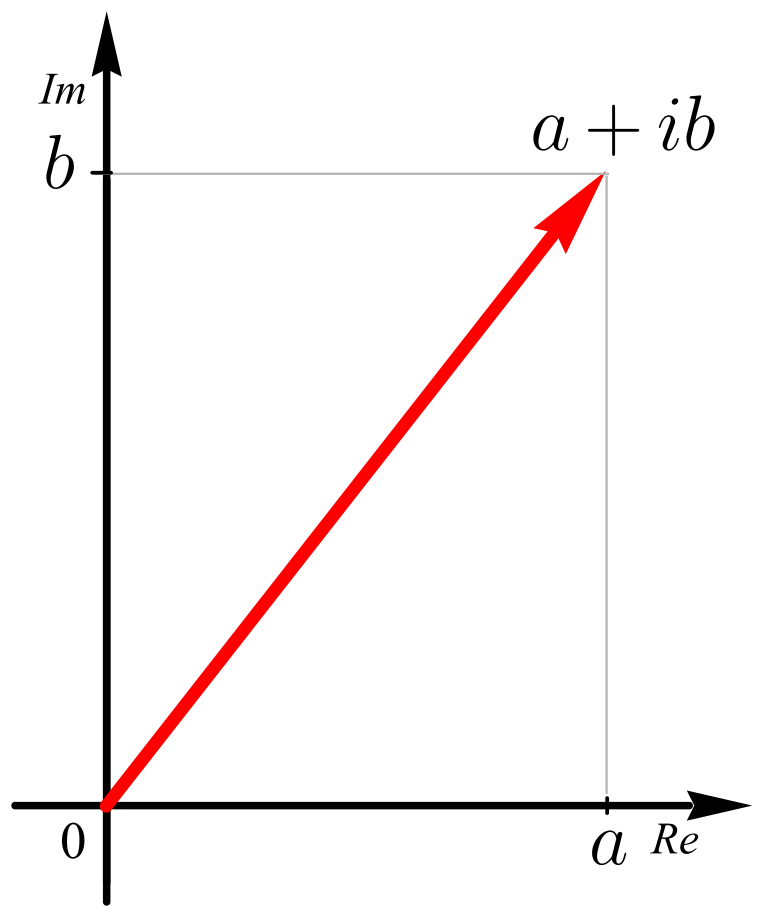
The true power of the Laplace Transform comes from its use of a complex frequency variable, . While the Fourier Transform uses a purely imaginary frequency, , to analyze steady-state sinusoids, the Laplace Transform generalizes this.
By incorporating the real part, , the Laplace Transform can analyze signals that grow or decay over time, such as the transient response of a circuit or the behavior of an unstable system. The Fourier Transform, which is limited to the axis, cannot handle functions that don't converge to zero as . The Laplace Transform overcomes this by finding a region in the complex plane where an appropriate scaling factor makes the integral converge.
Region of Convergence
The transform integral doesn't converge for all values of . The set of complex values for which the integral is finite is called the Region of Convergence (ROC). The ROC is not just a mathematical curiosity; it's essential for defining the transform uniquely. Two different time-domain functions can have the same algebraic expression for but different ROCs.
The function is only fully defined by its mathematical expression and its corresponding Region of Convergence.
Properties of the ROC depend on the nature of the signal :
- Right-sided signals, including causal signals that are zero for , have an ROC that is a right half-plane, like .
- Left-sided signals, which are zero for , have an ROC that is a left half-plane, like .
- Two-sided signals have an ROC that is a vertical strip, like , if it exists at all.
- Finite-duration signals have an ROC that is the entire s-plane.
The connection to the Fourier Transform is direct and revealing. If we set , the Laplace kernel becomes , which is precisely the kernel of the Fourier Transform. This means the Fourier Transform of a function is simply its Laplace Transform evaluated along the axis (). However, this is only valid if the axis is included within the Region of Convergence. If the ROC does not contain the imaginary axis, the standard Fourier Transform of the function does not converge, but the Laplace Transform still provides a valid frequency-domain representation.
The Laplace transform converts a time-domain function (a signal that changes over time) into a frequency-domain representation — essentially translating calculus problems into algebraic ones.
Test your understanding of the Laplace Transform as a linear operator.
What is the primary role of the Region of Convergence (ROC) in the context of the Laplace Transform?
The property described by the equation is known as:
Understanding the Laplace Transform from this operator theory perspective provides a robust foundation for analyzing a wide range of systems and signals.