Kubernetes Fundamentals for VMware Users
Introduction to Kubernetes
What Is Kubernetes?
Imagine you're conducting a massive orchestra. You don't play any instruments yourself, but you make sure every musician starts on time, plays at the right volume, and works in harmony with the others. If one violinist breaks a string, you quickly signal another to take their place. This is what Kubernetes does for modern software.
In today's world, applications aren't single, monolithic programs anymore. They're often broken down into smaller, independent services called containers. Think of each musician as a container. As applications grow, managing hundreds or even thousands of these containers manually becomes impossible. You need a conductor.
Kubernetes is an open source container orchestration platform that automates many of the manual processes involved in deploying, managing, and scaling containerized applications.
Originally developed by Google, Kubernetes (often shortened to K8s, because there are eight letters between the 'K' and the 's') provides a framework to run complex systems reliably. It handles scaling applications up or down based on demand, ensures they recover from failures, and manages how they talk to each other. To understand why this is so important, let's look at how we got here.
From Virtual Machines to Containers
Years ago, applications ran on physical servers. This was simple but inefficient. One server running one application might only use 10% of its resources, leaving the rest wasted.
The first big solution was virtualization. A hypervisor allows one physical server to host multiple virtual machines (VMs). Each VM acts like a complete, independent computer with its own operating system (OS). This was a huge improvement, but each VM still carried the overhead of a full OS, making them large and slow to start.
Enter containers. Containers bundle an application with all its dependencies—libraries, settings, and other files—into a single package. Unlike VMs, containers share the host server's operating system kernel. This makes them incredibly lightweight, fast, and portable. You can build a container on your laptop and know it will run exactly the same way on any other machine, whether it's in a data center or the cloud.
Containers solved the problem of creating portable, efficient application packages. But this created a new challenge: how do you manage hundreds or thousands of these containers at once? How do you handle networking between them, balance traffic, and replace them if they fail? This is where orchestration comes in.
The Kubernetes Architecture
Kubernetes organizes computers—whether physical or virtual—into a group called a cluster. Think of a cluster as your entire orchestra. It has two main types of components: a control plane and worker nodes.
The Control Plane: This is the brain of the operation, the conductor. It makes all the decisions about the cluster, like scheduling which applications run on which machines, monitoring their health, and responding to failures. You interact with the control plane to tell Kubernetes what you want your application state to be, and it works to make it so.
Nodes: These are the machines (servers) that do the actual work. Each node runs the applications assigned to it by the control plane. They are the musicians in the orchestra, each playing their part as directed. If a node fails, the control plane automatically moves its workload to other healthy nodes.
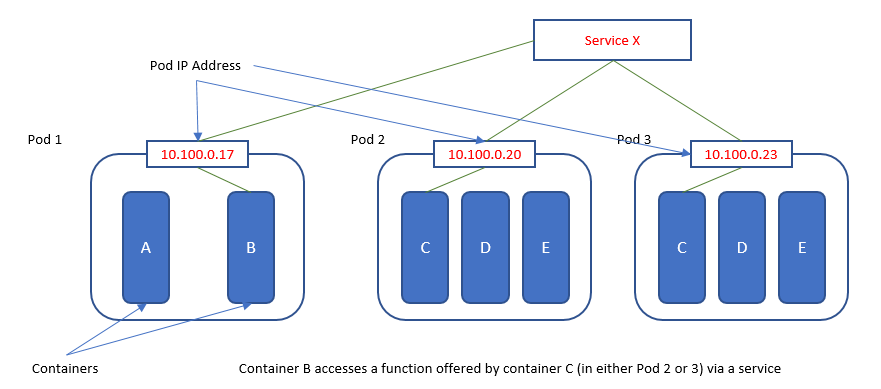
By managing applications at this higher level of abstraction, Kubernetes hides the complexity of the underlying infrastructure. Developers can focus on building their applications without worrying about which specific machine their code is running on. This approach provides several key benefits.
Key Benefits of Kubernetes
- Automatic Scaling: Automatically increases or decreases the number of running containers based on traffic or CPU usage.
- Self-Healing: Restarts containers that fail, replaces and reschedules containers when nodes die, and kills containers that don't respond to health checks.
- Service Discovery & Load Balancing: Distributes network traffic to ensure deployments are stable and handles discovering new services automatically.
- Automated Rollouts & Rollbacks: Lets you gradually roll out new versions of your application and quickly roll back if something goes wrong.
This combination of containerization and orchestration has transformed how modern applications are built and deployed, making them more resilient, scalable, and easier to manage.
In the provided orchestra analogy, what does the Kubernetes control plane represent?
What is the primary advantage of containers compared to virtual machines (VMs)?