From Blank Page to Brilliant Premise
Psychological Archetype Mapping
From Premise to Psyche
Your story idea has passed the stress test. It has stakes, scale, and a central conflict that can sustain a narrative. Now, we build the person at its heart. Instead of inventing a character and dropping them into a plot, we're going to construct a psyche that is intrinsically linked to the story's core problem. The character's internal flaw won't just be an obstacle; it will be the reason the external plot is a problem for them specifically.
To do this, we'll borrow from psychology, focusing on frameworks that map the inner world. This isn't about collecting a list of traits. It's about understanding the deep-seated patterns and past traumas that drive a person's behaviour. We start with the foundational patterns known as archetypes.
According to Swiss psychologist Carl Jung, archetypes are innate universal psychic dispositions that form the substrate from which the basic themes of human life emerge.
In storytelling, archetypes provide a recognizable blueprint for a character's core motivations. Think of them not as rigid roles like 'The Hero' or 'The Mentor', but as bundles of psychological energy. They represent universal human experiences: the drive for order (The Ruler), the quest for knowledge (The Sage), or the desire for connection (The Lover). A character is often a blend of these, but one usually dominates their psyche.
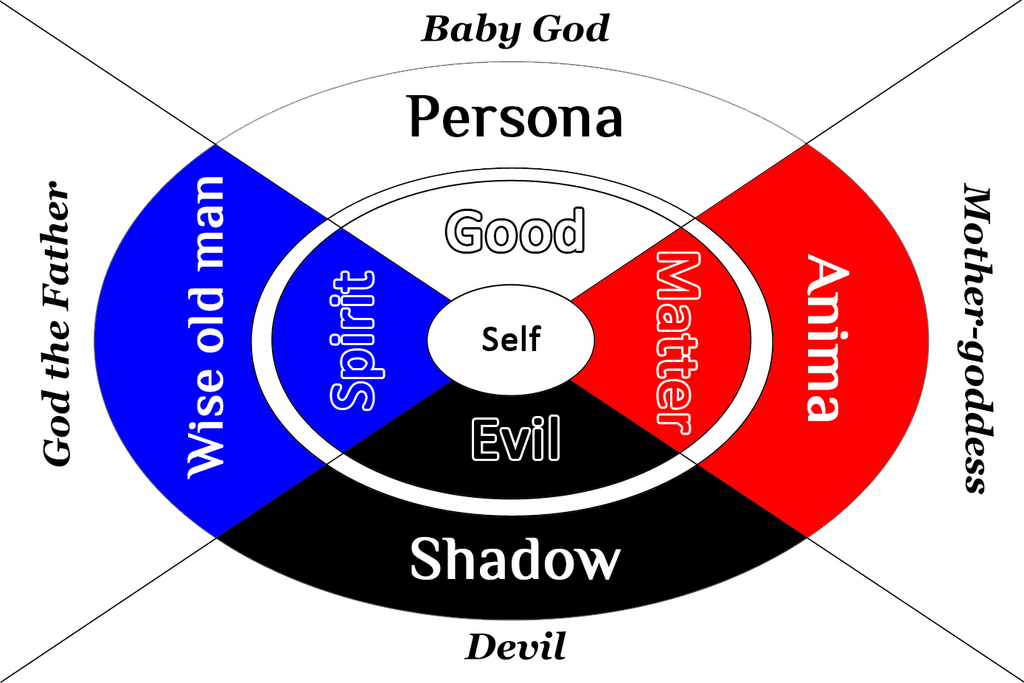
Consider a premise about a brilliant detective who must solve a series of unsolvable crimes. The Sage archetype seems a natural fit. But what if we layered in The Orphan, someone who feels abandoned and constantly seeks a family? Now, her drive to solve the case isn't just about intellect; it's a desperate attempt to create order and belonging in a chaotic world. Her professional brilliance and personal vulnerability are two sides of the same coin.
The Ghost in the Machine
Archetypes give us the general shape of a character's psyche. The specifics come from their past. Every compelling protagonist is haunted by something. In screenwriting, this is often called the 'Ghost' or the 'Wound'.
Ghost
noun
A past traumatic event that dictates a character's present-day behaviour and worldview. It's the source of their deepest flaw and fear.
The Ghost is not backstory for the sake of detail. It's the engine of their internal conflict. It creates a 'false belief' system, a distorted lens through which they see the world. A police officer whose partner was killed on his watch (the Ghost) might operate from the false belief that 'trusting anyone leads to disaster'. This belief dictates his actions, making him a lone wolf who refuses help, which is precisely what makes the new, complex case so difficult for him to solve.
The Ghost creates the flaw. The flaw makes the external plot a nearly impossible challenge. The story forces the character to confront the Ghost to overcome the flaw and solve the plot.
Need vs. Want
The Ghost and its resulting false belief create a fundamental conflict within the character, best understood as the dichotomy between what they want and what they need.
| Concept | Description | Example (The Lone Wolf Detective) |
|---|---|---|
| The Want | The character's conscious, external goal. It's what they believe will solve their problems. | He wants to solve the case alone to prove he can handle it. |
| The Need | The unconscious, internal truth the character must learn to become whole. It directly counters their false belief. | He needs to learn to trust others to heal from his past trauma. |
The entire story is an engine designed to make the character let go of their Want and embrace their Need. The plot relentlessly pressures their flaw, proving that their false belief system is unsustainable. The detective's attempts to solve the case alone fail repeatedly. Only when he is forced to rely on a new partner (confronting his Need) does he begin to make progress, both on the case and on healing his internal Wound.
Mapping the Personality
With the archetypal foundation, the Wound, and the Need/Want dynamic established, we can add a final layer of psychological texture. The Enneagram is a powerful tool for this. It's a personality system that describes nine interconnected types, each with its own core fear, core desire, and patterns of behaviour under stress and in growth.
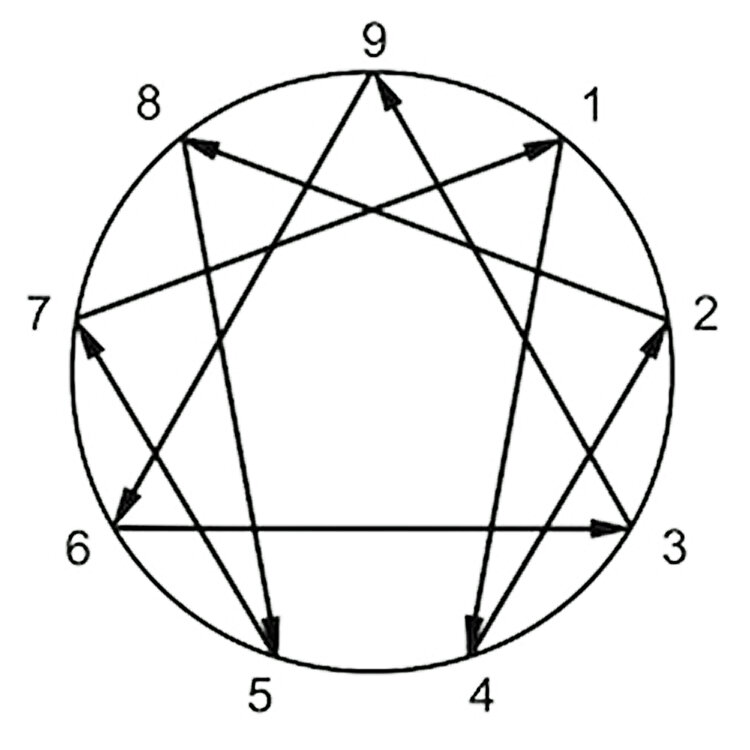
Unlike broader archetypes, the Enneagram provides a highly specific map of a character's inner landscape. Let's return to our detective. We know his Ghost and his false belief. What Enneagram type might he be?
-
As a Type 5 (The Investigator): His core fear is being useless or incompetent. He hoards information and isolates himself to feel capable. His lone wolf behaviour is a defence mechanism to protect his sense of competency. The plot would challenge him by forcing him into situations where he doesn't have all the answers and must rely on the intuition of others.
-
As a Type 6 (The Loyalist): His core fear is being without support or guidance. His partner's death shattered his sense of security. His lone wolf act isn't about competency; it's a counter-phobic response to fear. He acts tough to mask a deep-seated anxiety and a desperate need for a trustworthy authority.
-
As a Type 8 (The Challenger): His core fear is being controlled or harmed by others. His partner's death was the ultimate betrayal of his trust, a vulnerability he vows never to experience again. His aggression and refusal to work with others is a way to maintain control of his environment and protect himself from being hurt.
Using a system like the Enneagram allows you to root your character's specific behaviours and reactions in a consistent, psychologically coherent framework. Their actions are no longer arbitrary; they are a direct expression of their deepest fears and desires.
By layering these psychological models—archetype, wound, and personality type—we move beyond a flat collection of traits. We create a character with depth, whose internal journey is inextricably woven into the fabric of the plot. Their struggle isn't just about what happens; it's about who they must become to face it.
What is the primary function of a character's 'Ghost' or 'Wound' in a story?
The fundamental conflict within a character is often best understood as the dichotomy between what they ______ and what they ______.