From Blank Page to Brilliant Premise
Dramatic Potential Validation
The Dramatic Litmus Test
You’ve used the Premise Equation to forge a narrative seed. It's a solid start, but a seed is not a story. Many promising ideas wither over the course of a full-length script. Before you write a single page, you must test its viability.
Think of this as a stress test for your concept. We’re not concerned with character names or snappy dialogue yet. We’re checking the engine of the story to see if it can power a 90 to 120-minute journey. This test rests on three pillars: Stakes, Scale, and Sustainability.
Pillar 1: Stakes and Scale
Stakes are the consequences of failure. What happens if the protagonist doesn't achieve their goal? If the answer is “not much,” you don’t have a story. High-stakes premises don't always involve life-or-death situations, but the outcome must feel that important to the main character. The potential loss must be devastating on a personal level, whether it's the loss of life, love, identity, or a deeply held belief.
A bomb expert must defuse a device in a crowded stadium. The stakes are clear: thousands of lives. A disgraced lawyer takes on a case to prove her estranged father’s innocence. The stakes are different, but just as high: redemption, family, and her entire sense of justice.
Scale refers to the scope of your story's world and conflict. Is this an intimate drama that unfolds in a single location, or a sprawling thriller that spans continents? Neither is inherently better, but the scale must be cinematic. It needs to provide enough visual and narrative space for the conflict to play out in a compelling way.
A story about two people arguing in a room can be cinematic if the emotional landscape is vast and volatile. A globe-trotting adventure can feel small if the hero's journey is emotionally inert. The scale must justify the medium of film.
Pillar 2: Sustainability
Can your central conflict sustain a feature-length narrative? This is where many ideas fail. A brilliant concept for a short film often doesn't have the 'legs' to last 100 pages. The conflict must be complex enough to generate escalating complications, not just a single obstacle.
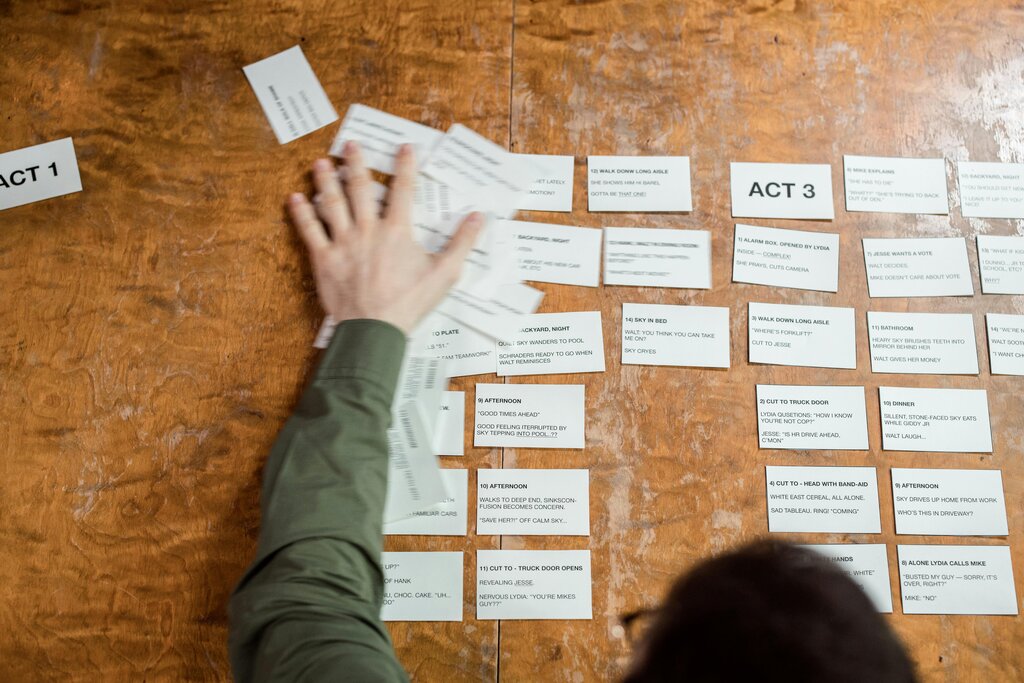
A conflict based on a simple misunderstanding is not sustainable. Why? Because it can be solved with a single conversation. That might fill five minutes, not ninety. A sustainable conflict is one that cannot be easily resolved. The protagonist must try and fail multiple times, with each failure making the situation worse and forcing them to dig deeper.
Ask yourself: What prevents a simple resolution? A sustainable conflict has built-in barriers. These could be powerful antagonists, systemic corruption, or the protagonist's own internal flaws. The problem should be a knot, not a straight line. Every attempt to untangle one part of it should tighten another.
The Iron Rule of Dramaturgy
This is the final and most crucial test. It connects the external plot to the internal journey of the protagonist, ensuring your story has thematic depth and emotional resonance. The rule is simple to state but challenging to execute.
A story problem must press, test, stretch, and challenge your protagonist, forcing her into the darkest depths of her flaws and into the brightest light of her strengths.
The Iron Rule dictates that a character's internal flaw must be the primary obstacle preventing them from solving the external plot problem. The solution to the external problem is within their reach from the beginning, if only they could overcome their inner demon.
Let’s break it down:
- External Problem: The tangible goal. Catching the killer, winning the court case, stopping the evil corporation.
- Internal Flaw: The character’s deep-seated weakness. Arrogance, cowardice, crippling self-doubt, a rigid moral code that fractures on contact with reality.
An arrogant detective might have all the clues to solve a murder, but his refusal to listen to his more observant, lower-ranking partner prevents him from seeing the truth. The external plot (the murder investigation) becomes a crucible that forces him to confront his arrogance (the internal flaw). He cannot solve the case until he learns humility. The plot isn't just happening to him; it is happening because of who he is.
If you can remove the protagonist's flaw and they can still solve the external problem just as easily, your idea fails the test. The internal and external must be inextricably linked. This is what creates a satisfying and meaningful narrative arc. It ensures the story is about transformation, not just a sequence of events.
Time to check your understanding.
What is the primary function of the 'Stakes' in a story premise?
Which of the following central conflicts is the LEAST sustainable for a 90-minute film?
Passing this litmus test gives you the confidence that your premise is robust. You've confirmed it has meaningful consequences, a cinematic scope, and a conflict that can endure. Most importantly, you've established a fundamental link between plot and character, ensuring your story has the potential for real dramatic power.