Choosing HIIT Running Shoes
HIIT Foot Biomechanics
Beyond the Straight and Narrow
Steady-state running is predictable. Your foot strikes the ground, absorbs impact, and pushes off, all in a straight line. The forces travel primarily through your foot in one direction, the sagittal plane, over and over again. High-Intensity Interval Training (HIIT) throws that predictability out the window. One moment you're sprinting forward, the next you're jumping sideways, then dropping into a burpee.
Each HIIT movement introduces a unique cocktail of forces, demanding that your feet manage stress from multiple angles, not just front to back.
This multi-directional chaos means your foot has to work as a brake, a pivot, and a gas pedal all at once. The muscles, tendons, and ligaments are stressed in ways they simply aren't during a steady jog. This is why footwear designed for running often feels unstable during a HIIT class.
The Sideways Load
Consider a lateral lunge or a side shuffle. Unlike the forward rolling motion of running, these movements force your foot to stop sideways momentum and immediately push off in the opposite direction. The load is concentrated on the inside and outside edges of your feet, testing your ankle's stability with every rep.
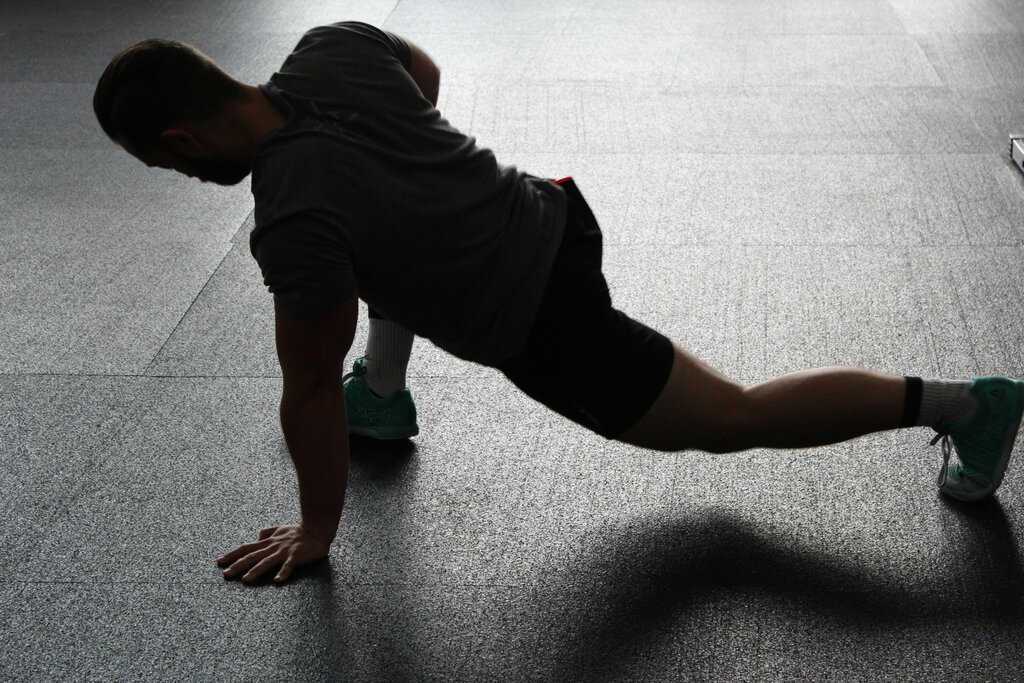
During a lateral bound, your foot must rapidly shift from pronation (rolling inward to absorb shock) to supination (stiffening and rolling outward to create a rigid lever for push-off). Performing this under load, and at speed, requires immense control. Without adequate support, the ankle is vulnerable to rolling over, leading to sprains of the on the outside of the ankle.
Strength training in multiple planes of motion and greater ranges of motion (think lateral lunges and single-leg deadlifts) balances the high volume of steps runners take on a weekly basis.
Explosive Impacts
HIIT is defined by its explosive nature. Movements like box jumps and burpees involve generating maximum force in a short time, followed by a high-impact landing. When you land from a jump, your body can experience ground reaction forces several times your body weight.
This force needs to be dissipated quickly and effectively. Your foot's arch acts as a natural spring, but the sheer magnitude of the impact from plyometric exercises requires support. A proper landing involves the foot, ankle, knee, and hip all flexing in a coordinated sequence to act as a shock absorber. If the foot is unstable or poorly supported, that force gets shunted up the kinetic chain, increasing the risk of injury not just in the ankle, but also in the knees and hips.
Running shoes, with their soft, often elevated heels, can create an unstable platform for these landings. A flatter, more stable sole provides a better base of support, allowing the and other structures in the foot to function optimally. This stability is crucial for translating landing forces into the next explosive movement.
To recap the demands on your feet during HIIT:
| Movement Type | Primary Force Direction | Key Foot/Ankle Requirement |
|---|---|---|
| Sprints | Forward (Linear) | Efficient propulsion |
| Lateral Shuffles | Side-to-side | Lateral stability, rapid change of direction |
| Box Jumps | Vertical & Forward | High-impact absorption, stable landing base |
| Burpees | Multi-directional | Combination of stability, propulsion, and absorption |
Ready to test what you've learned about the unique demands of HIIT?
What is a primary difference between the forces experienced by the foot during HIIT versus steady-state running?
During a lateral bound, the foot must rapidly shift from pronation to supination. What is the purpose of this action?
Understanding these forces is the first step toward selecting the right gear and using proper form to stay safe and get the most out of your high-intensity workouts.