Building a Modern Drug Information Database
Testing and Quality Assurance
Testing Your Database
Once a database is built, it needs to be tested. For a drug information database, this step is critical. A small bug could lead to incorrect dosage information or missed drug interactions, with serious consequences for patient safety. Testing isn't a single action, but a series of checks at different levels to ensure every part of the system works as expected, both on its own and with other parts.
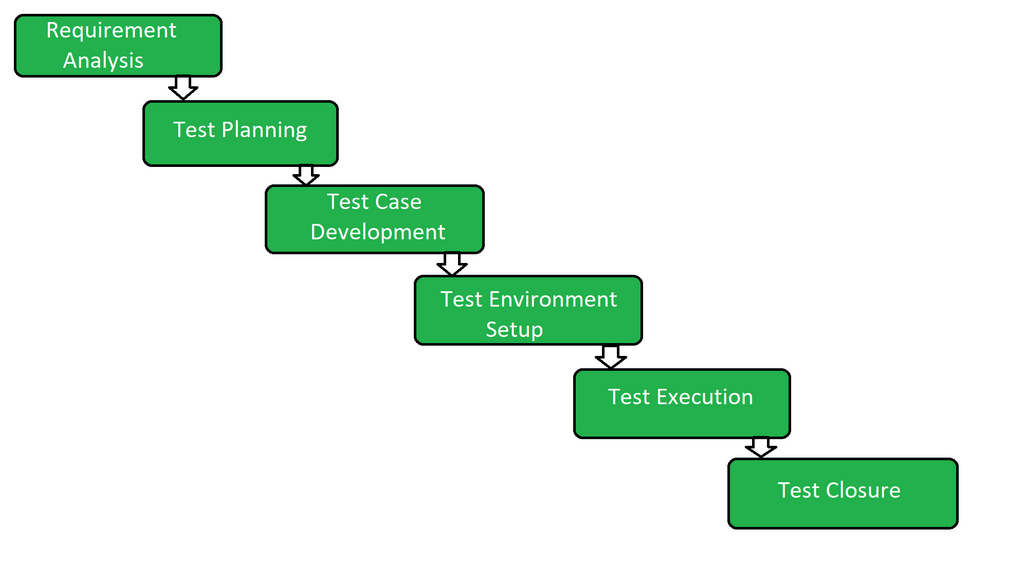
A comprehensive testing and validation plan should include the following elements:
We'll look at three key types of testing: unit testing, integration testing, and performance testing. Each one examines the database from a different angle to catch potential problems before it reaches users.
Unit Testing: Checking the Bricks
Think of building a house. Before you lay a wall, you'd want to make sure each individual brick is solid. Unit testing is the software equivalent of checking each brick. It focuses on the smallest testable parts of an application, called "units," in isolation from the rest of the system.
A unit could be a single function, a procedure, or a method. In our drug database, a unit might be a function that validates a drug's identification number or one that retrieves a list of known side effects for a specific medication.
The goal of a unit test is simple: verify that a small piece of code does exactly what it's supposed to do, every time.
To keep these tests isolated, developers often use "mocks" or "stubs." These are placeholder objects that simulate the behavior of real components. For example, to test a function that processes drug data, you wouldn't connect to the live database. Instead, you'd give it a mock object with pre-defined data. This ensures the test only fails if the function itself is broken, not because of an external issue like a network problem.
A common methodology is Test-Driven Development (TDD). Here, the developer writes a test before writing the code. The test will naturally fail at first. Then, the developer writes the minimum amount of code needed to make the test pass. Finally, they clean up the code. This cycle ensures that every piece of code is written with a specific, testable requirement in mind.
# Pseudocode for a unit test

def test_check_interaction():
    # Setup: Define two drugs that have a known interaction
    drug_a = "Warfarin"
    drug_b = "Aspirin"

    # Action: Call the function we are testing
    interaction_exists = checkForInteraction(drug_a, drug_b)

    # Assert: Check if the result is what we expect
    assert interaction_exists == True

def test_no_interaction():
    # Setup: Define two drugs with no interaction
    drug_c = "Ibuprofen"
    drug_d = "Water"

    # Action: Call the function
    interaction_exists = checkForInteraction(drug_c, drug_d)

    # Assert: Check for the expected negative result
    assert interaction_exists == False
Integration Testing: Making Sure It All Fits
Once we know the individual bricks are strong, we need to see how they work together. Do they form a stable wall? This is integration testing. It verifies that different modules or services in your application can communicate and cooperate correctly.
For the drug database, integration tests answer questions like:
- When a pharmacist searches for a drug in the user interface, does the correct information get pulled from the database and displayed?
- If the data entry module sends a new drug record to the database module, is it stored correctly?
- Does the security module successfully block an unauthorized user from accessing sensitive patient data stored in the database?
There are a few strategies for this. The "big bang" approach involves connecting all the modules at once and hoping for the best. It's usually chaotic and difficult to debug when something goes wrong.
A more methodical approach is incremental testing. In a top-down strategy, you test from the highest-level modules (like the user interface) downwards, using stubs for lower-level modules that aren't finished yet. The bottom-up approach is the reverse. You start with the foundational modules (like the database) and move upwards, using simple drivers to simulate the modules that will eventually use them.
Performance Testing: Checking Under Pressure
A database that's accurate but slow is frustrating and potentially dangerous in a time-sensitive clinical setting. Performance testing checks how the system behaves under a heavy workload. It's not about finding functional bugs, but about measuring speed, stability, and scalability.
| Test Type | Goal | Example Question |
|---|---|---|
| Load Testing | Measure performance under expected, everyday user loads. | Can the system handle 500 pharmacists searching for drugs at once? |
| Stress Testing | Find the system's breaking point by pushing it beyond normal limits. | How many simultaneous users does it take to crash the server? |
| Soak Testing | Check for issues that emerge over a long period of sustained load. | After running for 48 hours straight, are there any memory leaks? |
| Spike Testing | See how the system recovers from sudden, massive surges in traffic. | What happens if 2,000 users log on in the same minute? |
These tests help identify bottlenecks. Maybe a specific type of search query is very slow, or the server runs out of memory when too many records are exported at once. By simulating these conditions before the database goes live, you can find and fix these issues, ensuring the system is reliable for the healthcare professionals who depend on it.
What is the primary purpose of unit testing?
A developer is building a system and decides to test the user interface first, using 'stubs' to simulate the behavior of the database that isn't built yet. What type of integration testing strategy is this?
Thorough testing ensures the final database is not just functional, but also robust, secure, and reliable.