Bitcoin Explained
Understanding Blockchain Technology
The Digital Ledger
At its heart, a blockchain is a special kind of digital ledger. Think of it like a shared notebook that everyone in a group can see and write in. Once something is written down, it can't be erased or changed. This notebook isn't stored in one place; instead, every member of the group has their own identical copy.
At its most basic level, a blockchain is a digital ledger maintained by a decentralized network of computers.
This ledger is built from a series of records called “blocks.” Each block contains a batch of information, like transaction details. These blocks are linked together one after another in chronological order, forming a “chain.” This structure is what gives blockchain its name.
How Blocks Are Linked
The magic of the blockchain lies in how these blocks are connected. Each block holds three key pieces of information:
- Data: The specific records being stored, such as details of financial transactions.
- Hash: A unique, fixed-length string of characters that acts like a digital fingerprint for the block. It's generated from the data inside the block. If any data changes, the hash changes completely.
- Previous Block's Hash: The hash of the block that came directly before it in the chain.
This third element is crucial. By including the previous block's hash, each new block is cryptographically tied to the one before it, creating a secure and unbreakable chain.
Because each block references the one before it, the history of the ledger is locked in place. If someone tried to alter the data in an old block, its hash would change. This would break the chain, as all subsequent blocks would now be pointing to an incorrect hash. The rest of the network would immediately notice and reject the fraudulent change.
This linking mechanism is what makes a blockchain immutable, meaning its records are permanent and unchangeable.
A Distributed System
As we covered, this digital ledger isn't kept by a single authority like a bank or government. Instead, it's a distributed ledger, meaning identical copies are maintained by numerous computers (called nodes) all over the world. This decentralization is a core feature.
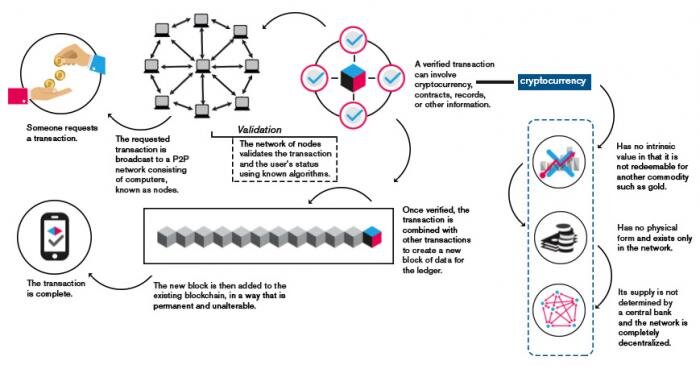
When a new block of transactions is ready to be added, it's sent out to everyone in the network. Each participant checks the block to make sure it's valid according to the network's rules. This removes the need for a central intermediary, as trust is established through transparency and collective verification.
Reaching Agreement
With so many participants, how does the network agree on which new blocks are valid? This is handled by a consensus mechanism. It's a set of rules that governs the blockchain, ensuring that all participants agree on the current state of the ledger and that new blocks are added in a fair and secure way.
Consensus Mechanism
noun
A fault-tolerant method used in blockchain networks to achieve the necessary agreement on a single data value or a single state of the network among distributed processes or multi-agent systems.
Think of it as a democratic voting system for transactions. For a block to be added to the chain, a majority of the network's participants must agree on its validity. This collective agreement process prevents any single entity from controlling the network or adding fraudulent blocks. It's the foundation of the blockchain's security and integrity.
Ready to check your understanding of these core concepts?
What is a blockchain at its most fundamental level?
What is the primary purpose of including the 'previous block's hash' in each new block?
By combining chained blocks, a distributed network, and a consensus mechanism, blockchain technology creates a transparent, secure, and immutable way to record information.