Basics of Horsemanship for Beginners
Stable Safety Protocols
Barn Rules for Safety
Now that you understand how a horse sees the world, it’s time to learn the rules of their home: the stable. Just like a library has rules for being quiet, a stable has rules to keep both people and horses safe. These aren't just suggestions; they are serious safety protocols based on everything you've learned about a horse's prey instincts.
Let's start with your gear. What you wear in a barn matters. The most important rule is to always wear sturdy, closed-toe shoes. Boots are best. A horse can't always see its own feet, and if it accidentally steps on your toes, its weight can cause a serious injury. Sandals, flip-flops, or soft sneakers don't offer any protection.
Also, avoid wearing anything that dangles or could get snagged, like loose scarves or long necklaces. In a busy barn, it's best to keep things simple and secure.
Leading Your Horse
When you lead a horse, you're its guide. Your position next to the horse is key to clear communication and safety. The correct way to walk is with your shoulder lined up with the horse's throat or shoulder. This is the "shoulder-to-shoulder" position.
Hold the lead rope with your right hand about 12-18 inches from the horse's halter. Hold the rest of the rope, neatly folded, in your left hand. Never wrap the rope around your hand or arm.
This position keeps you out of the horse's main blind spots—directly in front and directly behind. If you walk ahead, the horse can't see you and might spook into you. If you walk behind, you risk getting kicked. The shoulder-to-shoulder position allows you to see the horse’s head and ears, and the horse can easily see you with its side vision. You can guide it forward, and if it gets startled, you are in a safer zone to react.
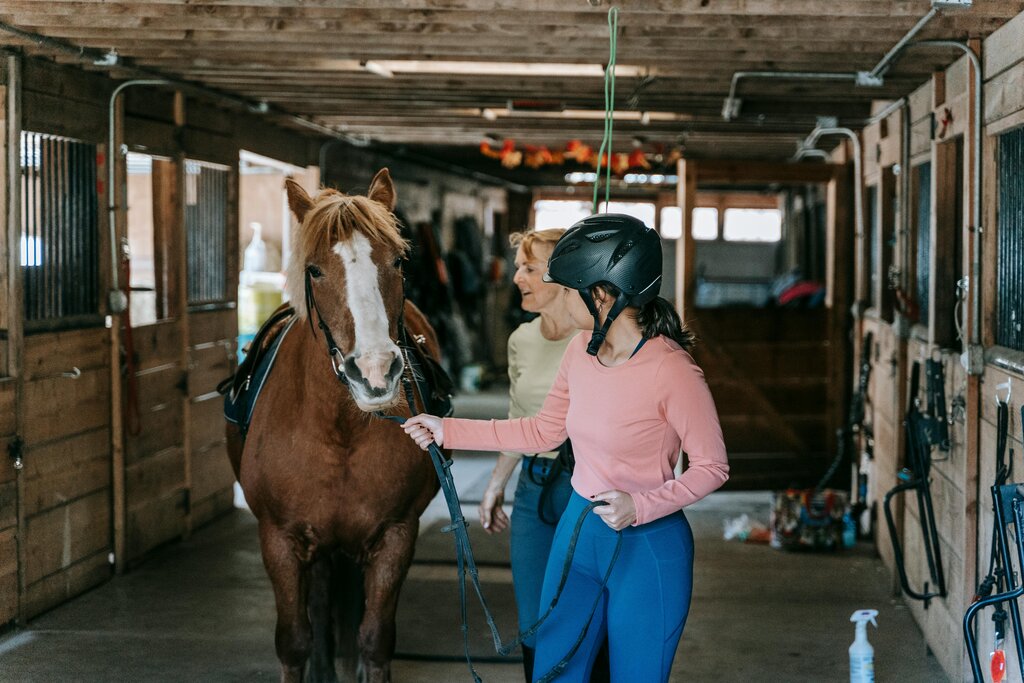
Navigating through a gate or doorway requires extra focus. A narrow space can make a horse feel trapped, triggering its flight instinct. Always open the gate wide enough for both of you to pass through easily. Walk through confidently, and once you're clear, turn the horse to face the gate before you close it. This keeps the horse's attention on you and prevents it from rushing or getting its hip caught on the gatepost.
Tying Up Safely
You can't tie a horse with just any knot. A horse that feels trapped will pull back with immense force. If the knot doesn't give way, the horse can injure its neck or poll, the sensitive area at the top of its head. This is why every horse person must know how to tie a quick-release knot properly. It holds securely but can be undone with a single pull on the end of the rope, even if the horse is pulling against it.
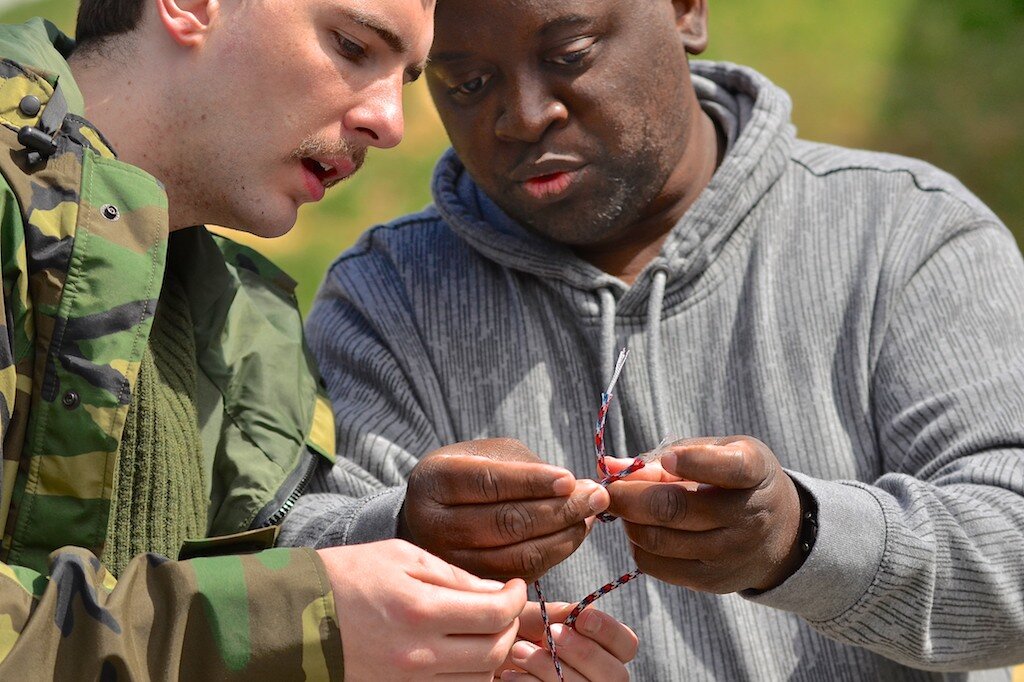
In many stables, you'll see horses tied in the aisle using s. These are two ropes, one attached to each side of the horse's halter, that connect to walls on either side of the aisle. Cross-ties keep the horse centered and are great for grooming or tacking up. However, safety is still the top priority.
Never duck under a horse's neck when it's on cross-ties. Always walk all the way around its hindquarters. Ducking underneath puts your head in a major blind spot, and a spooked horse could throw its head up and hit you.
Following these rules shows respect for the horse and the people around you. It proves you are ready for more responsibility in the barn.
Why is it crucial to wear sturdy, closed-toe shoes like boots in a stable?
When leading a horse, the correct position is to have your shoulder aligned with the horse's throat or shoulder. What is the primary safety reason for this "shoulder-to-shoulder" position?