Basics of Horsemanship for Beginners
Advanced Grooming Tools
More Than Just a Cleaning
You already know how to approach a horse safely and lead them with confidence. Now, let’s talk about one of the best ways to build a strong bond: grooming. This isn’t just about making a horse look clean before a ride. It’s a health check-up and a conversation without words. A good grooming session tells the horse you’re a friend, and it gets their muscles ready for work.
The Right Tool for the Job
Professional grooming follows a specific order, with each tool doing a special job. Using them correctly and in sequence makes the process faster, more effective, and more enjoyable for the horse. The main sequence is: curry comb, dandy brush, body brush, and finally, a finishing cloth. Think of it like a spa treatment for your equine partner. Each step prepares the coat for the next, resulting in a healthy, gleaming horse.
First, secure your horse in the , which you already know how to use safely. This keeps them comfortably in place while you work. The first tool you'll grab is the rubber curry comb. Its job isn't to remove all the dirt. Instead, you'll use it in strong circular motions on the horse's large, muscular areas, like the neck, shoulder, back, and hindquarters. Avoid using it on bony parts like the face, spine, and lower legs.
This circular rubbing does two amazing things: it lifts deep-down dirt and loose hair to the surface, and it gives the horse a massage. This massage stimulates the skin to produce natural oils, which are like a built-in coat conditioner. It protects their skin and gives their coat a beautiful shine.
Brushing Away the Grime
After the curry comb has loosened everything up, it’s time to sweep it all away. For this, you need the dandy brush. This is a stiff-bristled brush designed for flicking away the coarse dirt and hair you just brought to the surface. Using short, strong flicking motions in the direction of hair growth, work your way over the same areas you used the curry comb. You’ll see a cloud of dust and hair come off—that’s how you know it’s working!
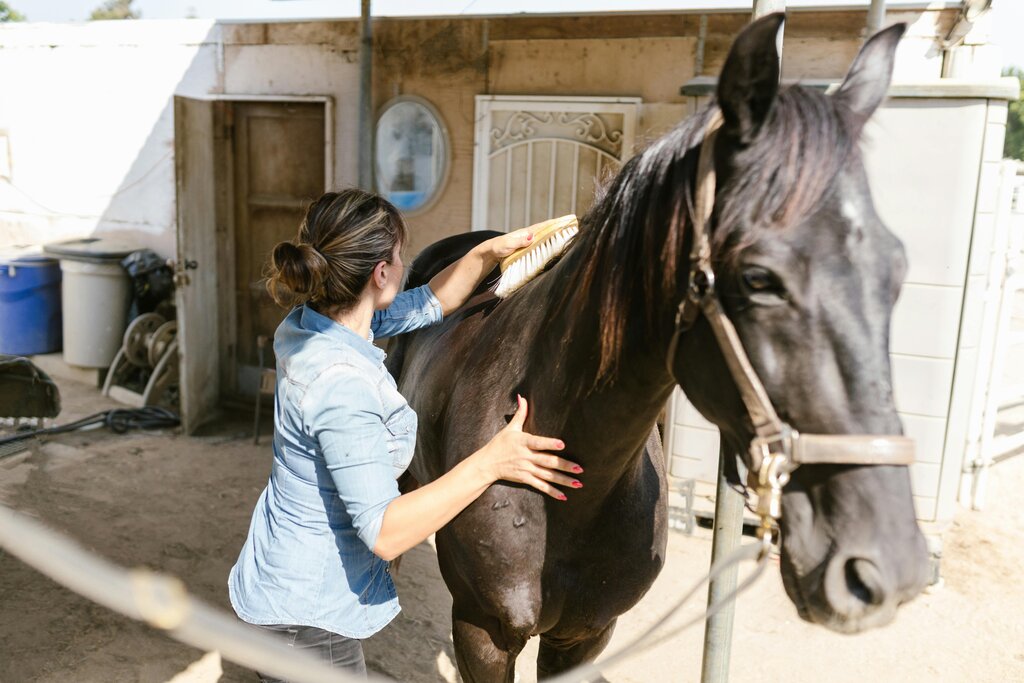
Next up is the body brush, which has softer, more densely packed bristles. This brush removes finer dust and smooths the coat, distributing those natural oils you stimulated earlier. Use long, sweeping strokes that follow the contours of the horse's body. After a few strokes, you might clean the body brush by swiping it against the metal teeth of a curry comb (a different, often metal, type used just for cleaning brushes). This keeps you from just spreading dirt around.
The Finishing Touches
The final steps are what make a horse truly sparkle. Once the brushing is done, a soft cloth or a special grooming mitt can be wiped all over the horse's coat to remove any last bits of dust and add a final polish. This is also the time to gently wipe around the horse’s eyes and nostrils with a clean, damp cloth.
Arguably the most important grooming task is cleaning the hooves. A horse’s hoof is like a shoe that can get rocks, mud, and other debris stuck inside. Cleaning them daily with a is essential to prevent infections and lameness.
To clean a hoof, stand beside the horse facing its tail. Run your hand down the back of the horse’s leg until you reach the ankle. Gently squeeze the tendon area and say “up” to ask them to lift their foot. Once they lift it, hold the hoof firmly and use the hoof pick to scrape out any debris, moving from the heel toward the toe. Be very careful to clean the grooves alongside the triangular-shaped “frog” in the center, but avoid picking directly at the frog itself, as it is a sensitive part of the hoof.
Completing this routine doesn't just make for a clean horse. It strengthens your partnership and ensures the horse is healthy and comfortable before you even think about putting a saddle on.
Ready to check your knowledge?
What is the primary purpose of using a rubber curry comb in circular motions on a horse's large muscles?
Arrange the following grooming tools in the correct order of use for the horse's main body.