Algorithmic Trading Without Code
Introduction to Algorithmic Trading
What Is Algorithmic Trading?
Algorithmic trading, or algo trading, uses computer programs to place trades based on a predefined set of rules. Instead of a human manually buying and selling stocks, an algorithm does the work automatically. The goal is to execute trades faster and more efficiently than any person could.
Algorithmic trading refers to the use of computer programs that follow defined sets of instructions (algorithms) to execute trades at speeds and frequencies impossible for human traders.
Think of it like setting a smart thermostat in your home. You can program it to turn on the heat when the temperature drops below 68 degrees and turn it off when it hits 72. The thermostat monitors the temperature and acts on your rules without you having to do anything. An trading algorithm does the same thing, but with market data like price, volume, or timing.
From Trading Pits to Pixels
The idea of automating trades isn't brand new, but it exploded with the rise of electronic stock exchanges in the 1980s and 90s. Before then, traders shouted orders on crowded exchange floors. The shift to digital trading opened the door for computers to take over.
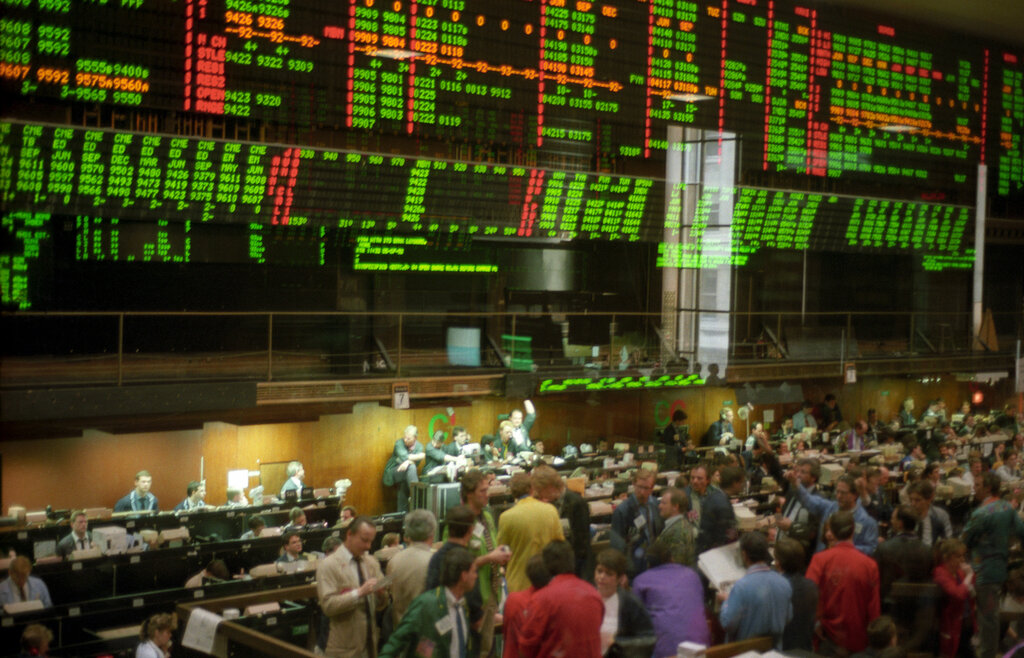
Early systems were simple, often used to break up large orders to avoid causing big price swings. Today, algorithms are incredibly sophisticated. Their widespread use has dramatically increased the speed and volume of trading, fundamentally changing how financial markets operate.
The Key Advantages
Why let a computer trade for you? There are three main benefits: speed, efficiency, and discipline.
Speed: Algorithms can analyze market conditions and execute an order in microseconds. A human trader, no matter how fast, can't compete.
Efficiency: An algorithm can monitor thousands of stocks and execute countless trades simultaneously without getting tired or making a typo. This allows for strategies that would be impossible to manage manually.
Discipline: Algorithms stick to the plan. They don't get greedy during a winning streak or panic-sell during a downturn. By removing emotion from the equation, they avoid common psychological pitfalls that lead to poor trading decisions.
Common Strategies
Algorithms can be programmed to follow any number of strategies. Most fall into a few common categories.
Trend-Following
other
These are strategies that act on the assumption that if a price is moving in a certain direction, it will continue to do so. The algorithm identifies a trend and trades with it—buying in an uptrend and selling in a downtrend.
Arbitrage
noun
Arbitrage strategies look to profit from tiny price differences of the same asset across different markets. For example, if a stock is trading for $10.00 on the New York Stock Exchange and $10.01 on another exchange, an arbitrage bot would simultaneously buy it on the first and sell it on the second for a risk-free profit of one cent per share.
Market Making
noun
Market makers provide liquidity by placing both buy and sell orders for a stock. They aim to profit from the difference between the buy price (the bid) and the sell price (the ask), which is known as the spread. Their algorithms constantly adjust these orders based on supply and demand.
These are just a few examples. Strategies can range from very simple to incredibly complex, often involving advanced statistical models.
Who Uses Algo Trading?
It's not just for tech wizards in a basement. Algorithmic trading is used across the financial industry.
-
Institutional Investors: Large firms like pension funds and mutual funds use algorithms to manage massive orders. Placing a buy order for a million shares at once would spike the price, so they use algorithms to break the order into smaller, less disruptive pieces.
-
Market Makers & Prop Shops: Firms like Citadel Securities or Jane Street have business models built entirely around high-frequency, automated trading strategies like market making and arbitrage.
-
Retail Traders: Technology has made algorithmic trading more accessible to individual traders, though they typically operate on a much smaller scale than the big institutions.
Now that you have a grasp of the basics, let's test your knowledge.
What is the primary function of an algorithmic trading system?

Quiz Completed
0/1
Questions answered correctly
Understanding these core concepts is the first step. Algorithmic trading is a powerful tool that has reshaped modern finance by prioritizing speed, data, and automated execution.