Zeckhauser Probability Decision Making
Introduction to Decision Theory
How We Make Choices
Every day is a series of decisions. Some are small, like choosing coffee over tea. Others are life-changing, like accepting a new job. Decision theory is the study of how we make these choices, especially when faced with uncertainty. It's a field that blends economics, psychology, and statistics to understand the logic behind our actions.
Think of it as a framework for reasoning. It doesn't just describe how people do act; it also explores how they should act to achieve their goals. This makes it a powerful tool for everything from personal finance to corporate strategy and public policy.
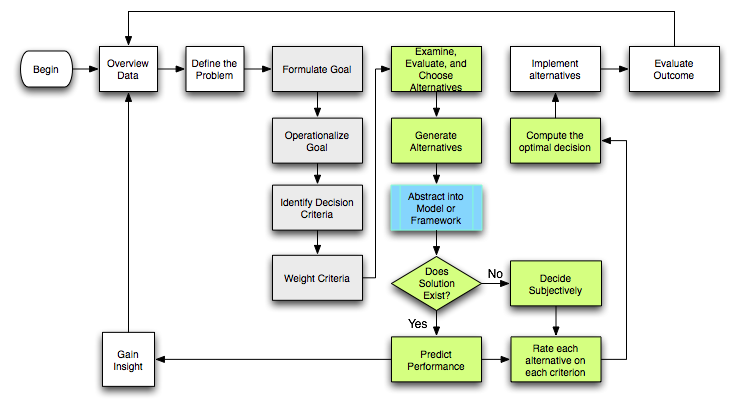
The Decision Theory Approach highlights the significance of decision-making processes in management.
The Idea of Rational Choice
In decision theory, a central concept is the 'rational agent'. This isn't a person who is cold or emotionless. A rational choice is simply one that is consistent with your goals and preferences.
Imagine you want to get to the airport as quickly as possible. You check two ride-sharing apps. App A says the ride will take 20 minutes. App B says 30 minutes. The rational choice is to pick App A. You have a clear goal (speed), and one option is objectively better at achieving it.
Rationality here means having a clear set of preferences and making choices that align with them. It's about internal consistency. If you prefer apples to bananas, and bananas to cherries, then rationality implies you should also prefer apples to cherries. This orderly ranking of options is the foundation of logical decision-making.
Preferences and Utility
How do we formalize these preferences? Economists use the concept of utility. Utility is a way to measure the value or satisfaction a person gets from a particular outcome. It's a numerical representation of your preferences.
It’s important to remember that utility is subjective. A devoted coffee drinker gets immense utility from their morning espresso, while someone else might get none. It's a personal scale of value.
Let's say you're choosing a dessert. Your preferences might look like this:
| Dessert Option | Preference Rank | Example Utility |
|---|---|---|
| Chocolate Cake | 1st | 10 |
| Apple Pie | 2nd | 8 |
| Fruit Salad | 3rd | 3 |
The numbers themselves don't have an absolute meaning, but their relationship does. A utility of 10 for chocolate cake and 8 for apple pie shows you prefer the cake, and it also suggests the strength of that preference. The cake isn't just better; it's slightly better than the pie, but much better than the fruit salad.
Deciding in an Uncertain World
Most decisions aren't as simple as choosing a dessert. Outcomes are rarely guaranteed. What if the chocolate cake at a new restaurant might be dry? This is where decision theory becomes truly powerful, by combining utility with probability.
Let's say you're deciding whether to invest $100 in a startup. There are two possible outcomes:
- The startup succeeds, and your investment becomes worth $1,000.
- The startup fails, and you lose your $100.
To make a rational decision, you need to weigh the utility of each outcome by its likelihood. If the startup has a high chance of success, the potential gain might be worth the risk. If it's likely to fail, the potential loss looms larger.
This basic idea, of combining the value of an outcome (utility) with its chance of happening (probability), is the core of making choices under uncertainty. It allows us to compare different options in a structured way, moving beyond simple gut feelings.
Decision theory is primarily the study of...
According to decision theory, a 'rational choice' is best described as one that...
This framework provides the essential building blocks for understanding more complex decision-making models.