Youth Investment Portfolio Builder
Investment Basics
Building Your Investment Foundation
Investing is about putting your money to work for you. Instead of letting cash sit idle, you can use it to buy things you believe will grow in value over time. These things are called assets. The goal is to build wealth by choosing a mix of assets that align with your financial goals.
What You Can Invest In
Assets are grouped into categories called asset classes. Each class behaves differently and has its own level of risk and potential for return. Understanding the main types is the first step in building a portfolio.
Equity
noun
Ownership in a company, often in the form of shares of stock.
When you buy a stock, you're buying a small piece of a public company. If that company does well—its profits grow and its business expands—the value of your piece can increase. This makes equities a powerful engine for growth in a portfolio. However, if the company performs poorly, the value of your stock can fall. This potential for both high growth and significant loss makes equities a higher-risk asset class.
Fixed Income
noun
An investment that provides a return in the form of fixed periodic payments and the eventual return of principal at maturity.
Think of fixed-income investments, like bonds, as loans. You lend money to a government or a corporation, and in return, they promise to pay you interest over a set period. At the end of that period, they return your original investment, known as the principal.
Because the payment schedule is generally predictable, these assets are considered less risky than stocks. They typically offer lower returns but provide stability and reliable income to a portfolio.
Real Estate
noun
Property consisting of land or buildings.
This involves buying physical property—like a house, apartment building, or commercial space—with the goal of earning money. This can come from two sources: collecting rent from tenants (income) or selling the property for more than you paid for it (appreciation).
Real estate can be a solid long-term investment, but it's also less liquid. It takes more time and effort to sell a building than it does to sell a stock.
The Risk and Return Trade-off
In investing, there's a fundamental relationship between risk and return. Generally, to get a higher potential return, you have to accept a higher level of risk. There's no such thing as a high-return, no-risk investment.
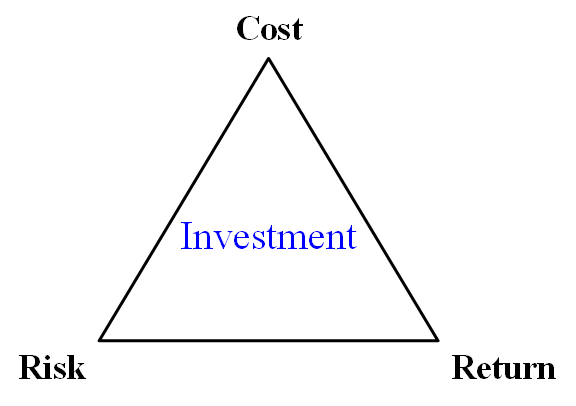
Equities, for example, have historically offered the highest returns, but they also come with the most volatility. Fixed income is safer but provides more modest returns. Real estate falls somewhere in between.
Your personal risk tolerance—how comfortable you are with the possibility of losing money—is key. Someone saving for retirement in 30 years can afford to take more risks than someone saving for a down payment on a house next year. Your goals and timeline will help you decide on the right mix.
The Power of Diversification
You've likely heard the saying, "Don't put all your eggs in one basket." In investing, this is the core idea behind diversification.
Diversification is the investing equivalent of not putting all your eggs in one basket.
Diversification means spreading your money across different asset classes. The goal is to build a portfolio where the different parts don't all move in the same direction at the same time. If the stock market is down, your bond holdings might be stable or even up, cushioning the overall impact.
By owning a mix of equities, fixed income, and other assets, you can reduce your overall risk without necessarily sacrificing your potential for returns. It's a strategy to smooth out the ride and protect your portfolio from the inevitable ups and downs of any single market.
Let's check your understanding of these core concepts.
What is the primary goal of investing?
Which of the following best describes a fixed-income investment, like a bond?
Understanding these building blocks—asset classes, risk and return, and diversification—is the first step toward making informed investment decisions that can help you reach your financial goals.