Your Learning Adventure Begins
Introduction to Online Learning
The Freedom and the Challenge
Online learning offers incredible flexibility. You can often learn from anywhere, at any time, fitting education around your life instead of the other way around. This opens up opportunities that might have been out of reach before. Whether you're a full-time parent, working a demanding job, or living far from a campus, online courses bring the classroom to you.
However, this freedom comes with its own set of challenges. Without a fixed schedule or a teacher looking over your shoulder, staying motivated can be tough. The same home that offers comfort can also be filled with distractions. Success in online learning hinges on balancing its benefits with its demands.
| Benefits | Challenges |
|---|---|
| Learn from anywhere | Requires strong self-discipline |
| Flexible scheduling | Potential for isolation |
| Access to a wide range of courses | Distractions at home |
| Often more affordable | Needs reliable tech and internet |
Setting Yourself Up for Success
Your success as an online learner isn't about being a genius. It's about building smart habits. The two most important are managing your time and creating a space that helps you focus.
Think of yourself as the manager of your own education. You set the hours, you create the environment, and you hold yourself accountable.
Start with time management. Look at your week and block out specific times for learning, just as you would for a work meeting or a doctor's appointment. Treat these blocks as non-negotiable. Many people find success with techniques like the Pomodoro Technique: work for 25 minutes, then take a 5-minute break. This keeps your mind fresh and makes starting a study session feel less daunting.
Next, create your study environment. This doesn't need to be a separate room, but it should be a dedicated space. When you're in that space, your brain should know it's time to learn. Keep it organised and free of clutter. Most importantly, eliminate distractions. Put your phone in another room or turn off notifications on your computer. Let family or flatmates know your study schedule so they don't interrupt you.
Your Digital Classroom
Online courses are delivered through various digital tools and platforms. You don't need to be a tech expert, but it helps to know what to expect. Most courses are hosted on a Learning Management System, or LMS. This is your central hub for everything related to the course.
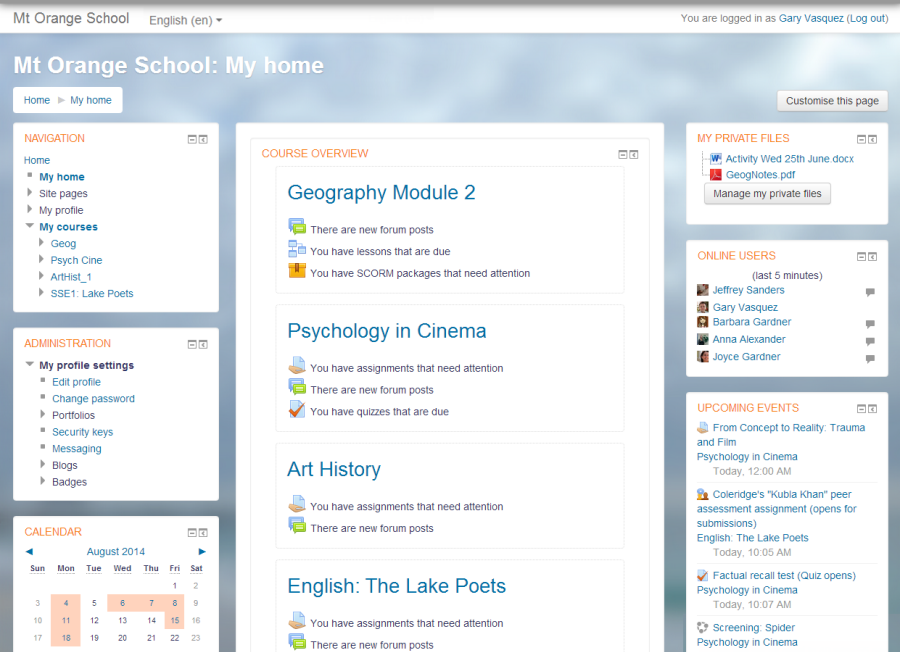
On an LMS, you'll find your course materials, such as video lectures, readings, and assignments. It's also where you'll submit your work and see your grades. Think of it as your virtual campus.
Beyond the LMS, you'll likely use a few other tools:
- Video Conferencing: Platforms like Zoom or Google Meet are used for live lectures, group discussions, or one-on-one meetings with instructors.
- Discussion Forums: These are message boards where you can ask questions, discuss topics with classmates, and participate in group activities. They are a key part of building a sense of community in an online course.
- Collaborative Documents: Tools like Google Docs allow you to work on projects with other students in real time, even when you're miles apart.
Now, let's test what you've learned about getting started with online learning.
According to the text, what is the main advantage of online learning?
A Learning Management System (LMS) is best described as a...
With the right mindset and habits, you can thrive in an online learning environment and make the most of the flexibility it offers.