Your First Steps in French
French Sounds
The French Alphabet
The French alphabet uses the same 26 letters as English, which is a great start. The main difference lies in how the letters are named. Learning these names is your first step, as it helps with spelling and understanding spoken French.
| Letter | French Name | Pronunciation Guide |
|---|---|---|
| A | ah | /ɑ/ |
| B | bé | /be/ |
| C | cé | /se/ |
| D | dé | /de/ |
| E | euh | /ə/ |
| F | effe | /ɛf/ |
| G | gé | /ʒe/ |
| H | ache | /aʃ/ |
| I | i | /i/ |
| J | ji | /ʒi/ |
| K | ka | /ka/ |
| L | elle | /ɛl/ |
| M | emme | /ɛm/ |
| N | enne | /ɛn/ |
| O | o | /o/ |
| P | pé | /pe/ |
| Q | qu | /ky/ |
| R | erre | /ɛʁ/ |
| S | esse | /ɛs/ |
| T | té | /te/ |
| U | u | /y/ |
| V | vé | /ve/ |
| W | double vé | /dublə ve/ |
| X | ixe | /iks/ |
| Y | i grec | /i ɡʁɛk/ |
| Z | zède | /zɛd/ |
Vowel Essentials
French vowels are pure and crisp. Unlike in English, they don't typically glide into another sound. Each vowel has one distinct sound you should aim for. Think of them as short, sharp notes.
- A is like the 'a' in "father."
- I sounds like the 'ee' in "see."
- O is like the 'o' in "go."
- U is a sound we don't have in English. To make it, say "ee" but round your lips as if you were going to whistle.
- E is tricky. It can be pronounced like the 'e' in "the" (a soft 'uh' sound), or it can be silent, especially at the end of a word.
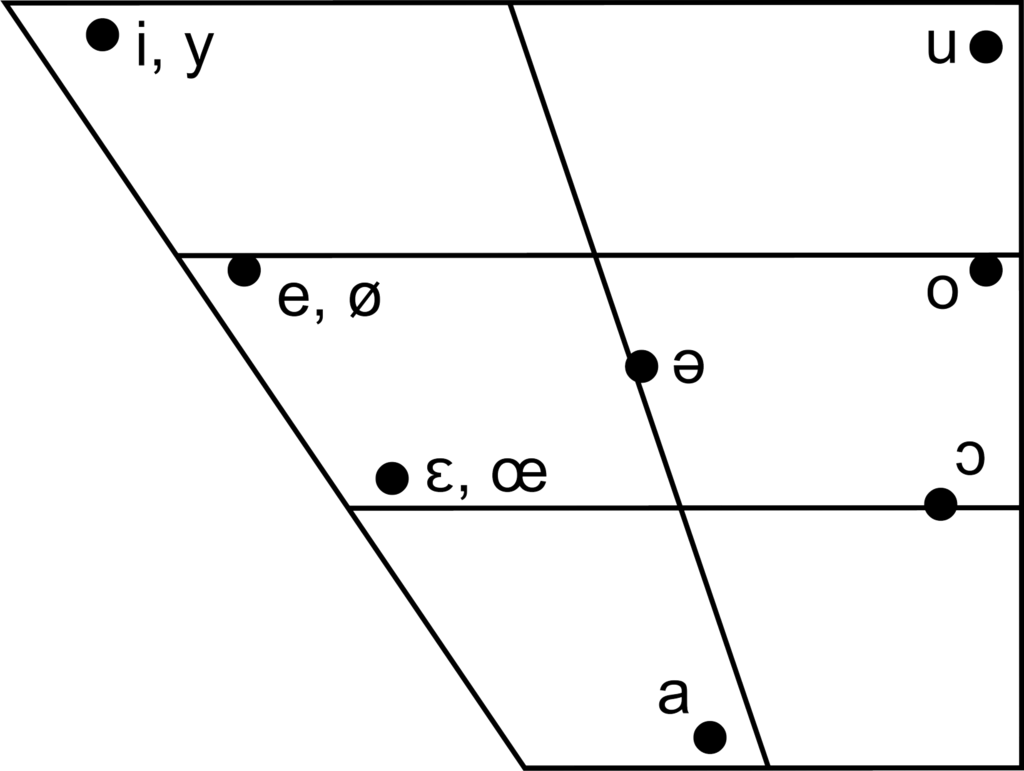
You'll notice little marks on some vowels. These are accents, and they change the pronunciation. They are not for stress like in Spanish.
- é (accent aigu) makes an "ay" sound, like in "say." Example: école (school).
- è (accent grave) makes an "eh" sound, like in "get." Example: mère (mother).
- ê (accent circonflexe) also makes an "eh" sound, just like è.
- The cédille on a ç turns a hard 'k' sound into a soft 's' sound. It only appears before the vowels a, o, and u. Example: garçon (boy).
Consonants with Character
Most consonants sound similar to their English counterparts, but a few have their own French flair.
- The French R is one of the most distinctive sounds. It's not rolled with the tip of the tongue. Instead, it's produced in the back of the throat, almost like a light gargle. It's a soft, breathy sound from the uvula scraping against the back of the tongue.
- CH is pronounced like the 'sh' in "shoe." Example: chat (cat).
- GN makes a 'ny' sound, similar to the 'ñ' in Spanish. Think of the sound in "canyon." Example: montagne (mountain).
- PH simply makes an 'f' sound, just like in English. Example: photo (photo).
Nasal Vowels
French has a category of sounds that can be new to English speakers: nasal vowels. These are produced by passing air through both the mouth and the nose. When a vowel is followed by an n or m in the same syllable, it often becomes a nasal sound, and the 'n' or 'm' itself isn't pronounced.
- an, en sound like the 'on' in the English word "on," but with air passing through your nose.
- in is like the 'an' in "ant," again with a nasal quality.
- on sounds like the 'ong' in "song," but you don't pronounce the 'g' sound at the end.
- un is a nasalized 'uh' sound. It's similar to the sound in "under," but with air flowing through the nose.
The Sound of Silence
One of the biggest hurdles for beginners is knowing which letters not to pronounce. French has many silent letters, especially at the end of words. As a general rule, the final consonants c, r, f, l are usually pronounced (think "careful"), while others are often silent.
Final -e is almost always silent. It often just signals that the preceding consonant should be pronounced. Final -s, -t, -d, -x, and -z are also typically silent. For example, the plural marker '-s' is written but not heard, unlike in English. The word chats (cats) sounds exactly the same as chat (cat).
A key takeaway: Don't assume every letter you see is a letter you should say.
Now, let's review these core concepts before testing your knowledge.
Ready to see what you've learned? This quiz will cover the key pronunciation rules we've discussed.
How is the French vowel 'U' pronounced?
Which accent on the letter 'e' produces an 'ay' sound, as in the English word 'say'?
Mastering these sounds is a journey. Consistent practice is the key to making them feel natural. Keep listening and keep trying.