Your First AWS Virtual Private Cloud
Cloud Networking Foundations
Your Private Space in the Cloud
The Amazon Web Services (AWS) cloud is enormous, with countless servers running applications for millions of customers. A Virtual Private Cloud, or VPC, is your own private, isolated section within that vast public cloud. Think of it like a gated community. Inside the gates, you control the layout of the streets, who can enter, and where the houses are built. Outside the gates is the rest of the world, but inside, you make the rules.
Amazon Virtual Private Cloud (VPC) lets you provision a logically isolated section of the AWS Cloud where you can launch AWS resources in a virtual network that you define.
This isolation is crucial. It means your applications and data are not just floating around in a giant public pool. Instead, they live inside a virtual network that you design and control. You decide what resources are public and can be accessed from the internet, and which ones are kept completely private, shielded from the outside world. This gives you the security and control of a traditional, on-premise data center, but with the flexibility and scale of the cloud.
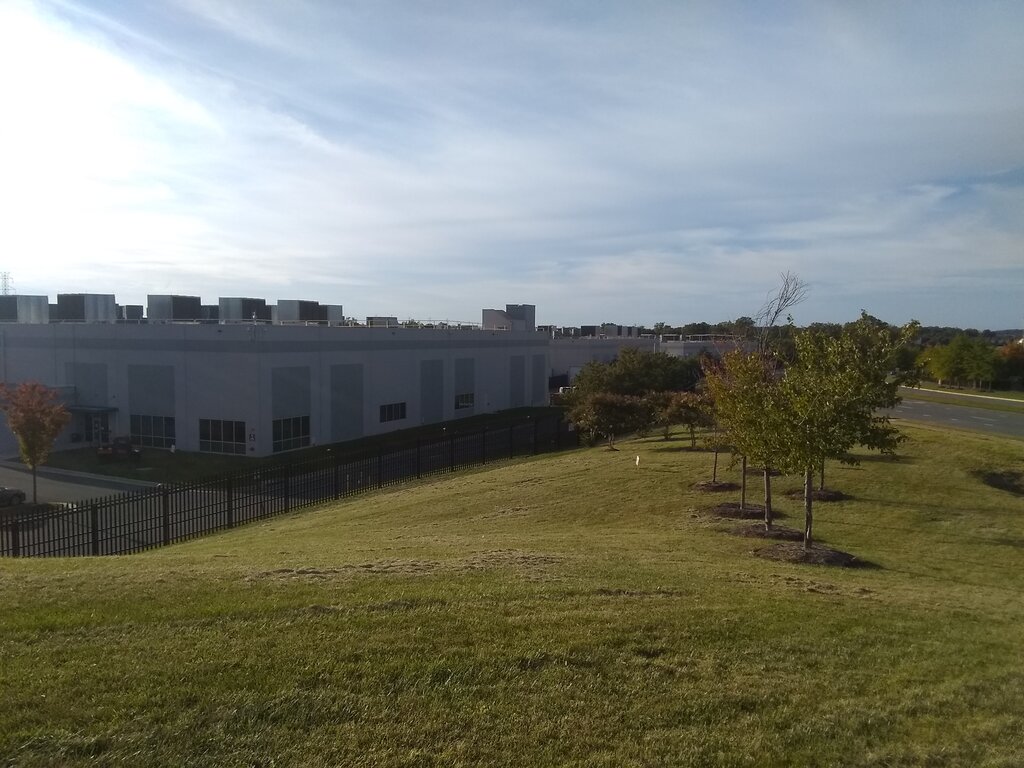
Where in the World Is Your Cloud?
When you set up your VPC, you don't just create it in the abstract "cloud." You place it in a specific physical location. This is where Regions and Availability Zones come in.
A is a geographic area somewhere in the world, like Northern Virginia or Ireland. Each Region is a separate cluster of data centers. An (or AZ) is one or more discrete data centers within a Region. Every Region has at least two AZs, and they're all physically separate from each other, with their own power, cooling, and networking.
Think of a Region as a large university campus. The Availability Zones are the individual, self-contained buildings on that campus. A fire in the science lab (one AZ) won't shut down the library (another AZ). This structure lets you build resilient applications that can withstand failures.
Two Flavors of VPC
When you first create an AWS account, you get two options for your VPC: default or custom.
A Default VPC is created for you automatically in each AWS Region. It’s a move-in-ready network designed to make it easy for you to get started immediately. You can launch resources like servers right away without having to configure any networking first. It's perfect for learning and for simple applications.
A Custom VPC is one you build from scratch. You define everything: the IP address range, the subnets, the routing, and the security. This gives you complete control, which is necessary for production applications with specific security and networking requirements. You get to be the architect of your own network.
| Feature | Default VPC | Custom VPC |
|---|---|---|
| Setup | Automatic, ready-to-use | Manual, requires configuration |
| Control | Standardized configuration | Full control over all settings |
| Best for | Beginners, simple projects | Production apps, specific needs |
Now, let's check your understanding of these foundational concepts.
Which of the following is the best analogy for an AWS Virtual Private Cloud (VPC)?
What is the primary benefit of having multiple Availability Zones (AZs) within a single AWS Region?
Understanding VPCs, Regions, and Availability Zones is the first step in mastering cloud networking. You now have a mental model of how to create your own secure, isolated space within AWS.