Your 20-Day Fitness Accelerator
Assess Current Fitness
Know Your Starting Line
Before starting any journey, you need to know where you are on the map. The same is true for fitness. Establishing a baseline isn't about judging yourself; it's about gathering the data you need to create a smart, effective plan that's tailored just for you. This initial assessment helps you see your strengths, pinpoint areas for improvement, and track your progress down the road.
First, A Safety Check
Safety is always the first priority. Before you do any physical tests, it's important to make sure you're ready for a new or increased level of activity. The Physical Activity Readiness Questionnaire, or PAR-Q, is a simple tool to help you do just that. It's a quick check-in to spot any potential health risks.
Answer these questions honestly:
- Has a doctor ever said you have a heart condition and should only do physical activity recommended by a doctor?
- Do you feel pain in your chest when you do physical activity?
- In the past month, have you had chest pain when you were not doing physical activity?
- Do you lose your balance because of dizziness or do you ever lose consciousness?
- Do you have a bone or joint problem that could be made worse by a change in your physical activity?
- Is your doctor currently prescribing drugs for your blood pressure or heart condition?
- Do you know of any other reason why you should not do physical activity?
If you answered "yes" to one or more questions, it's a good idea to talk with your doctor before you start a new fitness program. If you answered "no" to all of them, you can be reasonably sure that you can start becoming more physically active.
Measuring Your Fitness
Once you've cleared the safety check, it's time to measure four key areas of fitness. For each test, warm up with a few minutes of light activity, like marching in place or arm circles. Perform these tests on a day when you feel rested and energized.
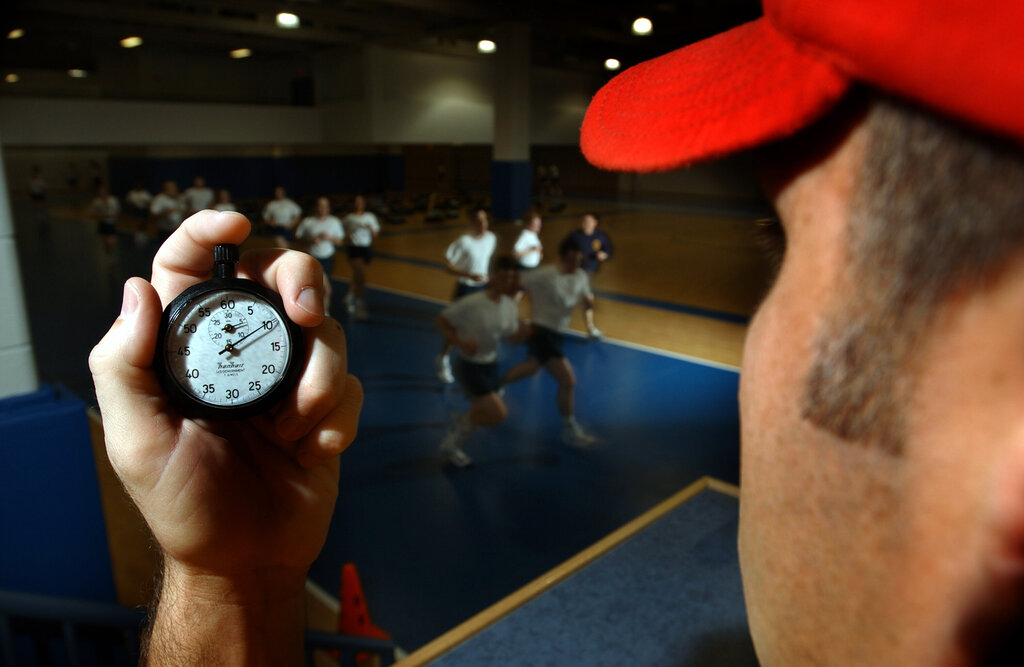
Cardiovascular Endurance This measures how efficiently your heart and lungs supply oxygen to your muscles during sustained activity. A great way to test this is the 1.5-mile (2.4 km) run/walk test.
Using a track or a flat, measured path, time how long it takes you to cover the distance. Push yourself to a pace that's challenging but sustainable. If you need to walk, that's perfectly fine. Just complete the distance as quickly as you can and record your time.
Muscular Strength & Endurance This refers to the ability of your muscles to exert force. We can test this with a couple of simple bodyweight exercises: the push-up test and the squat test.
For the push-up test, perform as many push-ups as you can with good form before you need to stop. You can do them on your toes or, for a modification, on your knees. For the squat test, stand with your feet shoulder-width apart and squat down until your thighs are parallel to the floor, then return to standing. Count how many you can do before your form breaks down.
Record the number of repetitions for each.
Flexibility Flexibility is the range of motion in your joints. A simple way to measure it is the sit-and-reach test. Sit on the floor with your legs straight out in front of you, feet flexed. Place a ruler or tape measure between your legs with the zero mark at your heels. Slowly reach forward as far as you can, keeping your legs straight. Note the distance you reach.
Body Composition This is the ratio of fat mass to fat-free mass (like muscle, bone, and water) in your body. While methods like body fat percentage calipers can be tricky, a simple waist circumference measurement is a useful indicator of health. Use a flexible tape measure to measure around your bare abdomen, just above your hipbone. Keep the tape snug but not compressing your skin.
| Fitness Component | Test | Your Result |
|---|---|---|
| Cardiovascular Endurance | 1.5-Mile Run/Walk | Time: |
| Muscular Strength | Push-Up Test | Reps: |
| Muscular Endurance | Squat Test | Reps: |
| Flexibility | Sit-and-Reach | Inches: |
| Body Composition | Waist Circumference | Inches: |
Turning Data into Goals
Your assessment results are not just numbers; they are the foundation for your goals. Instead of a vague goal like "get stronger," you can now set a specific one, like "increase my push-up count by five reps." Using a framework like S.M.A.R.T. helps make your goals clear and achievable.
Specific: What exactly do you want to achieve? Instead of "get in shape," try "improve my 1.5-mile run time."
Measurable: How will you track your progress? Your baseline measurement is your starting point. A measurable goal would be "reduce my 1.5-mile run time by 90 seconds."
Attainable: Is your goal realistic given your current fitness level and time? Aim for progress, not perfection. If you currently do 2 push-ups, aiming for 20 in 20 days might be too much. Aiming for 5-7 is more attainable.
Relevant: Does this goal matter to you? A goal to run faster is relevant if you want to improve your cardiovascular health.
Time-based: When will you achieve this goal? Our plan is for 20 days, so set your target within that timeframe. For example: "I will reduce my 1.5-mile run time by 90 seconds in 20 days."
With your baseline data and a S.M.A.R.T. goal, you're ready to build a plan that works.
Let's review what you've learned about assessing your fitness.
What is the primary purpose of establishing a fitness baseline before starting a new exercise program?
The Physical Activity Readiness Questionnaire (PAR-Q) is used to determine your readiness for increased physical activity by spotting potential health risks.
This assessment gives you a clear picture of your starting point. It’s the essential first step toward building a fitness plan that's both effective and right for you.