YOLOv4 Object Detection Explained
Introduction to Object Detection
Teaching Computers to See
Imagine walking into a room. Instantly, you recognize a chair, a table, a lamp, and a book. You don't just see them; you know where they are. This is, in essence, what we teach computers to do with object detection. It's a field of computer vision focused on identifying and locating objects within an image or video.
Object detection answers two main questions: "What is in this image?" and "Where is it?"
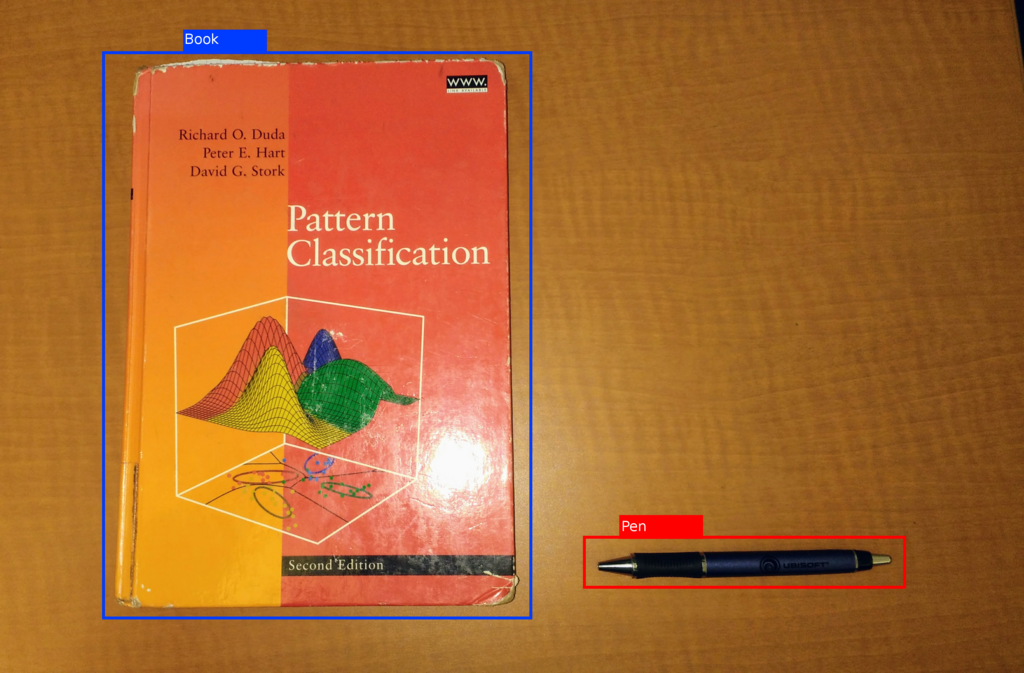
For a computer, an image is just a grid of pixels. Object detection algorithms analyze this grid to identify groups of pixels that form objects it has learned to recognize. The result is typically a bounding box—a rectangle drawn around each detected object—along with a label identifying what the object is (e.g., 'car', 'person', 'dog').
Why Object Detection Matters
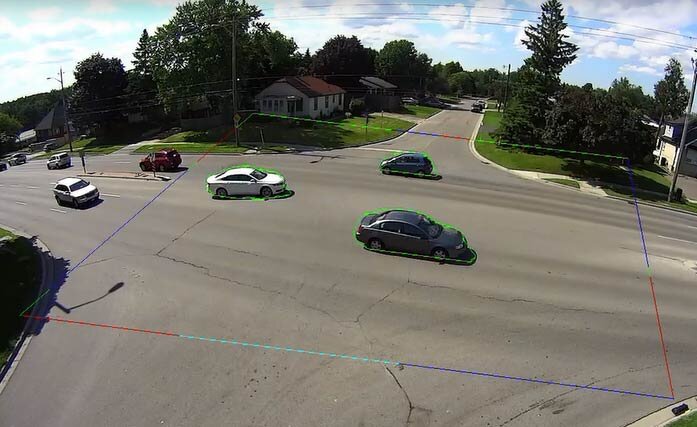
Object detection is a cornerstone technology behind many modern innovations. Self-driving cars use it to see pedestrians, other vehicles, and traffic signs. In retail, it can be used to automatically track inventory on shelves. In security, it powers systems that monitor for intruders or suspicious activity. Even your phone's camera uses it to focus on faces when you take a picture.
From manufacturing floors, where it spots defects in products, to agriculture, where it identifies ripe fruit for picking, object detection is transforming how we interact with the world.
How It Used to Work
Before modern AI, object detection was a slow, deliberate process. The most common traditional method was the sliding window approach. Imagine taking a small rectangular magnifying glass and sliding it across every single part of an image, from left to right and top to bottom. At each position, you'd stop and ask, "Is there an object inside this rectangle?"
To make this work, you'd also have to repeat the entire process with different sizes of rectangles to find objects of various scales. While this method can work, it's incredibly slow and computationally expensive. It has to check thousands, sometimes millions, of windows for every image.
These early methods also relied on manually programmed features. A developer had to tell the computer exactly what to look for—things like edges, corners, or specific color patterns. This was brittle and didn't work well when objects varied in appearance, lighting, or orientation.
The Deep Learning Revolution
Modern object detection has been revolutionized by deep learning, a type of machine learning inspired by the human brain. Instead of being explicitly programmed, a deep learning model, known as a neural network, learns to recognize objects from vast amounts of example data.
You show the model thousands of pictures of cats, and it learns the features that define a cat on its own—whiskers, pointy ears, fur patterns, and so on. This approach is far more robust and accurate than the old methods.
Deep learning models automatically discover the important features for identifying objects, making them more powerful and flexible than older, hand-crafted systems.
Many of these modern detectors, like the YOLO (You Only Look Once) family of models, have become incredibly efficient. Instead of sliding a window across the image, they look at the entire image just once to figure out what objects are present and where they are located. This brings us to another key concept: speed.
The Need for Speed
For many applications, detection has to happen in the blink of an eye. A self-driving car can't wait several seconds to identify a pedestrian crossing the street. This is where real-time object detection comes in. The goal is to process a video stream, which is just a sequence of images (frames), fast enough to keep up with the real world.
A typical video has 30 frames per second (FPS). A real-time detector must be able to process each of those frames in under 1/30th of a second. Achieving this combination of high speed and high accuracy is the central challenge in modern object detection, and it's what makes algorithms like YOLO so powerful.
Time to check what you've learned.
What are the two primary tasks performed by an object detection algorithm?
Which of the following is a key reason why modern deep learning methods surpassed traditional techniques like the sliding window approach?
Understanding these core ideas provides a solid foundation. Next, we'll look at how specific models, like YOLO, have revolutionized the field by making real-time detection a practical reality.