Yoga for Creative Minds
Alignment and Biomechanics
The Blueprint Pose
Mountain Pose, or Tadasana, is more than just standing still. It’s an active, engaged posture that serves as the foundation for every other standing pose you'll do. Mastering its alignment teaches your body how to stack your joints for stability and efficiency. Everything starts from the ground up.
Pada Bandha
noun
An energetic lock or seal created by actively engaging the feet. It involves lifting the arches and distributing weight evenly to create a stable base.
Look down at your feet. Place them hip-width apart, with the outer edges parallel. Now, activate your Pada Bandha. Lift all ten toes, spread them wide, and then place them back down on the mat. Feel the four corners of each foot pressing evenly into the floor: the mound of the big toe, the mound of the little toe, and the two sides of your heel. Gently lift the inner arches, as if drawing energy up from the ground.
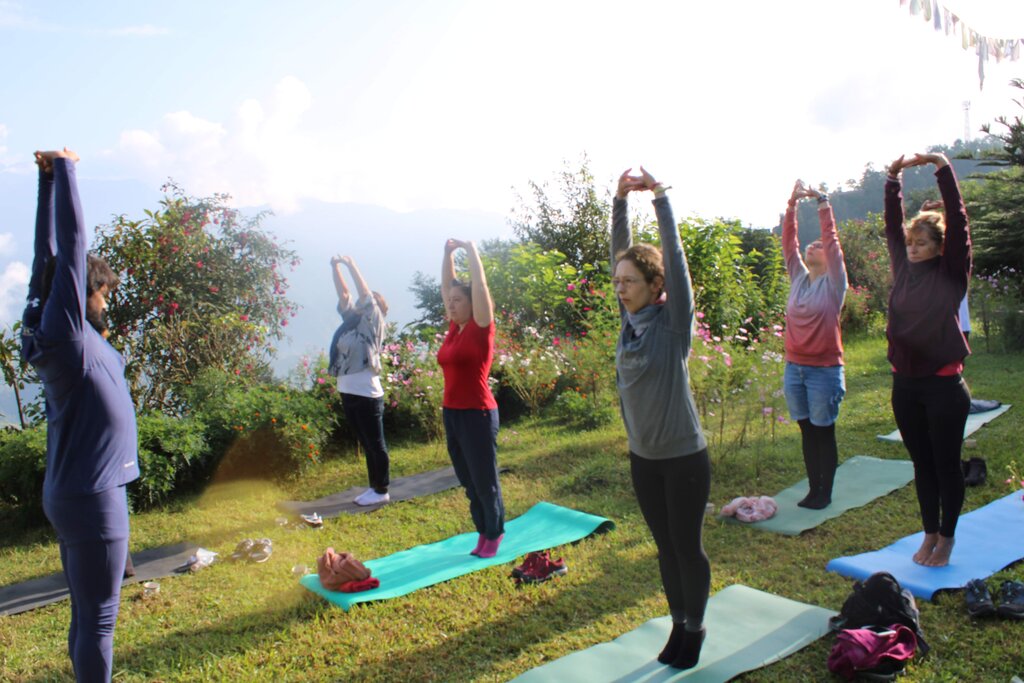
Next, let's find a neutral pelvis. Many people stand with their lower back either overly arched (an anterior tilt) or with their tailbone tucked under (a posterior tilt). To find neutral, place your hands on your hips and imagine your pelvis is a bowl of water. Gently tilt it forward, spilling water out the front, then backward, spilling it out the back. Find the position in between where the bowl is level. This is your neutral pelvis.
From this stable base, your spine can stack naturally, one vertebra on top of the other, all the way up to your skull. Let your arms hang by your sides with palms facing forward. The final touch is to gently draw your shoulder blades towards each other and slide them down your back. This action, called scapular retraction and depression, broadens your collarbones and opens your chest.
Grounding Your Practice
Wrist pain is a common complaint in yoga, especially in poses like Downward-Facing Dog (Adho Mukha Svanasana). The issue often isn't weak wrists, but poor weight distribution. By learning to properly ground your hands, you create a solid foundation that protects your joints.
This technique is called Hasta Bandha, or the hand lock. Place your hands on the mat, shoulder-width apart. Spread your fingers wide, like a starfish. The goal is to distribute your weight across the entire surface of your hand, not just dump it into the heel of your wrist. Press down firmly through the base of each finger, especially the knuckle of your index finger and thumb. Create a slight suction-cup effect in the centre of your palm. This engagement takes pressure off the delicate carpal tunnel area.
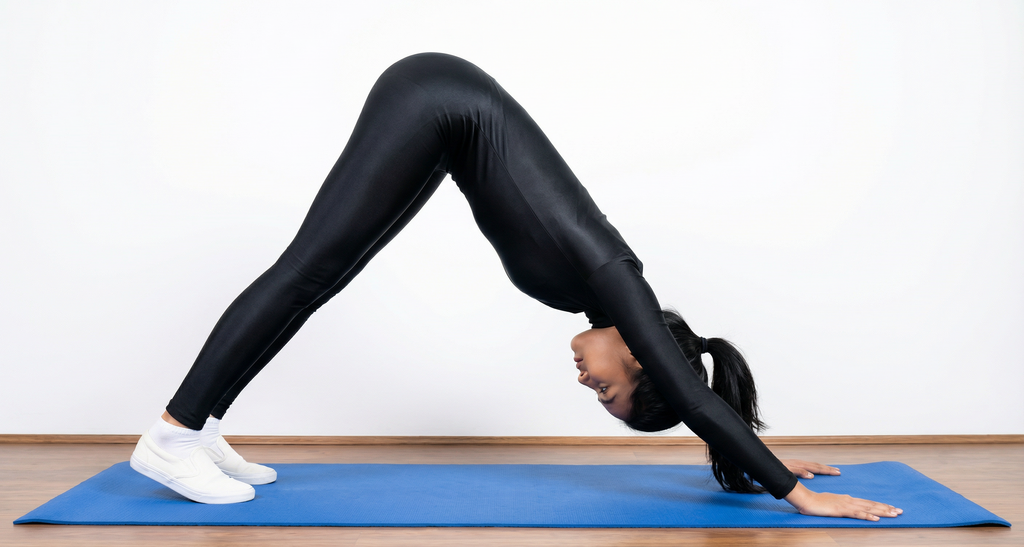
Once your hands are set, move into Downward-Facing Dog. Bend your knees generously at first. Focus on creating a long, straight line from your wrists, through your arms and shoulders, all the way to your tailbone. Your head should hang freely between your upper arms.
Think about actively pushing the floor away from you. This helps to engage the muscles around your shoulder blades (the scapulae), creating stability. Your arms should be externally rotated, so your biceps turn slightly towards the ceiling and your elbow creases face forward. This small adjustment creates space in the shoulder joint. Only after you've established this strong, stable upper body should you begin to gently straighten your legs and lower your heels toward the mat.
Your knees can always be bent in Downward-Facing Dog. The priority is a long, neutral spine, not straight legs.
Hinging from the Hips
Many forward folds are performed by rounding the spine, which puts pressure on the lumbar vertebrae. The key to a safe and effective forward fold is to initiate the movement from the hips, not the waist. This is known as a hip hinge.
Let’s practise this. Stand with your feet hip-width apart and a soft bend in your knees. Place your hands on your hip creases. Now, keeping your spine long and straight, send your buttocks backward as if you were trying to touch a wall behind you. Hinge forward from the hips, allowing your torso to lower towards your thighs. Only go as far as you can while maintaining a straight back. The movement comes from the pelvis rotating over the heads of the femur bones.
The fundamental position of balance in handstand is stacking the hips over the shoulders over the wrists.
This principle of hip hinging applies to many poses, from a simple Standing Forward Fold (Uttanasana) to a Seated Forward Fold (Paschimottanasana). By learning to move from your hips, you protect your lower back and create a deeper, more sustainable stretch in your hamstrings.
Proper alignment isn't about creating perfect-looking shapes. It's about understanding the mechanics of your body to build a practice that is safe, stable, and serves you for years to come.
What is the primary purpose of finding a "neutral pelvis" in Mountain Pose (Tadasana)?
When practising "Hasta Bandha" (the hand lock) to protect your wrists, which action is key?
Building a yoga practice on a solid foundation of alignment ensures safety and longevity on the mat.