Year 7 Fractions Fundamentals
Fraction Basics
Parts of a Whole
Whole numbers are great for counting things like apples or books, but what happens when you need to talk about a piece of something? That's where fractions come in. Fractions are a way to represent parts of a whole.
Fractions are a way to represent parts of a whole.
Imagine you have a chocolate bar that's made of eight equal squares. If you eat three of those squares, you've eaten a fraction of the chocolate bar. You didn't eat the whole thing, just a part of it.
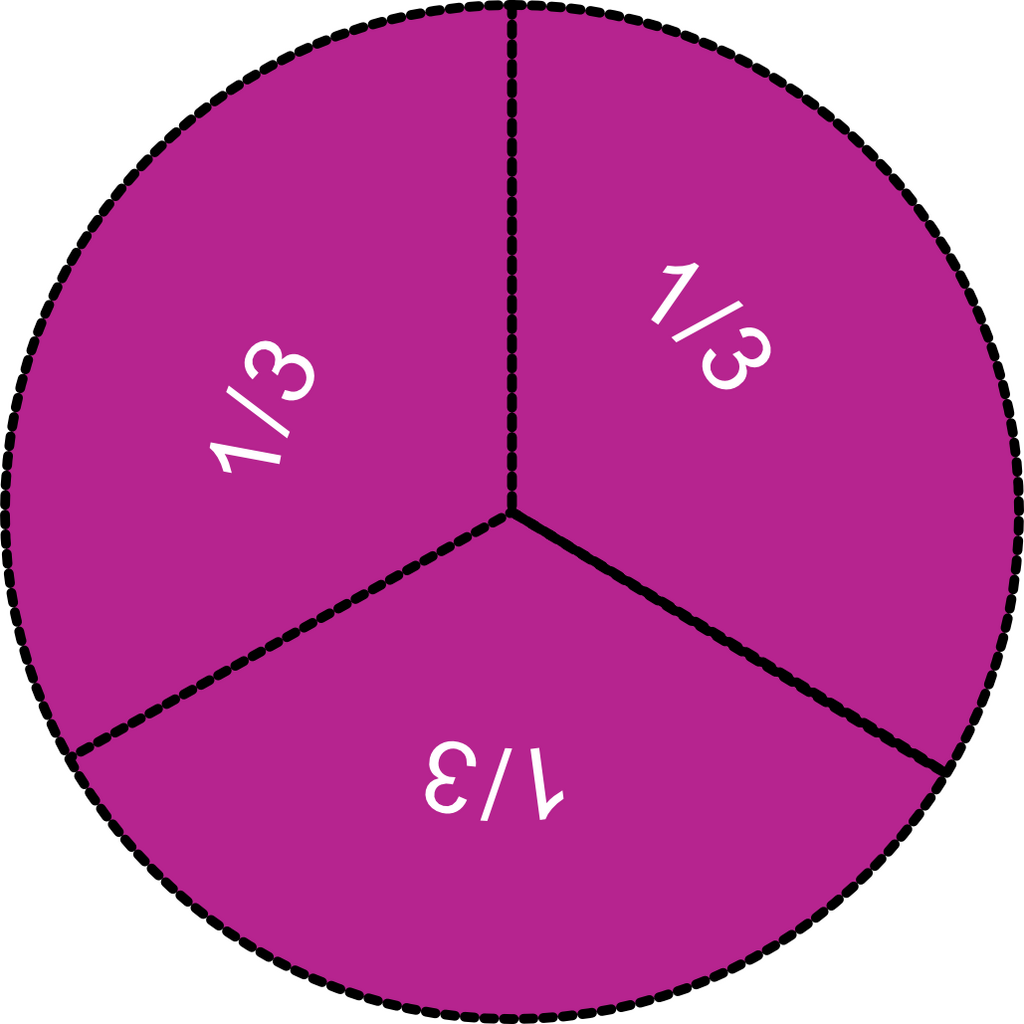
The key idea here is equal parts. For something to be a fraction, the whole must be divided into pieces of the same size.
Numerator and Denominator
Every fraction has two numbers, a top number and a bottom number, separated by a line. Each has a specific job.
The bottom number is the denominator. It tells you how many equal parts the whole is divided into.
denominator
noun
The number below the line in a fraction, indicating the number of equal parts into which the whole is divided.
The top number is the numerator. It tells you how many of those parts you are talking about.
numerator
noun
The number above the line in a fraction, showing how many of the parts indicated by the denominator are taken.
So, if you have a pizza cut into 8 slices (denominator) and you eat 1 slice (numerator), you ate of the pizza.
Visualizing Fractions
Seeing fractions can make them much easier to understand. You can draw them as shapes, like circles or rectangles.
Another powerful way to see fractions is on a number line. Just like whole numbers have their own spot, so do fractions. They live in the spaces between the whole numbers.
Thinking of fractions as numbers with their own place on the number line helps you understand their value. For example, you can see that is greater than , because it's further to the right.
What does a fraction represent?
In the fraction , what is the top number (5) called?
Understanding what fractions are and how to read them is the first step. Once you're comfortable with these basics, you'll be ready to see what else you can do with them.