Year 4 Maths Essentials
Multiplication and Division
Your Multiplication Toolkit
Think of multiplication as a shortcut for addition. Instead of adding 5 + 5 + 5, you can just say 3 × 5. Knowing your multiplication facts, or times tables, makes solving all kinds of math problems faster and easier. The goal is to know them all the way up to 12 × 12.
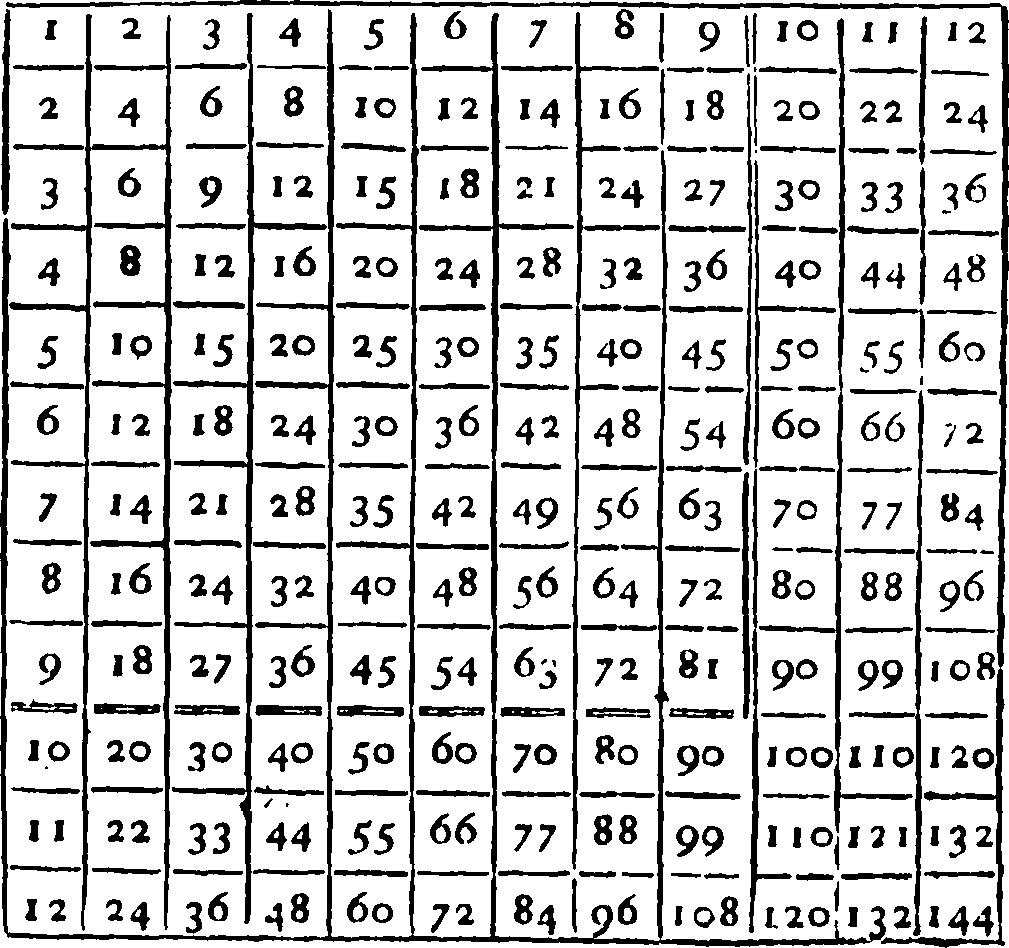
Regular practice is the key. You might use flashcards, play games, or just recite them. The more you practice, the more these facts will stick in your memory, ready for when you need them.
Finding Factor Pairs
Every number has factors, which are numbers that multiply together to create it. When you find two numbers that multiply to make a target number, you've found a factor pair.
For example, let's find the factor pairs for 12. We can ask ourselves: which numbers multiply to make 12?
- 1 × 12 = 12
- 2 × 6 = 12
- 3 × 4 = 12
So, the factor pairs of 12 are (1, 12), (2, 6), and (3, 4).
Recognizing factor pairs helps you understand how numbers are built. It's a useful skill for simplifying problems and is a building block for working with fractions later on.
A Family of Facts
Multiplication and division are closely related. They are inverse operations, which means they undo each other. For any multiplication fact, you can write corresponding division facts. Together, they form a "fact family."
Seeing this relationship helps you solve problems more flexibly. If you know that 4 × 6 = 24, you also instantly know that 24 ÷ 6 = 4.
Mental Math with Place Value
Place value is your secret weapon for doing multiplication and division in your head, especially with numbers like 10, 100, and 1000.
To multiply a whole number by 10, just add a zero to the end. To multiply by 100, add two zeros.
7 × 10 = 70 7 × 100 = 700
Why does this work? When you multiply by 10, every digit shifts one place to the left, making its value ten times bigger. The 7 moves from the ones place to the tens place, and a zero holds the ones place.
Division is the opposite. To divide a number ending in zeros by 10, just remove a zero. To divide by 100, remove two zeros.
700 ÷ 10 = 70 700 ÷ 100 = 7
This trick works because dividing by 10 shifts every digit one place to the right. The 7 in 700 moves from the hundreds place to the tens place, making its value ten times smaller.
Knowing these patterns makes mental calculations quick and simple.
Ready to test your knowledge?
Which of the following addition problems is the same as ?
If you know that , which division fact must also be true?
By mastering your times tables and understanding these key relationships, you're building a strong foundation for all the math to come.