Year 11 Physics Waves
Wave Basics
What is a Wave?
A wave is a disturbance that transfers energy from one place to another. The key thing to remember is that waves move energy, not matter.
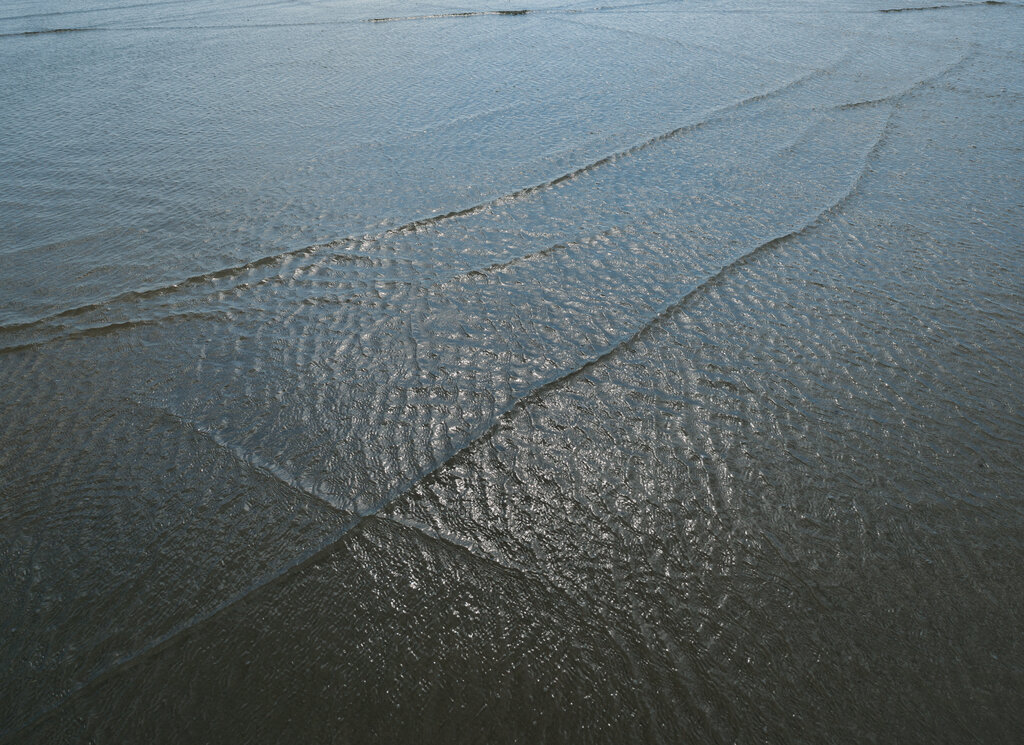
Think about a ripple spreading across a calm pond. A leaf floating on the surface will bob up and down as the ripple passes, but it won't be carried across the pond with the wave. The water molecules themselves are just moving locally, passing the energy along to their neighbors.
Two Main Flavors
Waves can be sorted into two main categories based on what they travel through.
Mechanical waves need a substance, or medium, to travel. Sound is a classic example. It travels through the air as vibrations. Without air particles to vibrate, like in the vacuum of space, sound can't exist. Other examples include ocean waves traveling through water or seismic waves from an earthquake traveling through the Earth.
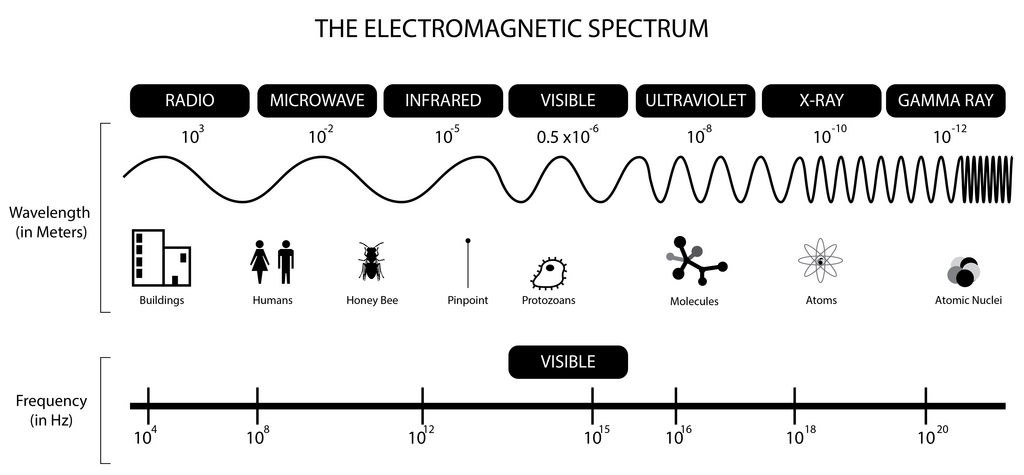
Electromagnetic (EM) waves are different. They don't need a medium at all and can travel through the vacuum of space. These waves are disturbances in electric and magnetic fields. Light from the sun, the microwaves that heat your food, and the radio waves that carry music to your car are all types of EM waves.
How Waves Move
We can also classify waves by the direction of their disturbance. There are two types: transverse and longitudinal.
In a transverse wave, the particles of the medium move perpendicular (at a 90-degree angle) to the direction the wave's energy is moving.
Imagine flicking one end of a rope up and down. You create a wave that travels along the rope's length, but each piece of the rope itself just moves up and down. Light and all other electromagnetic waves are transverse waves.
In a longitudinal wave, the particles of the medium vibrate parallel to the direction of energy transfer.
Think of a slinky. If you push one end, you'll see a compression travel down its length. The coils of the slinky move back and forth in the same direction the wave is traveling. Sound is a longitudinal wave, consisting of compressions (areas of high pressure) and rarefactions (areas of low pressure) in the air.
Measuring a Wave
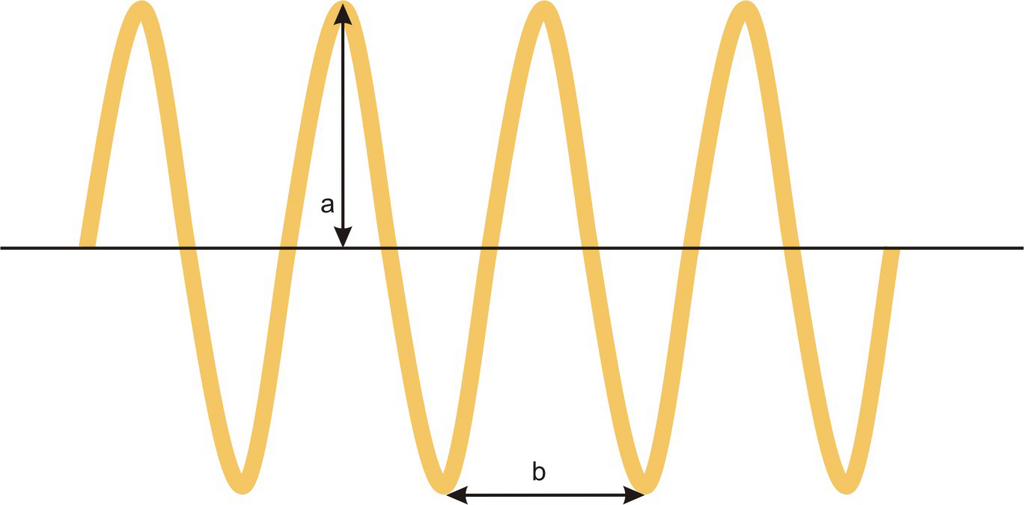
To describe waves, we use a few key properties. Let's look at a transverse wave to define them.
Amplitude
noun
The maximum displacement or distance a point on the wave moves from its equilibrium position (the undisturbed state). For a transverse wave, this is how high the crests are or how low the troughs are. A wave's amplitude is related to its energy—a higher amplitude means more energy.
Wavelength
noun
The distance between two consecutive identical points on a wave, such as from one crest to the next, or one trough to the next. It's represented by the Greek letter lambda ().
Frequency
noun
The number of complete waves (or cycles) that pass a certain point per second. It's measured in Hertz (Hz), where 1 Hz is one cycle per second. Frequency is represented by the letter .
Finally, there's speed (), which is simply how fast the wave's energy is moving through the medium. These three properties—speed, frequency, and wavelength—are all connected by a fundamental formula.
The Wave Equation
The speed of a wave is its frequency multiplied by its wavelength.
Here:
- is the wave speed (in meters per second, m/s)
- is the frequency (in Hertz, Hz)
- is the wavelength (in meters, m)
This equation tells us that for a wave traveling at a constant speed, frequency and wavelength are inversely proportional. If the frequency goes up, the wavelength must go down, and vice versa.
What is the primary thing that waves transfer from one place to another?
Which of the following requires a medium, such as air or water, in order to travel?
These basic concepts are the building blocks for understanding all kinds of wave behaviors.