Year 10 Energy Stores and Transfers
Energy Stores
Where Energy Lives
Energy isn't just a vague force that makes things happen. It's a quantity that can be held or stored in different ways within an object or a system. Think of it like money. You can have cash in your wallet, money in a checking account, or investments in the stock market. It's all money, but it's stored in different forms. Energy works in a similar way, existing in various 'stores' ready to be used.
Energy is not a substance, but it is substance-like and can be stored in physical system.
Let's explore the most common places where energy is stored.
Energy in Motion
The most straightforward energy store is found in movement. Any object that is moving has kinetic energy. A car driving down the highway, a planet orbiting the sun, and a single vibrating atom all possess kinetic energy. The amount of energy stored depends on the object's mass and how fast it's moving.
kinetic
adjective
Relating to or resulting from motion.
Something with more mass or more speed has a lot more kinetic energy. This is why a heavy, fast-moving truck has immense energy, while a slow-moving feather has very little. The relationship is described by a simple formula:
Here, is the mass of the object and is its velocity (or speed). Notice that velocity is squared, which means that doubling an object's speed quadruples its kinetic energy.
Stored Potential
Potential energy is energy that is stored due to an object's position or state. It's 'potential' because it has the ability to be converted into other forms of energy, like kinetic energy. There are several kinds of potential energy.
Gravitational Potential Energy: This is energy stored in an object because of its height in a gravitational field. The higher something is, the more gravitational potential energy it has.
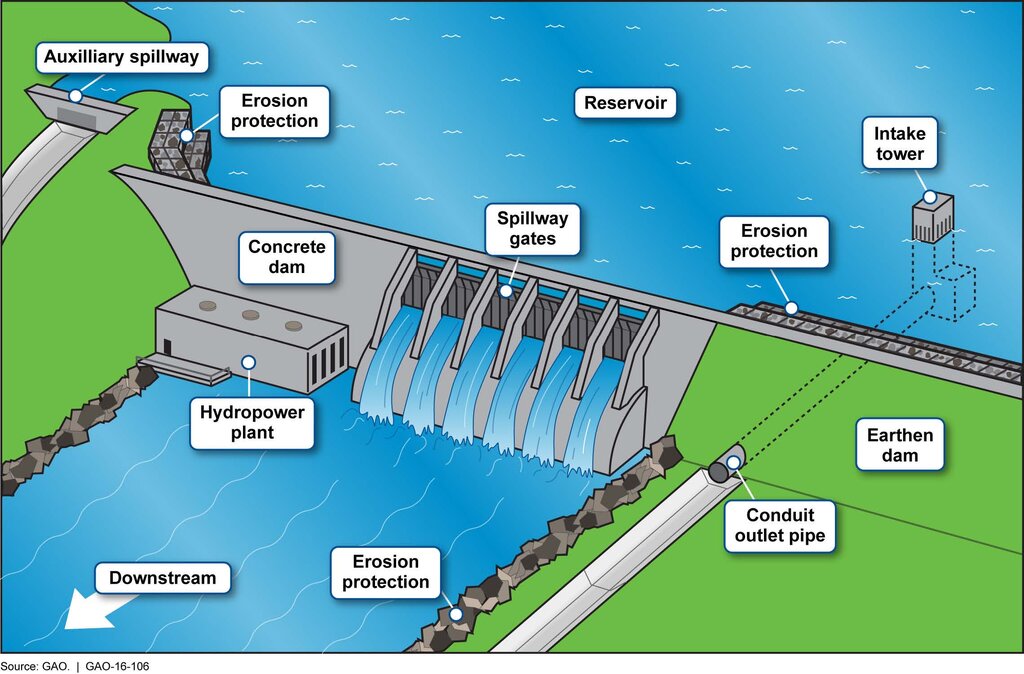
A book sitting on a high shelf has gravitational potential energy. If it falls, that stored energy is converted into the kinetic energy of its motion. A massive real-world example is the water held back by a dam. The huge volume of water stored at a height contains immense potential energy, which can be harnessed to generate electricity.
Another type is elastic potential energy.
Elastic Potential Energy: This is energy stored when an object is stretched or compressed. Think of a stretched rubber band or a compressed spring. When you let go, the object returns to its original shape, releasing the stored energy.
This principle is used in everything from the springs in a car's suspension system, which absorb the energy from bumps in the road, to the simple mechanism of a wind-up toy.
Energy at the Atomic Level
Some of the most powerful energy stores are found at the microscopic scale, within the very structure of matter.
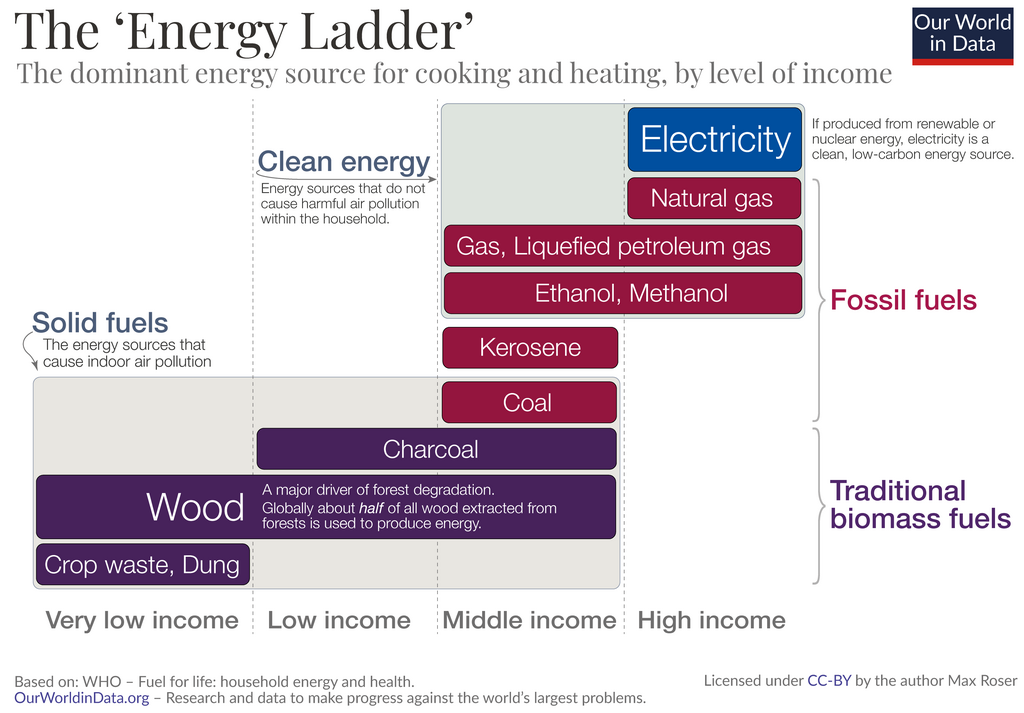
Chemical Energy: This is energy stored in the bonds between atoms and molecules. When a chemical reaction occurs, these bonds can be broken and reformed, releasing or absorbing energy. The food we eat, the gasoline in a car, and the wood in a fireplace all contain chemical energy.
Thermal energy is another form that relates to the particles inside an object.
Thermal Energy: This is the total kinetic energy of the atoms and molecules that make up a substance. The hotter an object is, the faster its particles move, and the more thermal energy it possesses. A cup of hot coffee has more thermal energy than a cup of cold water.
Two other important stores are related to fundamental forces: magnetism and electricity.
Magnetic and Electrostatic Energy: Magnetic energy is stored within a magnetic field, like the one created by a permanent magnet or an electromagnet. Electrostatic energy is stored due to the relative positions of charged particles. A balloon rubbed against your hair creates static electricity, storing electrostatic energy.
Finally, the most concentrated energy store of all is found within the atom's core.
Nuclear Energy: This is the energy stored in the nucleus of an atom. The forces holding the nucleus together are incredibly strong. Immense amounts of energy can be released when nuclei are split apart (fission) or joined together (fusion). Nuclear power plants use fission to generate electricity.
Understanding these different energy stores is the first step to seeing how energy operates in the world around us. It's not just one thing, but a versatile quantity held in many different accounts, ready to power everything from our bodies to our cities.