XRP ETH BTC A Crypto Investment Primer
Introduction to Cryptocurrencies
What Is Cryptocurrency?
At its heart, a cryptocurrency is digital money. Unlike the dollars or euros in your bank account, it doesn't exist in a physical form. It's a purely digital asset that you can use to buy goods and services, or hold as an investment. The primary goal of most cryptocurrencies is to create a secure and reliable way to exchange value without needing a traditional middleman, like a bank or a payment processor.
cryptocurrency
noun
A digital or virtual currency that is secured by cryptography, making it nearly impossible to counterfeit or double-spend.
The “crypto” part of the name comes from the complex cryptography used to secure transactions and control the creation of new units. This security is made possible by a groundbreaking technology called the blockchain.
The Technology Backbone
Imagine a shared digital notebook that is duplicated and spread across a vast network of computers. This notebook is the blockchain. It's a continuously growing list of records, called blocks, which are linked together securely. Each block contains a batch of recent transactions.
At the core of cryptocurrency lies in blockchain technology, a decentralized ledger that tracks and records all transactions within a peer-to-peer network.
Once a block is added to the chain, it's there for good. It cannot be easily altered or removed. This is because each block contains not only its own data but also a unique code, or hash, from the previous block. This creates a strong, interlocking chain. If someone tried to change the information in one block, they would also have to change every single block that came after it, all across thousands of computers at the same time. This structure makes the blockchain incredibly secure and transparent, as anyone on the network can see the ledger.
No One in Charge
One of the most important ideas behind cryptocurrency is decentralization. Traditional currencies are centralized; they are issued and managed by a central authority, like a government or a central bank. This central body controls the money supply and can approve or deny transactions.
Cryptocurrencies are different. They operate on a decentralized network of computers spread across the globe. No single person, company, or government owns or controls it. This peer-to-peer system means that power is distributed among its users.
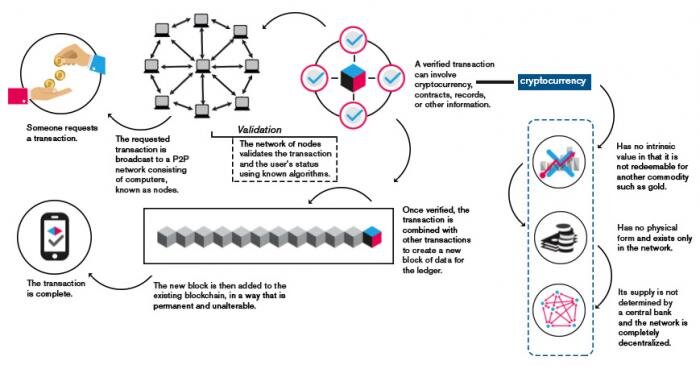
This lack of a central authority is significant. It means you can send and receive funds directly with another person without an intermediary. It also means the system is potentially more resilient, as there is no single point of failure.
How a Transaction Works
So, how does a transaction actually happen? Let's break it down into a few simple steps.
-
Initiation: You decide to send cryptocurrency to someone. Using a digital wallet, you create a transaction and sign it with your private key, which is like a secret password that proves you own the funds.
-
Broadcast: Your transaction is sent out to the entire network of computers (often called nodes).
-
Validation: The computers on the network check the transaction to make sure it's valid. They confirm that you have enough funds and that the request is authentic.
-
Confirmation: Once validated, your transaction is grouped with other transactions into a new block. This block is then added to the end of the blockchain.
-
Completion: With the block added to the chain, the transaction is complete and permanent. The funds are now in the recipient's wallet.
Every transaction is a public entry in a shared digital record book, verified by a global network of peers.
This whole process happens without any bank overseeing it. The network itself is the authority, collectively ensuring everything is legitimate. Let's review these key terms.
Ready to test your knowledge? Let's see what you've learned about the basics.
What is the primary technology that underpins most cryptocurrencies, acting as a distributed public ledger?
What does "decentralization" mean in the context of cryptocurrency?
Understanding these core concepts—what cryptocurrency is, how blockchain works, the power of decentralization, and the transaction process—is the first step into this new financial world.