Xi Robotic Emergency Undocking
Introduction to da Vinci Xi System
Meet the da Vinci Xi
Robotic-assisted surgery sounds like science fiction, but it's a reality in many modern operating rooms. The da Vinci Xi Surgical System is a sophisticated platform that allows surgeons to perform complex procedures using a minimally invasive approach. This means surgeons can operate through a few small incisions rather than one large one, which often leads to less pain and a quicker recovery for the patient.
Think of the system not as an autonomous robot, but as an extension of the surgeon's hands and eyes. It translates the surgeon's movements in real time, but with enhanced precision, control, and vision. The system is designed to be a tool, entirely under the control of a trained medical professional.
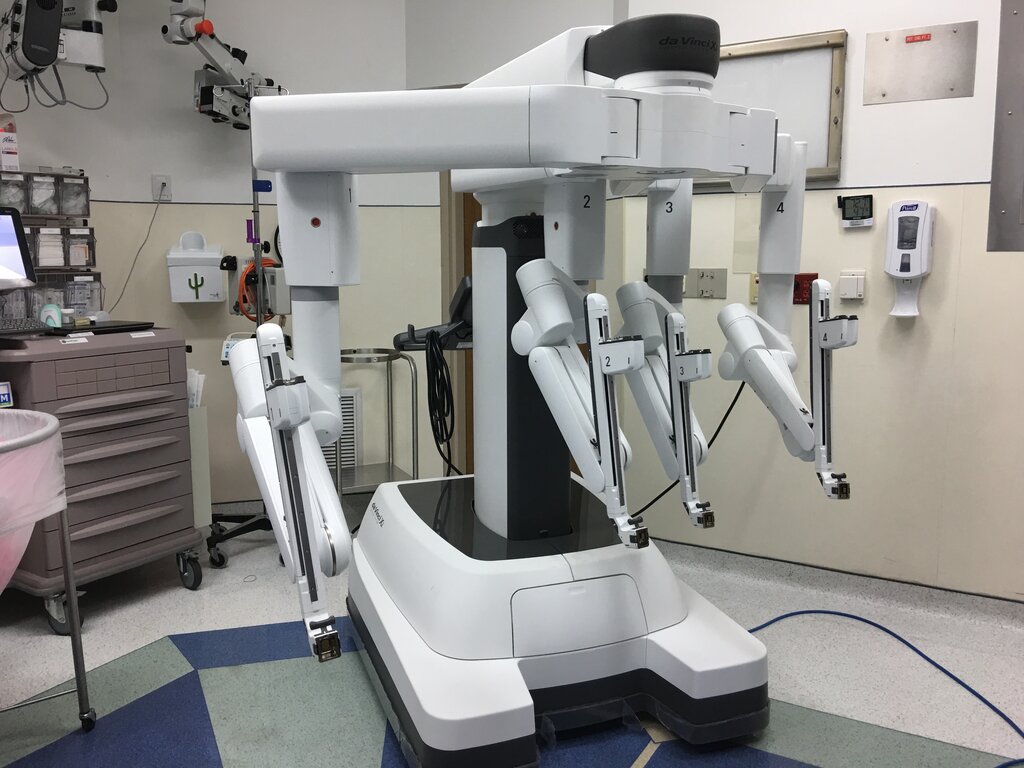
The Three-Part Team
The da Vinci Xi system is made up of three main components that work together seamlessly. Each part has a distinct role, much like members of a surgical team. Let's break down the surgeon's console, the patient-side cart, and the vision cart.
Surgeon's Console: The command center. Patient-Side Cart: The surgeon's hands. Vision Cart: The team's eyes.
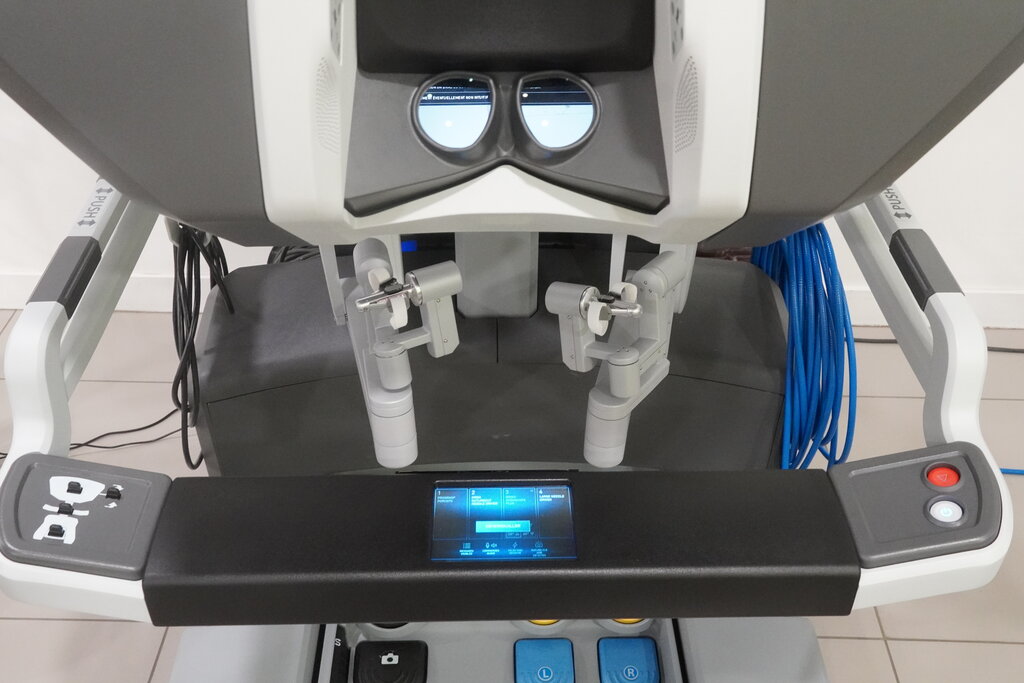
The Surgeon's Console
This is where the surgeon sits during the procedure, typically a few feet away from the operating table. It's an ergonomic console designed to be the surgeon's command center. Looking into a high-definition 3D viewer, the surgeon gets a magnified, crystal-clear view of the surgical site—far better than what the naked eye can see.
The surgeon uses master controls, which are like advanced joysticks, to manipulate the instruments. Every hand and wrist movement is translated into precise, real-time movements of the surgical instruments inside the patient. The system can even filter out natural hand tremors and scale the surgeon's movements, allowing for incredibly delicate work. Foot pedals are used to control energy devices and switch the camera's focus, keeping the surgeon's hands free for the main task.
The Patient-Side Cart
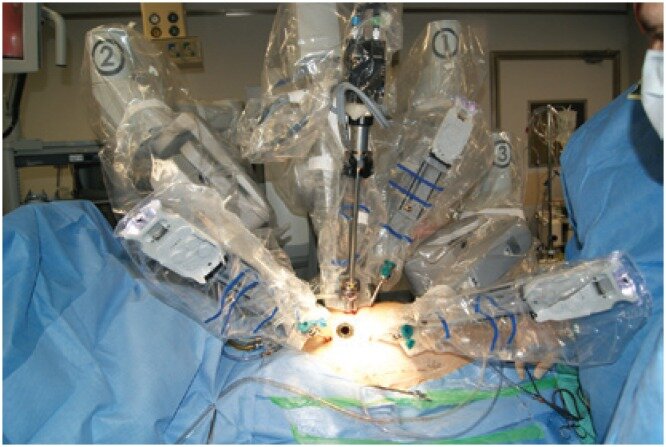
The patient-side cart is positioned next to the patient on the operating table. This is the part of the system that does the physical work. It has four interactive robotic arms that hold the surgical instruments and a 3D camera. During a procedure, the surgeon's commands from the console are carried out by these arms.
The instruments themselves, called EndoWrist instruments, are designed to mimic the human wrist but with an even greater range of motion. They can bend and rotate in ways a human hand cannot, providing exceptional dexterity in tight spaces within the body. Different instruments can be swapped out during the surgery depending on the task, whether it's cutting, grasping, or suturing.
The Vision Cart
The vision cart is the communication hub of the whole system. It houses the central processing unit and the image processing equipment. Think of it as the system's brain and eyes.
This cart connects all the components and generates the 3D image that the surgeon sees in the console. It also includes a large video monitor that allows the rest of the surgical team in the operating room to see exactly what the surgeon is seeing and doing. This shared view ensures the entire team is synchronized and can anticipate the next steps of the procedure.
What is the primary role of the da Vinci Xi Surgical System in the operating room?
The surgeon operates the da Vinci system from the ______, using master controls and a high-definition 3D viewer.
Understanding these core components provides a foundation for how robotic-assisted surgery works. Each part plays a critical role in creating a controlled, precise, and minimally invasive surgical environment.