Wyckoff Method Mastery with Ruben Villahermosa
Introduction to Wyckoff Method
Reading the Market's Mind
In the early 1900s, the stock market felt like a chaotic mystery to most people. Fortunes were made and lost, often with little rhyme or reason. But one trader, Richard D. Wyckoff, believed there was a logic hidden beneath the noise. He was a stock market analyst and educator who spent his life studying the titans of Wall Street, like J.P. Morgan and Jesse Livermore, to understand how they consistently won.
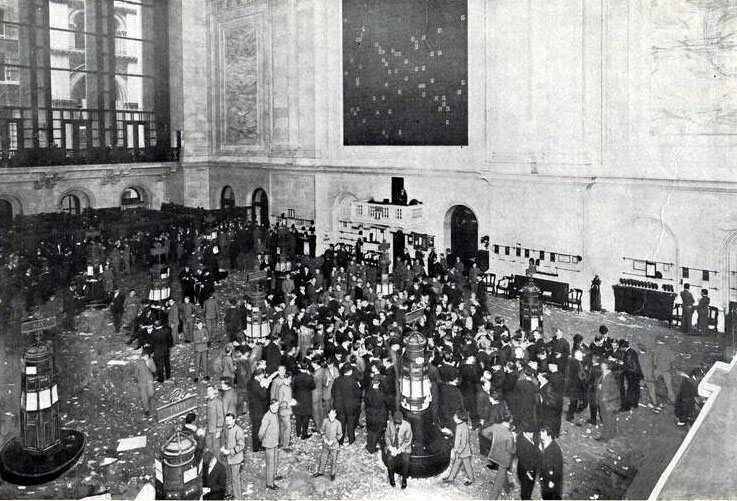
Wyckoff concluded that the market wasn't random at all. He saw it as a game orchestrated by a few large, well-informed players. He developed a method to track their activity by analyzing price movements and trading volume. His goal was simple: to teach regular investors how to understand the market's true intentions and trade in harmony with the smart money, not against it.
The Composite Operator
Wyckoff's central idea is the concept of the 'Composite Operator' or 'Composite Man'. This isn't a real person. It’s a mental model for the collective actions of all the big, professional players in the market—institutional investors, hedge funds, and other major financial forces.
Imagine all these powerful entities acting as one single, intelligent mind. This Composite Operator is patient, calculating, and unemotional. Their goal is to buy assets from the public at low prices and later sell them back at high prices. To do this, they manipulate market sentiment, creating news and price movements that trick retail traders into making poor decisions.
The Wyckoff Method teaches you to analyze the market as if it were controlled by a single person. Your job is to figure out what this person is doing.
Three Guiding Principles
Wyckoff's entire method is built on three fundamental principles that help traders interpret the actions of the Composite Operator. They provide a framework for analyzing charts without relying on dozens of complex indicators.
| Principle | Core Idea |
|---|---|
| Supply and Demand | Prices rise when demand is greater than supply, and fall when supply is greater than demand. This is the basic engine of the market. |
| Cause and Effect | For a significant price move to happen (the effect), a period of preparation (the cause) must precede it. The longer the cause, the larger the potential effect. |
| Effort vs. Result | Trading volume represents the effort, while the resulting price change is the result. If a lot of effort (high volume) leads to a small result (little price change), it signals a potential change in trend. |
By observing the interplay of these three principles through price and volume, a trader can start to see the market's narrative unfold. You begin to understand not just what the price is doing, but why.
Why It Still Matters
The Wyckoff Method was developed a century ago, long before algorithmic trading and 24/7 financial news. Yet, its relevance has only grown. The markets may be faster and more complex, but they are still driven by human psychology—fear and greed—on a massive scale. The Composite Operator today might be a collection of algorithms and quantitative funds, but its behavior remains the same.
The results of the study demonstrate the remarkable efficacy of deep learning models in detecting Wyckoff patterns within financial data, underscoring their potential for enhancing pattern recognition and analysis in financial markets.
Learning to identify the patterns of accumulation and distribution planned by these large operators gives traders a powerful edge. It’s a timeless approach focused on the underlying logic of market movements rather than just surface-level signals.
Ready to check your understanding? Let's review the key concepts.
What is the 'Composite Operator' in the Wyckoff Method?
According to Wyckoff's theory, what is the primary goal of the Composite Operator?
By understanding these foundational ideas, you've taken the first step toward analyzing markets through the logical lens developed by Richard Wyckoff.