Writing Chinese Basics
Introduction to Chinese Characters
A Living History
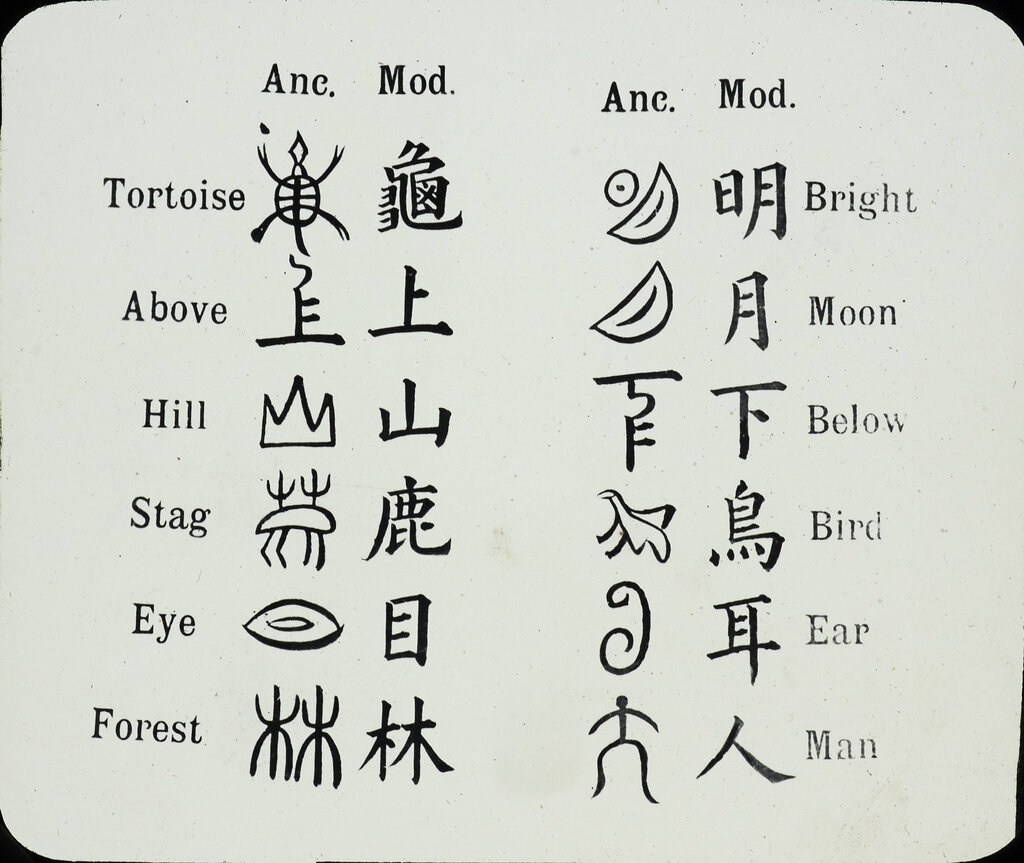
Chinese characters aren't just an alphabet. They are a direct link to thousands of years of history. Each character tells a story, starting as a simple picture of the world around us. The earliest known characters were carved into animal bones and tortoise shells over 3,000 years ago. These were called oracle bone script, used for fortune-telling.
Over centuries, these pictures became more stylized and abstract. The graceful curves turned into straighter, more efficient strokes for easier writing. What began as a drawing of a mountain eventually became the character we use today. This evolution shows how a practical need for communication shaped an entire writing system.
The Building Blocks
At first glance, Chinese characters can look complicated. But like any complex structure, they're built from simple parts. The most basic components are called strokes. Think of them as the individual lines you make with a pen to form a character. A simple character might have only one stroke, while a more complex one could have over a dozen.
For example, the character for "one" is just a single horizontal stroke: 一 (yī).
Strokes combine to form larger components called radicals. Radicals are the key to unlocking the meaning of characters. There are just over 200 common radicals, and they appear again and again in thousands of characters. Learning to spot them is like having a cheat sheet for understanding Chinese.
Many radicals are characters in their own right. For instance, the radical for water,氵, comes from the character 水 (shuǐ), which means water. When you see this radical on the left side of another character, it often has to do with liquids. For example, 河 (hé) means river, and 湖 (hú) means lake. The water radical gives you a hint about the character's meaning.
Why Characters Matter
In the age of digital input and phonetic systems like Pinyin, you might wonder if learning characters is still necessary. The answer is a definite yes. Pinyin is a great tool for learning pronunciation, but it's not the language itself. The characters are.
One key reason is that Mandarin has a huge number of homophones, words that sound the same but have different meanings. The word shì, for example, could mean "is" (是), "matter" (事), "city" (市), or "to try" (试), among many others. In spoken conversation, context helps you figure out the meaning. But in writing, the unique character for each word makes the meaning perfectly clear. Without recognizing the characters, written Chinese would be almost impossible to read.
Learning characters connects you to the heart of the language and its culture. It's a challenging but deeply rewarding part of the journey. By understanding how they're built and what they represent, you're not just memorizing symbols, you're learning to think in a new way.
What is the earliest known form of Chinese writing, often found on animal bones and tortoise shells?
True or False: Radicals in Chinese characters are purely decorative and do not provide any clues about the character's meaning or pronunciation.