Writing About Rivers
Introduction to River Functionality
The Pulse of the River
A river is more than just a channel of water; it’s a dynamic system with a distinct pulse. This pulse is its flow, a concept at the heart of river hydrology. Hydrology is the study of how water moves, and for a river, the most basic measure of its movement is discharge.
Discharge is the volume of water flowing past a certain point over a specific period. Think of it as the river's heartbeat, measuring how much lifeblood is pumping through its veins.
We calculate discharge () with a simple formula that multiplies the river channel's cross-sectional area () by the average velocity () of the water.
A river's discharge isn't constant. It swells with heavy rain or snowmelt and shrinks during dry spells. Where does all this water come from? It comes from the river's watershed, also known as its catchment basin. This is the entire area of land that drains into the river and its tributaries. When rain falls anywhere in the watershed, it eventually finds its way to the river.
The shape of the land, the type of soil, and the amount of vegetation all influence how quickly water reaches the river, affecting its discharge and overall character.
A River's Moving Load
Rivers are powerful sculptors of the landscape. Their energy doesn't just move water; it also transports vast amounts of material, from microscopic particles to giant boulders. This material is called the river's sediment load, and it moves in three different ways.
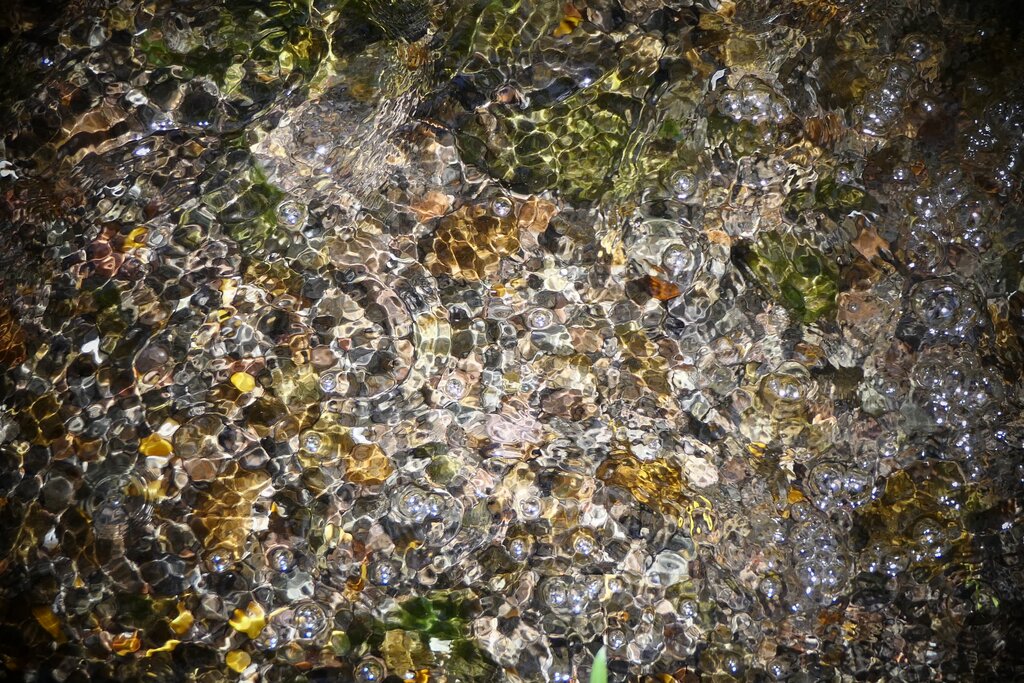
The dissolved load consists of minerals that have dissolved in the water, like sugar in tea. It's invisible and travels wherever the water goes.
The suspended load is made up of fine particles like silt and clay. These particles are light enough to be held up and carried along by the river's current, often giving the water a muddy or cloudy appearance.
The bed load includes heavier materials like sand, gravel, and rocks. These particles are too heavy to be suspended, so they are pushed, rolled, or bounced along the riverbed.
The speed of the river determines its carrying power. A fast-flowing river can move large rocks, while a slow, lazy river might only be able to carry fine silt.
When a river slows down, it loses energy and drops the sediment it was carrying. This process of deposition creates features like sandbars, deltas, and fertile floodplains.
The River's Chemistry
River water is much more than just H₂O. It's a complex chemical soup that reflects the geology, climate, and land use of its watershed. Understanding water chemistry is crucial for assessing a river's health.
| Parameter | What It Measures | Why It Matters |
|---|---|---|
| pH | Acidity or alkalinity | Most aquatic life thrives within a narrow pH range (typically 6.5-8.5). |
| Dissolved Oxygen (DO) | The amount of oxygen in the water | Fish and other aquatic organisms need oxygen to breathe. |
| Nutrients (N, P) | Levels of nitrogen and phosphorus | Essential for plant growth, but too much can cause harmful algal blooms. |
| Turbidity | Water clarity | High turbidity blocks sunlight, harming aquatic plants and can clog fish gills. |
These chemical properties are constantly in flux. They are influenced by what the river flows over and what flows into it. A river running through a limestone area will have different chemistry than one flowing over granite. Runoff from farms can increase nutrient levels, while industrial discharge can introduce pollutants, drastically altering the water's composition and its ability to support life.
A World of Water
A river is a habitat. It supports a complex web of life, from microscopic algae and bacteria to insects, fish, birds, and mammals. This community of organisms and their physical environment make up the river's aquatic ecosystem.
Ecosystem
noun
A biological community of interacting organisms and their physical environment.
The type of life a river can support depends on its physical and chemical characteristics. Fast, cold, highly-oxygenated mountain streams are home to trout and stoneflies. Slow, warm, murky lowland rivers might support catfish and dragonflies.
The river doesn't exist in isolation. The land alongside it, known as the riparian zone, is a critical part of the ecosystem. Trees and plants on the riverbank provide shade, which keeps the water cool. Their roots stabilize the banks, preventing erosion. Falling leaves and insects provide food for aquatic creatures. This connection between land and water is fundamental to a healthy river.
Together, these four aspects—hydrology, sediment transport, chemistry, and ecology—define a river's functionality. They are all interconnected. A change in one area, like an increase in rainfall (hydrology), can lead to more erosion (sediment transport), which clouds the water (chemistry) and harms fish populations (ecology). A healthy river is one where all these processes are in balance.
A river's discharge () is calculated by multiplying its cross-sectional area () by the water's average velocity (). If a flood causes a river's cross-sectional area to double while its velocity remains the same, what happens to the discharge?
Fine particles like silt and clay, which are light enough to be carried along by the river's current and often give the water a cloudy appearance, are known as the: