World War II Strategic Evolution
Diplomatic Failures
The Illusion of Security
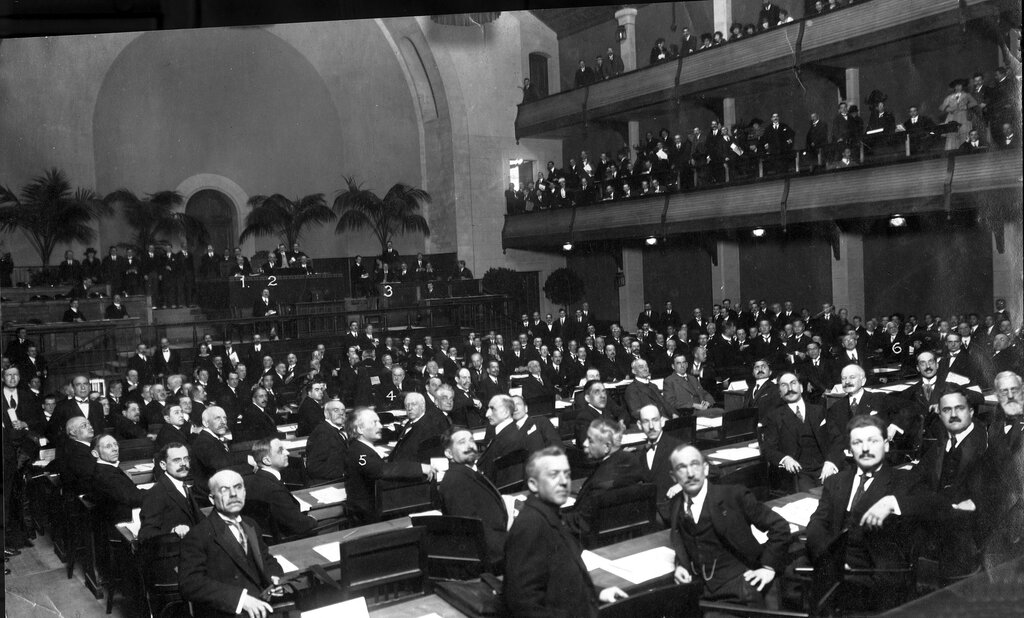
The end of World War I was supposed to usher in an era of lasting peace. The Treaty of Versailles laid out the terms, and an ambitious new body, the League of Nations, was created to prevent future conflicts through a system of collective security. The idea was simple: an attack on one member was an attack on all. If any nation acted aggressively, the international community would unite to stop it, using everything from economic sanctions to military force.
But this system was built on a fragile consensus. Major powers like the United States never joined the League, and others, like Germany and the Soviet Union, were initially excluded or joined late. The League had no army of its own and required unanimous agreement for any significant action, a near-impossible bar to clear. This meant the system's strength depended entirely on the willingness of its most powerful members, primarily Britain and France, to enforce its rules. They soon found that preserving the peace was far more complicated than they had hoped.
The post-war order quickly fractured into two camps: the 'status quo' powers, who wanted to preserve the existing borders and agreements, and the 'revisionist' powers, who felt wronged by the Versailles settlement and sought to overturn it. Germany, Italy, and Japan believed the global system was rigged against them, denying them the resources, territory, and influence they saw as their right.
The Economics of Expansion
For Germany, the driving ideology was Lebensraum, or 'living space.' The goal was to expand eastward, conquering territory in Eastern Europe to provide resources and land for the German people. This wasn't just a vague ambition; it was a geopolitical strategy to secure Germany's future as a dominant power. Japan, an island nation with few natural resources, had similar ambitions in Asia, seeking to establish a 'Greater East Asia Co-Prosperity Sphere' to secure oil, rubber, and other vital materials.
To fuel these expansionist plans, revisionist powers pursued a policy of autarky—economic self-sufficiency. The Great Depression had shown them how vulnerable their economies were to global markets and trade disruptions. By controlling their own resources, they could insulate themselves from international pressure and build up their military-industrial complexes without fear of foreign sanctions or blockades. This economic desperation made conflict not just possible, but logical.
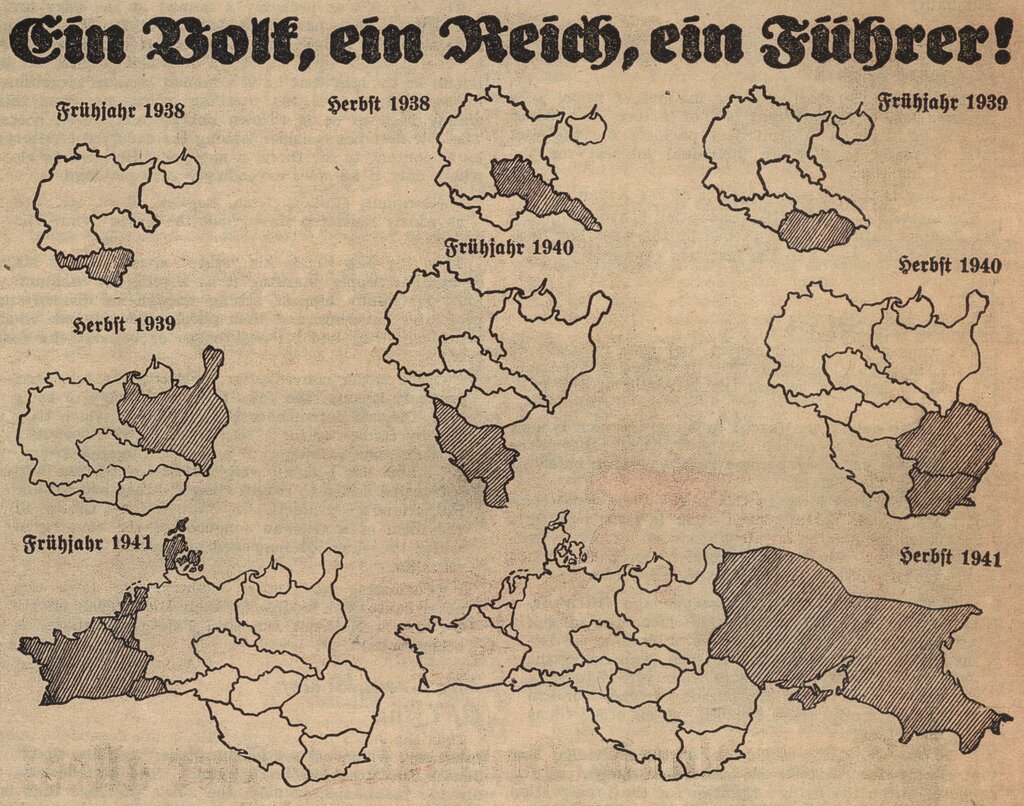
This drive for autarky put them on a direct collision course with the status quo powers, who controlled the existing global economic system. Every move Germany or Japan made to secure new resources was a direct challenge to the international order Britain and France were trying to uphold.
The Breaking Point
The Sudeten Crisis of 1938 became the ultimate test of collective security. The Sudetenland was a region of Czechoslovakia with a large ethnic German population. Citing the principle of self-determination, Hitler demanded its annexation. Czechoslovakia had a modern army and strong fortifications, and it was allied with France and the Soviet Union. On paper, it was a defensible position.
However, Britain and France were not prepared for a major war. Their populations were still traumatized by World War I, and their armies were not yet fully rearmed. They pursued a policy of appeasement—giving in to Hitler's demands in the hope of avoiding a larger conflict. At the Munich Conference, they agreed to Germany's annexation of the Sudetenland without consulting the Czechoslovakians. It was a calculated trade-off: sacrifice Czechoslovakia to buy more time to prepare for a war they saw as increasingly inevitable.
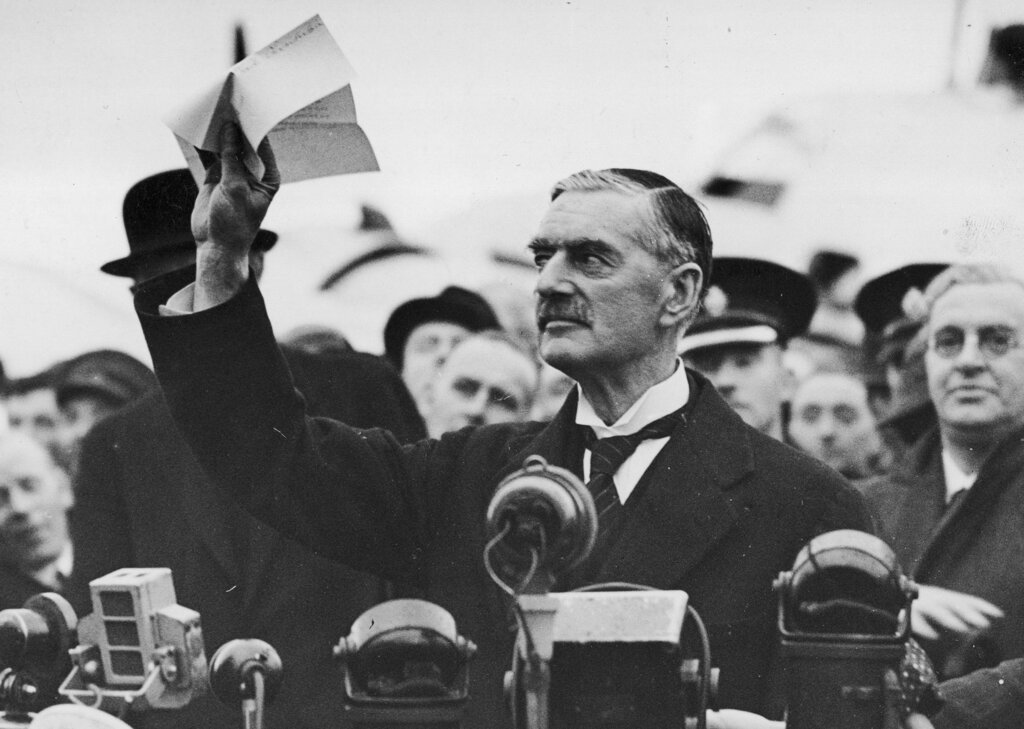
Appeasement failed because Hitler's ambitions were not limited to uniting ethnic Germans. In March 1939, he broke the Munich Agreement and invaded the rest of Czechoslovakia, proving he could not be trusted. This shattered any remaining hope for a diplomatic solution in London and Paris.
The final nail in the coffin of collective security was the , a non-aggression treaty signed between Nazi Germany and the Soviet Union in August 1939. For Hitler, it was a masterstroke. It neutralized his eastern front, allowing him to invade Poland without fear of a two-front war. For Stalin, it bought time to build up his own military while redirecting German aggression westward toward his capitalist rivals. Secret protocols in the pact divided Poland and the rest of Eastern Europe between them. With diplomacy now fully replaced by cynical power politics, the stage was set for war.
The collapse of the post-WWI order was not an accident. It was a systemic failure of a diplomatic framework too weak to contain the economic desperation and geopolitical ambitions of revisionist powers. When deterrence failed, and treaties became mere suggestions, conflict became the only remaining option.
What was a primary weakness of the League of Nations' system of collective security?
Revisionist powers like Germany and Japan pursued a policy of 'autarky' primarily to: