World War II Explained
World War I Aftermath
An Uneasy Peace
The fighting of World War I stopped on November 11, 1918, but the world was far from peaceful. Empires had collapsed, millions were dead, and entire regions were devastated. The victorious Allied powers met in Paris in 1919 to hammer out the terms of the peace, a monumental task that would shape the course of the 20th century. The main players were the leaders of the “Big Four”: President Woodrow Wilson of the United States, Prime Minister David Lloyd George of Great Britain, Prime Minister Georges Clemenceau of France, and Prime Minister Vittorio Orlando of Italy.
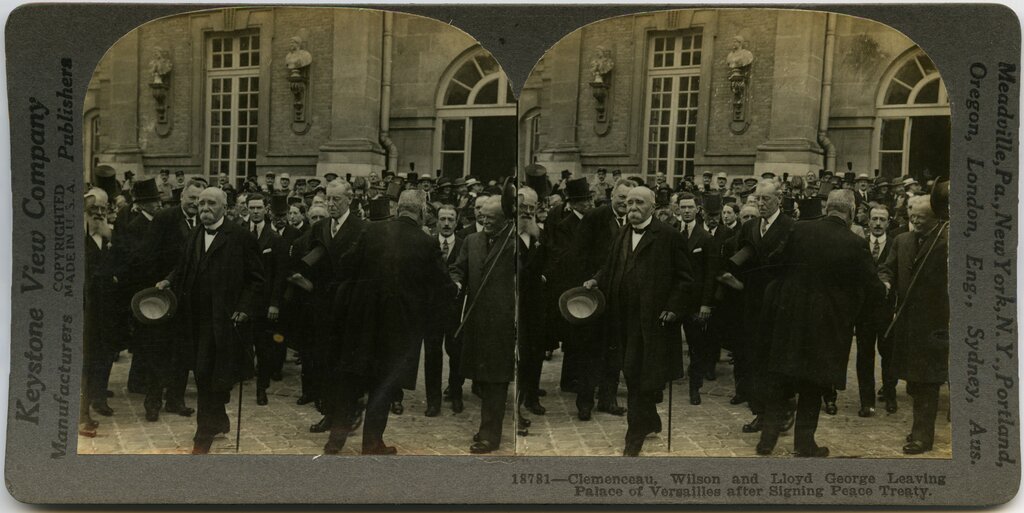
These leaders arrived with very different goals. Wilson, an idealist, pushed his “Fourteen Points,” a plan for a just and lasting peace that included principles like self-determination for nations and the creation of an international organization to prevent future wars. Clemenceau, whose country had been ravaged by German invasion twice in 50 years, wanted revenge and security above all else. He sought to cripple Germany so it could never again threaten France. Lloyd George sought a middle ground, wanting to punish Germany but not so harshly that it would lead to future instability or disrupt the European economy.
The Treaty of Versailles
The final agreement, the Treaty of Versailles, was primarily a compromise between the French and British positions, with some of Wilson's ideas included. Germany was not invited to the negotiations. In May 1919, German delegates were presented with the treaty and given little choice but to sign it. The terms were severe.
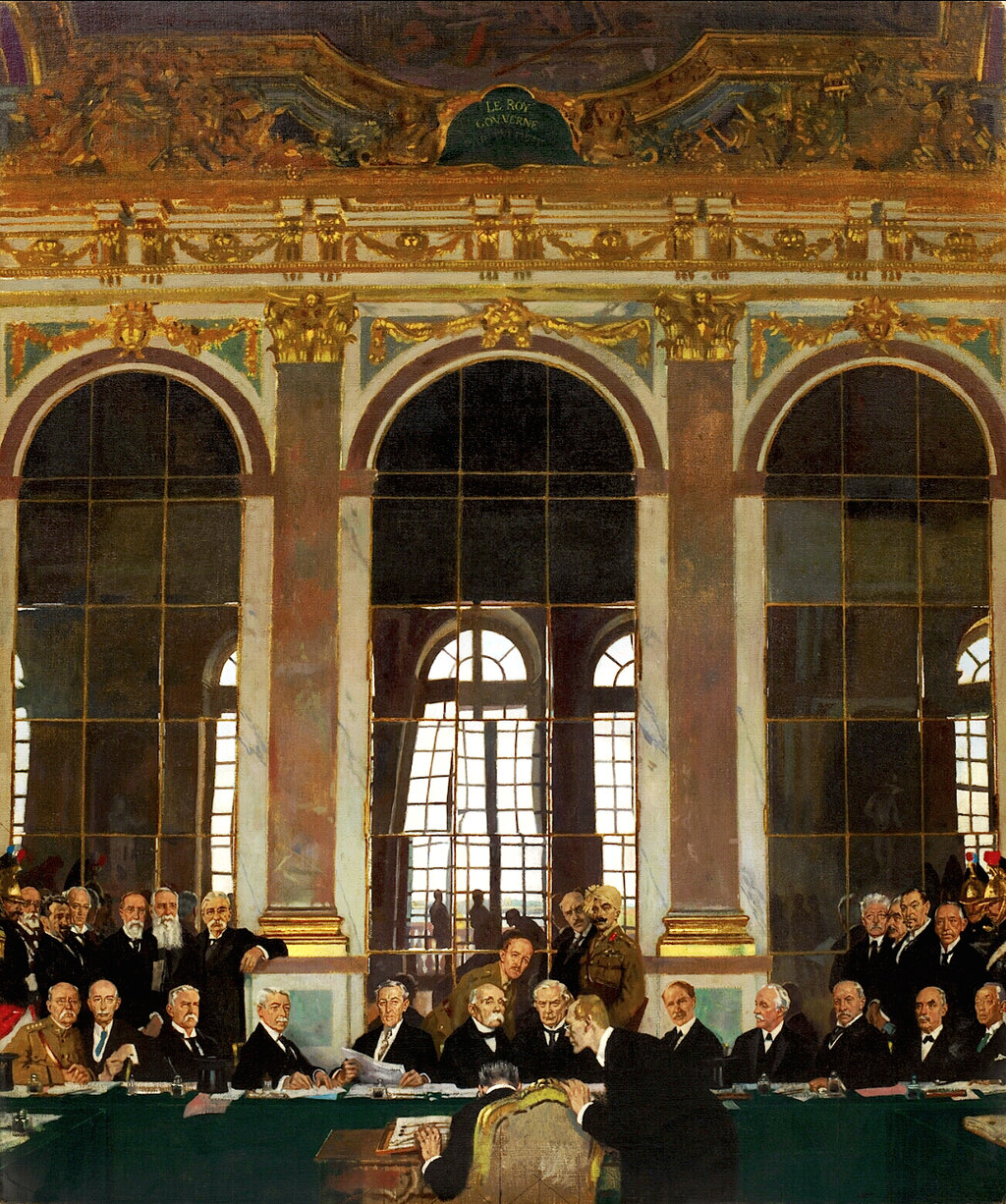
The treaty's conditions were designed to weaken Germany territorially, militarily, and economically. Each provision chipped away at its power and national pride.
| Term | Description |
|---|---|
| War Guilt Clause | Article 231 forced Germany to accept complete responsibility for starting the war. |
| Territorial Losses | Germany lost 13% of its European territory, including Alsace-Lorraine, and all of its overseas colonies. |
| Military Restrictions | The army was limited to 100,000 men, the navy was drastically reduced, and it was forbidden an air force. |
| Reparations | Germany was required to pay massive sums to the Allied powers for war damages. |
The impact on Germany was immediate and profound. The “War Guilt Clause” was a source of national humiliation. The territorial losses separated German-speaking populations and stripped the country of valuable industrial resources. The military restrictions left the nation feeling defenseless.
Worst of all were the reparations. The final amount was set in 1921 at 132 billion gold marks, an astronomical figure equivalent to hundreds of billions of US dollars today. The German economy, already shattered by the war, was in no position to pay. This created a cycle of economic crisis, hyperinflation, and political instability that plagued the new German government, the Weimar Republic, throughout its existence.
Many Germans did not see the treaty as a peace agreement, but as a Diktat—a dictated peace they were forced to accept without negotiation.
The League of Nations
The one bright spot for President Wilson was the creation of the League of Nations, an organization he believed would prevent another catastrophic war. The League was designed to resolve international disputes through diplomacy and negotiation. Member states agreed to protect each other against aggression, a concept known as collective security.
However, the League was flawed from the start. Its biggest weakness was that it had no army of its own and could not compel countries to follow its decisions. It could only recommend economic sanctions against aggressor nations, which were often ignored.
Furthermore, several key world powers were not members. In a major blow to its credibility, the U.S. Senate refused to ratify the Treaty of Versailles, meaning the United States never joined the very organization its president had championed. Germany and Soviet Russia were initially excluded. Without these major players, the League’s authority was severely limited.
Unresolved issues of WW1 triggered WW2.
The end of World War I did not bring the stable, peaceful world its architects had hoped for. The harsh terms of the Treaty of Versailles created deep resentment in Germany, while the League of Nations proved too weak to enforce the new international order. These factors created a fragile peace, leaving many of the war's underlying tensions unresolved.
Which of the "Big Four" leaders at the Paris Peace Conference was most focused on punishing Germany to ensure his country's future security?
The Treaty of Versailles imposed several harsh conditions on Germany. Which of the following was not a term of the treaty?