World War I Explained
Pre-War Europe
A Continent of Contradictions
At the turn of the 20th century, Europe was a continent of contrasts. On one hand, it was a hub of innovation, art, and scientific progress. Cities were growing, economies were industrializing, and life for many was improving. But beneath this glittering surface, deep-seated tensions were simmering.
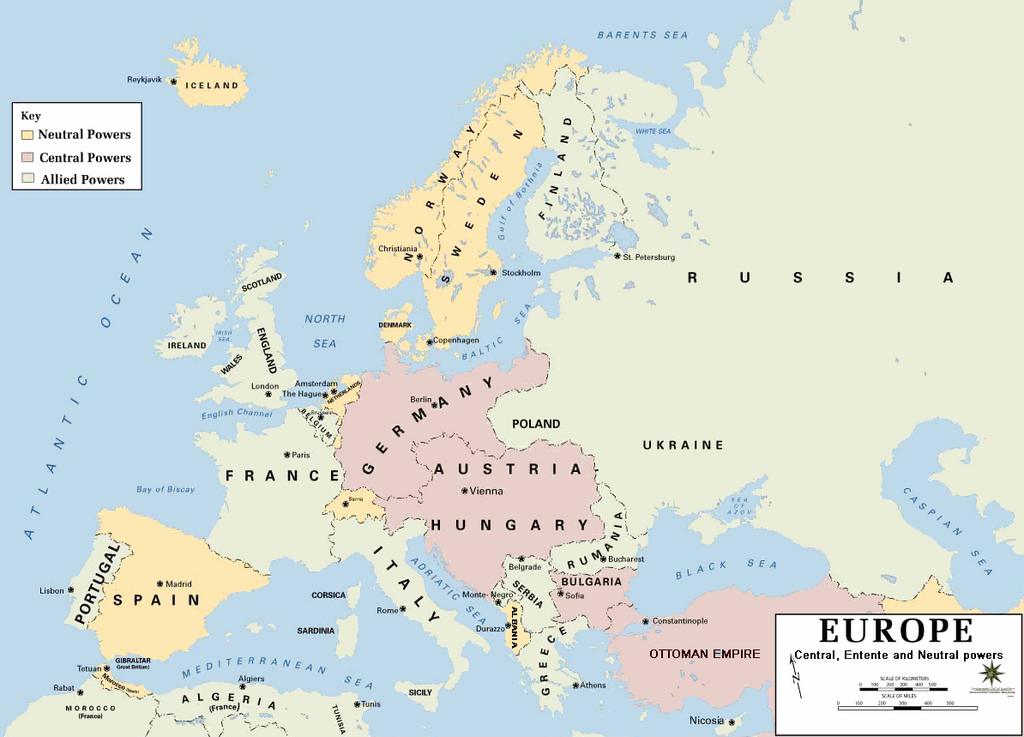
The continent was dominated by a handful of major powers. Great Britain was a global empire with a powerful navy, ruled by a constitutional monarchy. France was a republic, still wary of its neighbor, Germany. The German Empire, newly unified in 1871, was an industrial powerhouse with ambitions to match. To the east were two vast, multi-ethnic empires: Austria-Hungary, a dual monarchy struggling to manage its diverse populations, and the Russian Empire, an immense autocracy ruled by the Tsar.
Each of these nations was navigating a rapidly changing world, and their ambitions often put them on a collision course.
The Rise of Nationalism
One of the most powerful forces shaping Europe was nationalism, the belief in the unity and greatness of one's own people and culture. In some ways, it was a unifying force. It had driven the creation of modern Germany and Italy. But it could also be incredibly destructive.
In large, diverse empires like Austria-Hungary and the Ottoman Empire, different ethnic groups began to demand their own independent nations. Serbs, Poles, Czechs, and others agitated for self-rule, creating constant instability. The Balkan Peninsula, in southeastern Europe, was a particularly volatile region, often called the "powder keg of Europe" because of the competing nationalistic ambitions of its peoples and the meddling of larger powers like Russia and Austria-Hungary.
When people feel a fierce loyalty to their own ethnic group within a larger empire, it can pull that empire apart from the inside.
Competition for Colonies
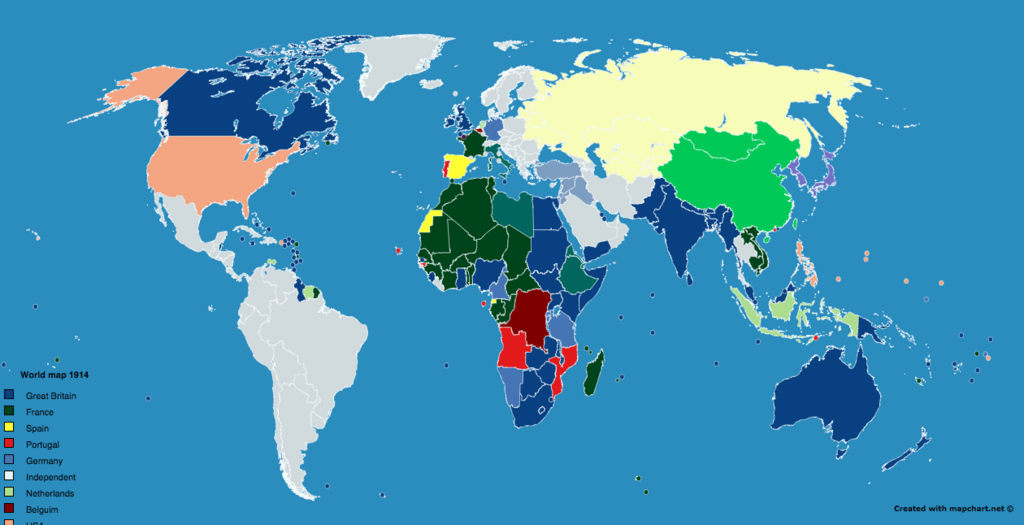
The great powers of Europe weren't just competing on the continent; they were competing across the globe. This era of imperialism saw nations scramble to build vast overseas empires, particularly in Africa and Asia. Colonies provided raw materials for factories, new markets for goods, and a powerful symbol of national prestige. The bigger the empire, the greater the nation.
This "scramble for Africa" and influence in Asia created intense rivalries. Great Britain and France had a head start, building enormous colonial empires. Germany, a latecomer to the game, felt it deserved its own "place in the sun" and began aggressively seeking colonies. This directly challenged the established powers, especially Britain, which saw Germany's imperial ambitions as a threat to its global dominance.
An Arms Race on the Seas
To build and protect these global empires, nations needed strong militaries. This led to an era of militarism, where military power was glorified and nations invested heavily in their armed forces. An intense arms race developed, with each country trying to outdo its rivals.
The most famous part of this was the Anglo-German naval race. Britain's security and its empire depended on the Royal Navy, which was by far the world's largest. When Germany began a massive shipbuilding program to build a navy to challenge Britain's, it created enormous suspicion and hostility. Each new battleship launched by Germany was seen as a direct threat in London, prompting the British to build even more advanced ships of their own, like the revolutionary HMS Dreadnought. This expensive and tense competition poisoned relations between the two powers.
The alliance system dividing Europe into two armed camps—the Triple Alliance (Germany, Austria-Hungary, Italy) and Triple Entente (France, Russia, Britain)—transformed what might have remained localized Balkan conflict into continental and ultimately global war.
The rising tensions from nationalism, imperialism, and militarism pushed European nations to seek security through alliances. They believed that by teaming up, they could deter potential aggressors. Instead, this created a rigid, two-sided system that made a large-scale war more likely. Europe was divided into two main camps.
| The Triple Alliance | The Triple Entente |
|---|---|
| Germany | France |
| Austria-Hungary | Russia |
| Italy | Great Britain |
The Triple Alliance was a pact of mutual defense. The Triple Entente (from the French word for "understanding") was a bit looser, especially at first. It began as a series of separate agreements between France, Russia, and Britain to resolve colonial disputes and counter the power of the Triple Alliance.
This system meant that a conflict between just two nations could quickly pull in all the major powers. A dispute between Austria-Hungary and Russia in the Balkans, for instance, could trigger a cascade of war declarations, dragging Germany, France, and Britain into the fight. The stage was set for a minor spark to ignite a continental inferno.
Which region of Europe was commonly referred to as the "powder keg" due to intense nationalistic tensions among its diverse ethnic groups before 1914?
The Anglo-German naval race was a primary example of the widespread militarism of the era.
These interconnected forces—nationalism, imperial rivalries, the arms race, and the rigid alliance system—created a Europe that was dangerously unstable. While the continent appeared prosperous on the surface, it was primed for a conflict that would change the world forever.