World War I An Overview
Origins of World War I
The Powder Keg of Europe
At the start of the 20th century, Europe felt like a continent holding its breath. Decades of peace and unprecedented progress were shadowed by growing tension. Four powerful forces—militarism, alliances, imperialism, and nationalism—were pushing the great powers closer to a conflict unlike any the world had ever seen. Together, they created a political environment so volatile that a single spark could ignite a massive explosion.
Militarism and the Arms Race
A core belief among Europe's great powers was that military strength was the ultimate measure of national greatness. This policy, known as militarism, led to a massive arms race. Nations poured resources into building larger armies and developing more powerful weapons. Conscription, or mandatory military service, became standard in most countries, swelling the ranks of their armed forces.
Military leaders gained significant influence over political decisions, often arguing that war was not only inevitable but a necessary tool for achieving national goals.
The most famous part of this arms race was the naval rivalry between Great Britain and Germany. For centuries, Britain’s Royal Navy had ruled the waves, protecting its vast global empire. But Germany, a rising industrial power, began building a massive fleet of modern warships to challenge British dominance. This competition created deep suspicion and hostility between the two nations, pushing them further apart.
A Tangled Web of Alliances
To protect themselves, European nations formed complex alliances, promising to defend each other if attacked. While intended to keep the peace by creating a balance of power, these pacts actually made a large-scale war more likely. A small, regional conflict could quickly pull in all the major powers like a set of falling dominoes.
By 1914, Europe was divided into two main camps.
The Triple Alliance consisted of Germany, Austria-Hungary, and Italy. The Triple Entente was an understanding between France, Russia, and Great Britain.
These alliances were a tangled mess of obligations and fears. Germany worried about a two-front war with France and Russia. France, still bitter about its defeat in the Franco-Prussian War of 1871, sought allies against Germany. Russia saw itself as the protector of Slavic peoples, which put it in direct conflict with Austria-Hungary. Britain, traditionally isolated, was drawn into the Entente by its concerns over Germany's growing power.
Imperialism and Nationalism
The race for colonies, or imperialism, added another layer of fuel to the fire. European powers competed for control over territories in Africa and Asia, seeking raw materials, new markets, and strategic advantages. This "scramble for empire" led to frequent clashes and diplomatic crises, heightening the sense of rivalry among nations.
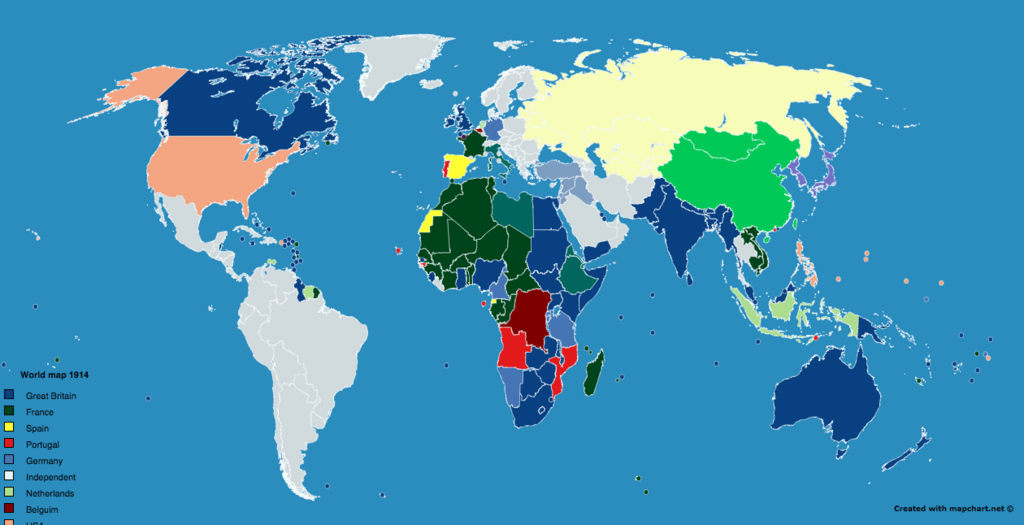
At the same time, nationalism was a powerful and destabilizing force. It fueled a fierce pride and a desire for national interests to triumph above all else. For some, it meant a desire for revenge, as in France's longing to reclaim the provinces of Alsace and Lorraine from Germany.
For others, it was about creating new nations. Many ethnic groups within the sprawling Austro-Hungarian and Ottoman Empires dreamed of independence. In the Balkans, a region of southeastern Europe, these nationalist ambitions were particularly intense. Russia supported a movement called Pan-Slavism, which aimed to unite all Slavic peoples, including the Serbs. This directly threatened Austria-Hungary, which had a large Slavic population and had annexed the Slavic territory of Bosnia in 1908.
The Spark in Sarajevo
This volatile mix of militarism, alliances, imperialism, and nationalism made the Balkans the "powder keg of Europe." All it needed was a spark to explode.
That spark came on June 28, 1914. Archduke Franz Ferdinand, the heir to the Austro-Hungarian throne, was visiting Sarajevo, the capital of Bosnia. He and his wife, Sophie, were assassinated by Gavrilo Princip, a young Serbian nationalist.
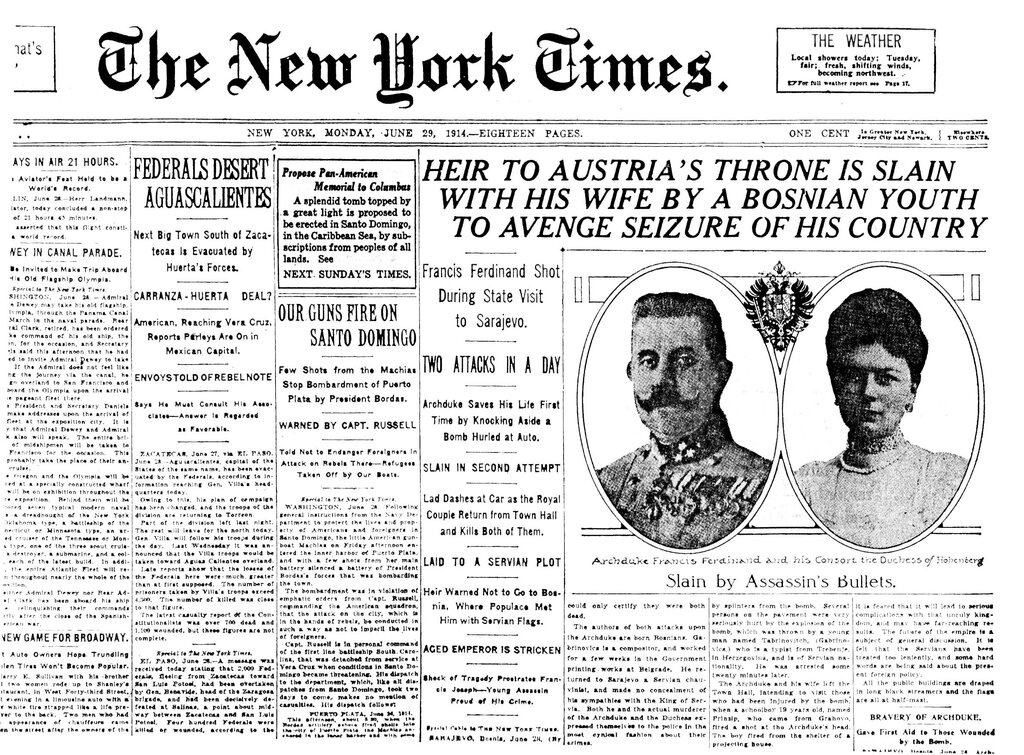
Austria-Hungary, convinced that the Serbian government was involved, issued a harsh ultimatum to Serbia. When Serbia failed to meet all the demands, Austria-Hungary declared war on July 28, 1914.
The alliance system immediately kicked into gear. Russia, seeing itself as Serbia's protector, began to mobilize its army. Germany, allied with Austria-Hungary, declared war on Russia and its ally, France. When Germany invaded neutral Belgium to attack France, Great Britain declared war on Germany. Within a week, the great powers of Europe were locked in a devastating conflict.
The naval arms race that intensified tensions before World War I was primarily a competition between which two nations?
True or False: The complex system of alliances in pre-WWI Europe successfully prevented small, regional conflicts from escalating into larger wars.
The assassination was the trigger, but the deep-rooted tensions of the previous decades were the true cause. A complex web of political and cultural forces had set the stage for a war that would reshape the world.