World Models for AGI and ASI
Introduction to World Models
The AI's Inner World
How do you know not to touch a hot stove? You have an internal model of the world. You understand that stoves get hot, and hot things can burn you. This mental simulation lets you predict the painful outcome without actually having to touch the stove every time. You can imagine the future.
Artificial intelligence is learning to do the same thing. An AI's version of this mental simulation is called a world model. It’s a system's internal representation of how its environment works, allowing it to understand cause and effect, and to plan its actions by thinking ahead.
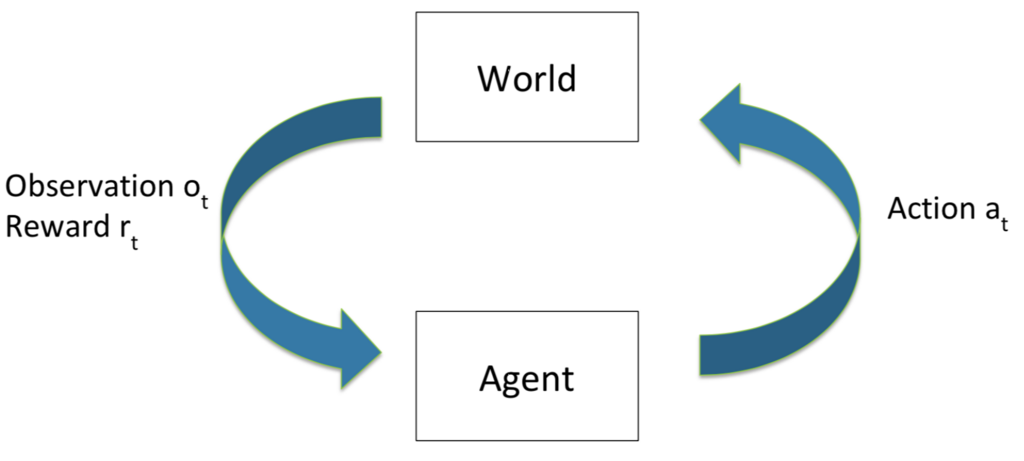
In AI, a “world model” is a learned internal representation of an environment’s dynamics — a model that can simulate how the world evolves over time in response to actions, under constraints like physics and causality.
Instead of just reacting to data, an AI with a world model can build a genuine understanding of its surroundings. This is a huge leap from simply recognizing patterns to actually comprehending the rules that govern a system, whether it's the physics of a robot's workshop or the social dynamics of a conversation.
Simulating the Future
The primary purpose of a world model is to enable an AI to ask "what if?" By building a miniature, virtual version of its environment, the AI can run experiments and see the likely outcomes of different actions before it commits to one in the real world. This capability is transformative for several reasons.
Planning and Decision-Making: A self-driving car can use its world model to simulate how other cars will react if it changes lanes, helping it choose the safest maneuver. It predicts the future to make better choices in the present.
Learning Efficiently: Imagine a robot trying to learn how to stack blocks. Instead of needing thousands of physical attempts (which could be slow and clumsy), it can practice millions of times inside its own world model overnight. This simulated experience helps it learn much faster.
Handling Uncertainty: The real world is messy and unpredictable. A world model can help an AI understand what it doesn't know. By noticing when reality doesn't match its predictions, the AI can identify new information and update its internal model, becoming more knowledgeable over time.
Core Components
While the technical details can get complex, a basic world model generally has three main parts that work together. First, it needs a way to see the world. Then, it needs to compress that information into a useful summary. Finally, it needs to predict how that summary will change over time.
-
Perception Module: This part takes in raw sensory data—like pixels from a camera or sound waves from a microphone—and extracts the important features. It filters out the noise to create a clean, compressed representation of the current state of the world.
-
Memory/State Module: This component holds the compressed representation of the world. It’s the AI’s memory of the immediate past and its understanding of the present moment.
-
Transition/Dynamics Model: This is the predictive engine. It takes the current state and a potential action (e.g., "turn the wheel left") and simulates what the next state will look like. By chaining these predictions together, the AI can "dream" or imagine long sequences of future events.
This structure allows an AI to not only perceive its environment but to develop an intuition for its dynamics, forming the foundation for more advanced reasoning and planning.
What is the primary function of a world model in an AI system?
The human understanding that a hot stove can burn you, which lets you avoid touching it, is a good analogy for an AI's world model.