Workplace Safety for Seniors
Introduction to Workplace Safety
The Foundation of a Safe Workplace
Workplace safety is about one simple goal: making sure everyone goes home at the end of the day just as healthy as when they arrived. This applies to every single person who steps into a work environment, whether they're a full-time employee, a part-time volunteer, a contractor, or a visitor. It involves creating systems and procedures to prevent injuries, illnesses, and even fatalities.
Think of it as a team sport. Success doesn't just depend on one person or one rule. It requires active participation from everyone, from the CEO to the newest volunteer. A safe workplace isn't just about avoiding accidents; it fosters a culture of trust and respect, where people feel valued and protected.
Shared Responsibilities
Both employers and workers have distinct but complementary roles in maintaining a safe environment. Employers are legally and ethically obligated to create the foundation for safety, while workers are responsible for building upon that foundation through their daily actions.
| Employer Responsibilities | Worker Responsibilities |
|---|---|
| Provide a workplace free from recognized hazards. | Follow all lawful safety and health rules. |
| Supply and pay for necessary safety gear. | Wear or use personal protective equipment (PPE). |
| Train workers about job hazards in a language they understand. | Report job-related injuries and illnesses. |
| Keep accurate records of work-related injuries and illnesses. | Report hazardous conditions to a supervisor. |
Safety isn't just a set of rules. It's an attitude and a commitment that becomes part of how work gets done every day.
Hazard Identification and Control
You can't fix a problem you don't know exists. The first step in preventing accidents is proactively identifying hazards. A hazard is any source of potential damage, harm, or adverse health effects on something or someone. This could be a wet floor, an unlabeled chemical, a frayed electrical cord, or even repetitive motions that cause strain over time.
Once a hazard is identified, the goal is to control it. Safety professionals use a system called the "hierarchy of controls" to determine the most effective way to reduce risk. It prioritizes strategies from most effective to least effective.
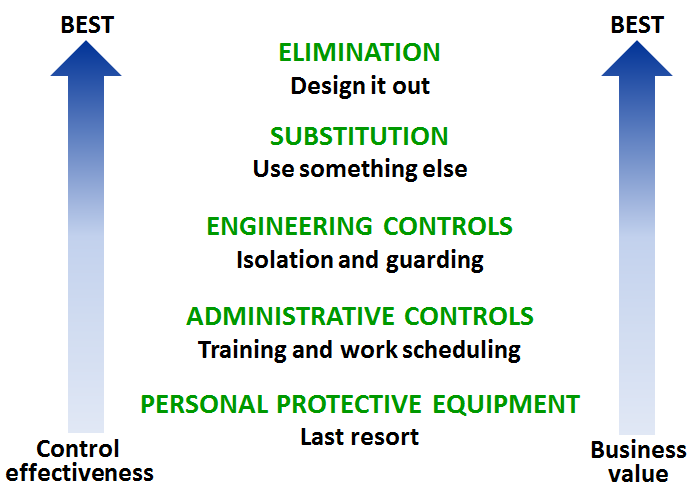
Here's a quick breakdown of the levels:
-
Elimination: Physically remove the hazard. This is the most effective solution. For example, if a machine is dangerously loud, eliminating it from the process entirely is the best fix.
-
Substitution: Replace the hazard with something safer. For instance, using a non-toxic paint instead of one with harmful fumes.
-
Engineering Controls: Isolate people from the hazard. This doesn't eliminate the hazard, but it creates a barrier. Examples include machine guards, sound enclosures, or a ventilation system to remove airborne contaminants.
-
Administrative Controls: Change the way people work. These are policies and procedures to reduce exposure, such as limiting the time a worker spends in a hazardous area or implementing specific safety protocols.
-
Personal Protective Equipment (PPE): Equip the worker with protection. This is the last line of defense and is used when other controls are not feasible. Examples include safety glasses, gloves, and hard hats.
Your Rights and Protections
Laws exist to ensure that safety is taken seriously. In the United States, the Occupational Safety and Health Act of 1970 gives workers specific rights and protections. This act created the Occupational Safety and Health Administration (OSHA), which sets and enforces workplace safety standards.
Under the law, you have the right to:
- A safe workplace.
- Receive information and training about hazards.
- Review records of work-related injuries and illnesses.
- File a confidential complaint with OSHA to have your workplace inspected.
Crucially, your employer is prohibited from retaliating against you for exercising your safety rights. This includes actions like firing, demoting, or reducing your hours. Worker participation is key to a successful safety program, and these protections ensure you can speak up without fear.

An effective safety program relies on open communication. When workers feel empowered to report concerns and contribute ideas, the entire workplace becomes safer. Regular safety meetings, clear reporting channels, and management that listens are all signs of a healthy safety culture.
An effective workplace accident prevention program has two fundamental aspects, namely identifying hazards and controlling the risks posed by those hazards.
Let's review some of the key terms we've discussed.
Now, check your understanding of these fundamental safety concepts.
According to the hierarchy of controls, what is the most effective method for dealing with a workplace hazard?
Who is ultimately responsible for ensuring a safe work environment?
Remember, safety is an ongoing journey, not a destination. By understanding your role and rights, you can help create a work environment where everyone can thrive.