Working Safely at Heights
Introduction to Fall Hazards
The Four-Foot Rule
A fall from a significant height is an obvious danger. But most of the deadliest workplace falls happen from surprisingly low heights. The distance that separates a simple stumble from a life-altering injury can be shorter than you think.
In the United States, falls are a leading cause of death for construction workers and account for thousands of preventable injuries across all industries every year. They are consistently one of the most frequently cited violations by the Occupational Safety and Health Administration (OSHA).
According to the Bureau of Labor Statistics, in 2022, there were 865 fatal falls, slips, and trips in the workplace, and 216,760 nonfatal injuries that required at least one day away from work.
Because of this risk, safety regulations kick in at very specific heights. OSHA defines “working at height” as any work done on a surface that is four feet or more above a lower level. For some specific industries, like scaffolding or steel erection, the height requirement can be different, but four feet is the general rule of thumb.
Four feet might not sound like much. It's the height of a few stacked boxes or the bed of a pickup truck. But a fall from this height is more than enough to cause serious harm, especially if you land awkwardly or strike an object on the way down.
Spotting the Danger Zones
Recognizing a fall hazard is the first and most critical step in preventing an accident. These dangers aren't always obvious, but they are common. Keeping an eye out for them is everyone's responsibility.
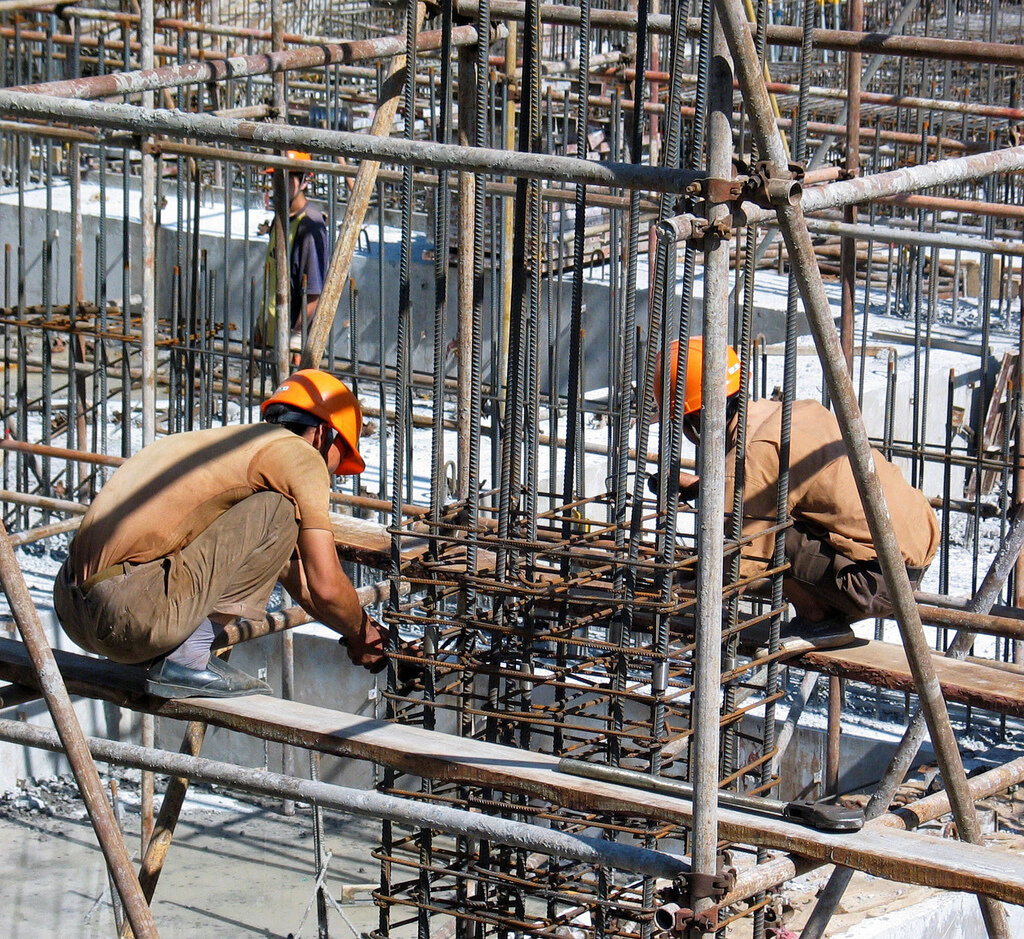
Some of the most common fall hazards include:
-
Unprotected Edges and Sides: Any raised floor, platform, roof, or walkway without a guardrail presents a fall risk. This includes loading docks, mezzanines, and balconies.
-
Openings: Holes in floors and walls are major hazards. This can be anything from an open pit or vat at ground level to a skylight on a roof or an unfinished elevator shaft.
-
Unstable or Slippery Surfaces: A surface doesn't have to be high up to be dangerous. Spills, ice, loose debris, or cluttered pathways can cause a slip or trip that leads to a fall, sometimes onto dangerous equipment or from one level to another.
-
Improper Ladder Use: Using the wrong ladder for the job, placing it on unstable ground, or over-reaching while on it can easily lead to a fall.
| Hazard Type | Common Examples |
|---|---|
| Unprotected Edges | Roofs, loading docks, scaffolds, open-sided floors |
| Floor Openings | Skylights, manholes, unfinished stairwells, trenches |
| Unstable Surfaces | Wet or oily floors, cluttered walkways, rickety ladders |
Learning to see these risks is a skill. It involves actively scanning your work area before you start a task and staying aware of changes in your environment throughout the day. It's about looking at a simple hole in the floor and seeing it not as an inconvenience, but as a potentially fatal hazard.
According to OSHA's general industry standard, at what height is work typically defined as “working at height,” requiring safety regulations to be implemented?
True or False: A fall from the height of a pickup truck bed is not high enough to cause a life-altering injury.